
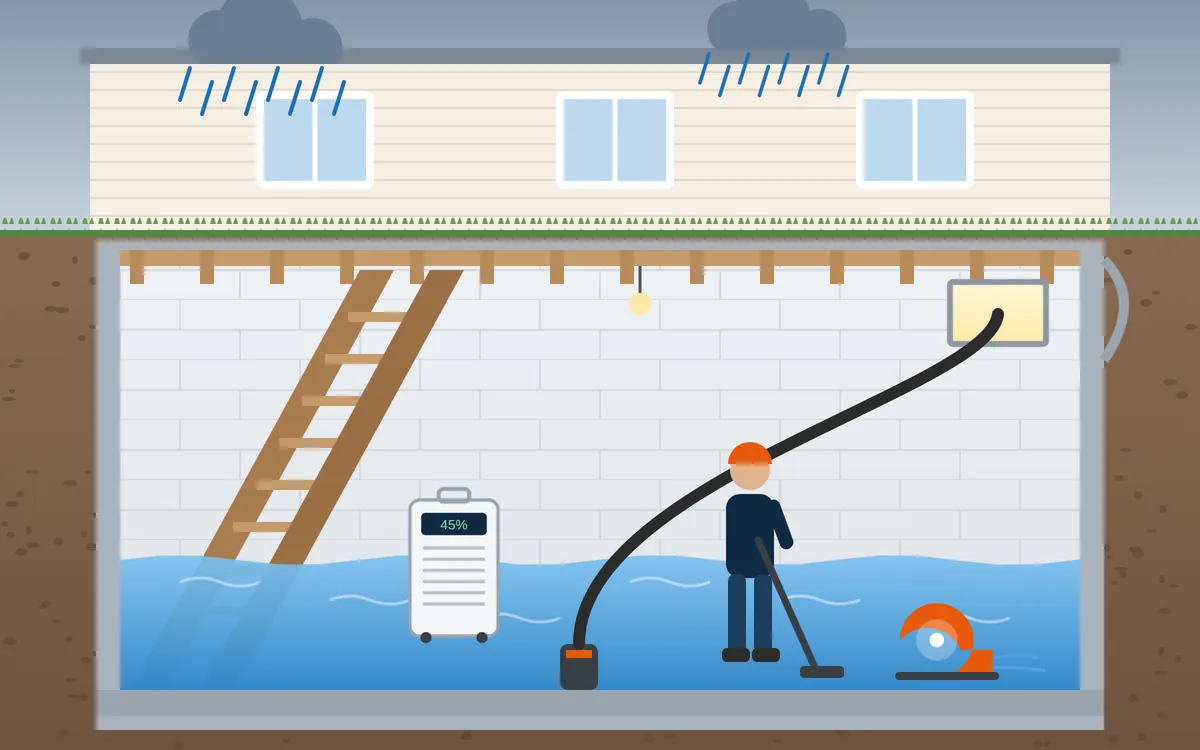
What matters most in the first 24 hours after a basement flood?
Three things: make it safe (power off, source stopped, water documented), get the standing water out, and start commercial drying equipment. Mold can begin growing in 24 to 48 hours on wet drywall and carpet pad, so the drying clock matters more than anything else in the first day. Call (800) 231-6861 for same-day help in Colorado.
Hour 0: The Moment You Spot the Water
Note the time. Look at the whole room from the stairs before you step in. Where is the water coming from? Is it clear, cloudy, or sewage-colored? Is anything plugged in near the floor? These are the three questions that decide everything else.
If power to the basement is on and water has reached outlets or extension cords, do not step in. Go to the main breaker panel and shut off the basement circuits. If the panel is in the flooded basement, call the utility.
Hour 1: Stop the Source and Make the Scene Safe
Close the house main water shutoff for a plumbing leak. Check the sump pump and its breaker. If a floor drain is backing up, stop using water anywhere in the house. For groundwater through a wall, there is no shutoff; the strategy shifts to pumping faster than it comes in.
Put on rubber boots, gloves, and eye protection. Add an N95 if the water is dark, murky, or smells of sewage. Keep children and pets out of the house if sewage is involved.
Hour 2: Photograph Everything Before You Move Anything
Wide shots of each wall. Close-ups of the water line, damaged contents, and the visible water source. Record the time water was first noticed, the time the source was stopped, and the approximate depth. Keep the original image files with timestamps intact. Insurers often ask for raw files.
Hours 3-4: Call Your Insurance and a Cleanup Crew
Call your insurance company's claim line to open a claim. Ask the agent which categories your policy covers: sudden plumbing, water backup, or flood. Ask whether you need to wait for an adjuster before starting mitigation. Most policies require you to prevent further damage, not wait, but get the answer in writing or by email.
Call a basement flood cleanup crew. The cleanup is very different depending on whether this is clean water or contaminated water, and that call sets the timeline.
Hours 4-8: Remove the Standing Water
A submersible pump moves the bulk water. A wet/dry vac or commercial extractor takes the last inch and the water trapped in carpet, pad, and porous flooring. On a finished basement, every hour standing water sits is more drywall to replace.
Hours 8-12: Pull Out What Won't Dry
Carpet pad after any contaminated water. Wet fiberglass insulation. Drywall with a flood cut 12 to 24 inches above the water line. Particleboard furniture, cardboard boxes, and soaked books. Bag contaminated debris and move it outside.
Hours 12-24: Set Up Commercial Drying
Air movers along wet walls, pointed low. A commercial dehumidifier for every 1,000 square feet of wet area. Door closed, equipment running continuously. Take baseline moisture readings and label where you took them. Everything from here is about drying faster than mold can grow.
End of Day 1: What Should Be True
By the end of the first 24 hours, the basement should be: safe to enter, dry of standing water, free of unsalvageable materials, documented in photos and written notes, and under active drying with commercial equipment. If any of those is not true, the recovery is behind schedule and the risk of mold rises sharply.
FAQs
Can mold really start growing in 24 hours?
Yes. The EPA documents visible mold growth on wet drywall and carpet pad in 24 to 48 hours at indoor temperatures.
Should I wait for the adjuster before starting cleanup?
No. Most homeowners policies require you to mitigate further damage. Document everything, then start. Confirm with your insurer in writing.
What if I can't find the water source in the first hour?
Shut off the house main water valve to rule out a plumbing leak. If water keeps coming, it is likely groundwater or sewer backup, which needs a professional.
Is one rental dehumidifier enough for a basement?
A typical home dehumidifier is not. A commercial low-grain refrigerant unit removes 5 to 10 times more water per day.
What temperature should the basement be during drying?
Between 70 and 90 degrees Fahrenheit is ideal for most drying equipment. Colder slows evaporation; hotter can stress materials.
Can I sleep in the house while drying runs?
If the water was clean and the basement is sealed off, yes. If sewage was involved, plan to stay elsewhere until cleaning is complete.
Sources and further reading
- EPA: Brief Guide to Mold, Moisture and Your Home
- Colorado Division of Insurance
- National Weather Service, Boulder
- FEMA Flood Maps
- CDC: Flood water after a disaster
These public sources were used to check the safety, drying, and insurance information on this page.
Need basement flood cleanup in Colorado? Call to be connected with a crew in your area.
Call (800) 231-6861