How long does it take to dry a basement?
Most basement structural drying jobs run about three to five days, but there's no honest fixed number. Drying time depends on how wet materials got, what they are (concrete and dense wood dry slowly), temperature, airflow, and dehumidifier capacity. The job is done when moisture readings in affected materials match dry reference readings from unaffected areas.
What to Do Right Now
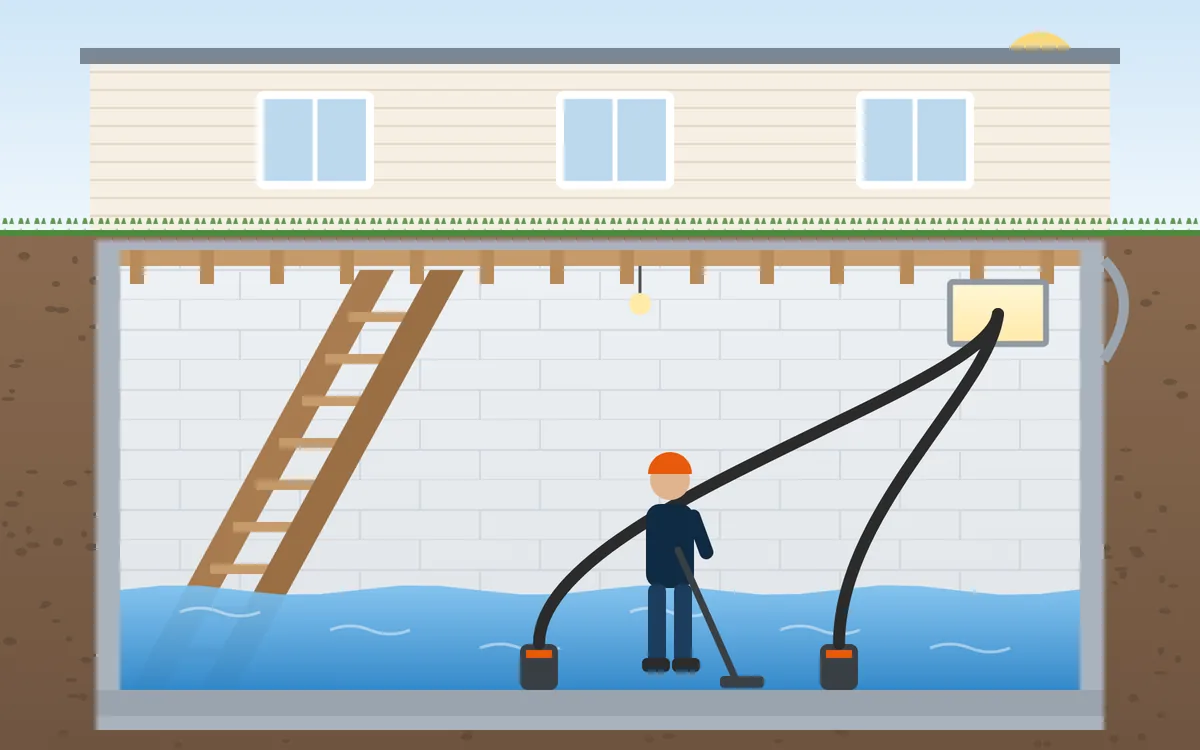
- If standing water remains, it has to be extracted first. Drying equipment can't keep up with puddles.
- Remove wet rugs, cardboard boxes, and fabric items from the basement to cut the moisture load.
- Keep basement windows closed if it's humid outside. Open ventilation only helps when outdoor air is drier.
- Don't use space heaters or turn the furnace up as your main drying method.
- Call (800) 231-6861 to set up structural drying.
How Basement Structural Drying Works
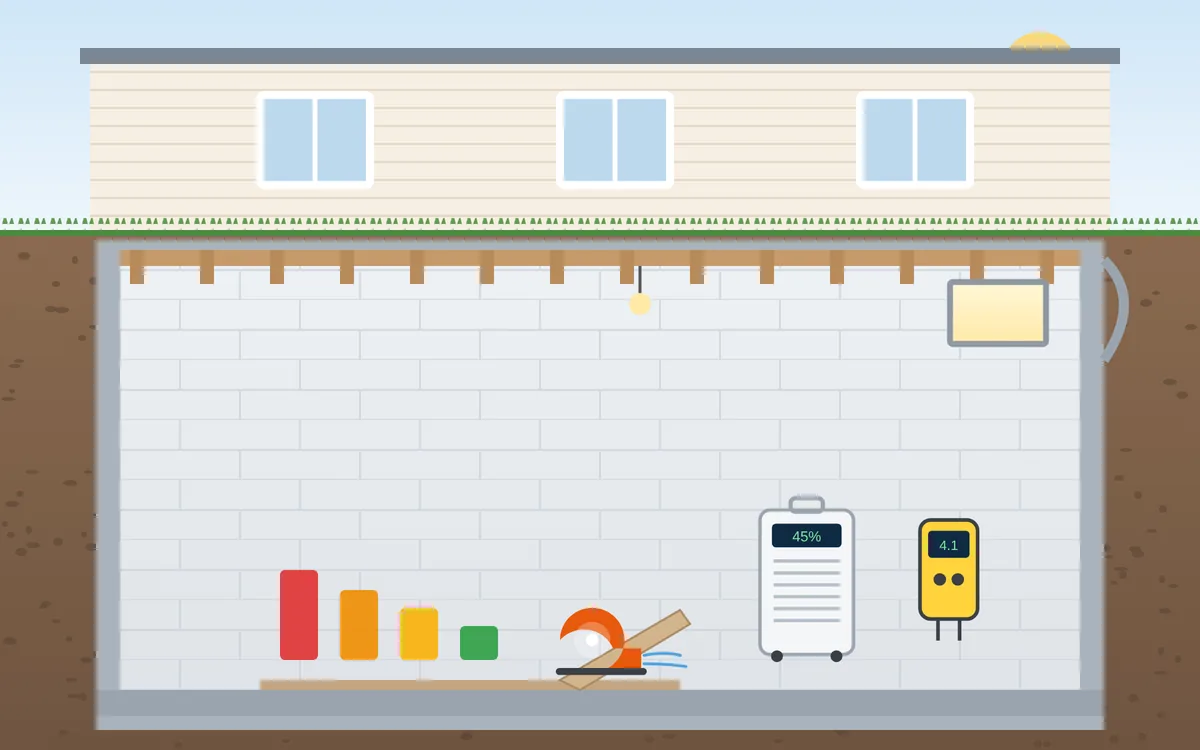
Drying is basic physics. Moisture moves from wet materials into the air when the air is drier than the material and when air moves across the surface. Structural drying controls three things at once:
Airflow
Air movers blow high-velocity air across wet walls and floors, breaking the thin layer of saturated air that sits on the surface.
Dehumidification
Dehumidifiers pull water out of the air. Without them, evaporated water just raises humidity and can soak back into materials or move upstairs.
Temperature
Warmer materials release moisture faster, but heat has to be paired with dehumidification. Heat alone makes a humid basement.
Restoration crews use these together and adjust them daily. That's the difference between real dehumidification work and leaving a box fan running.
Dehumidification and Drying Equipment
| Equipment | What it does | When it's used |
|---|---|---|
| Low-grain refrigerant (LGR) dehumidifiers | Pulls large amounts of water from the air, even at lower humidity | Most basement drying jobs |
| Desiccant dehumidifiers | Uses a drying material; works well in cool spaces | Cold basements and dense materials |
| Axial and centrifugal air movers | Moves air across wet surfaces | Placed along walls and over floors |
| Injection or cavity drying systems | Pushes dry air into wall cavities and under cabinets | Finished walls that may be saved |
| Moisture meters (pin and pinless) | Measures moisture content in wood, drywall, and concrete | Daily, at the same points |
| Thermo-hygrometer | Measures temperature and relative humidity | Tracks whether drying conditions are working |
Moisture Readings: How You Know a Basement Is Dry
A dry-looking wall can still be wet inside, and a dry-feeling slab can hold enough moisture to ruin new flooring. Moisture readings remove the guesswork. A crew should:
- Take dry standard readings from unaffected parts of the house for each material type.
- Mark and record the same reading points every day, including framing, drywall, and the slab.
- Adjust equipment as areas dry and move it toward the wettest zones.
- Stop only when affected materials reach the dry standard, and give you the log.
The Structural Drying Process for a Flooded Basement
Here is how a professional crew typically handles basement structural drying, from arrival to sign-off.
- 1
Extract first
All standing water and as much absorbed water as possible is removed. Drying starts with the least water left behind.
- 2
Set dry standards
Readings are taken from unaffected materials so the crew knows what 'dry' means in your home.
- 3
Remove barriers to drying
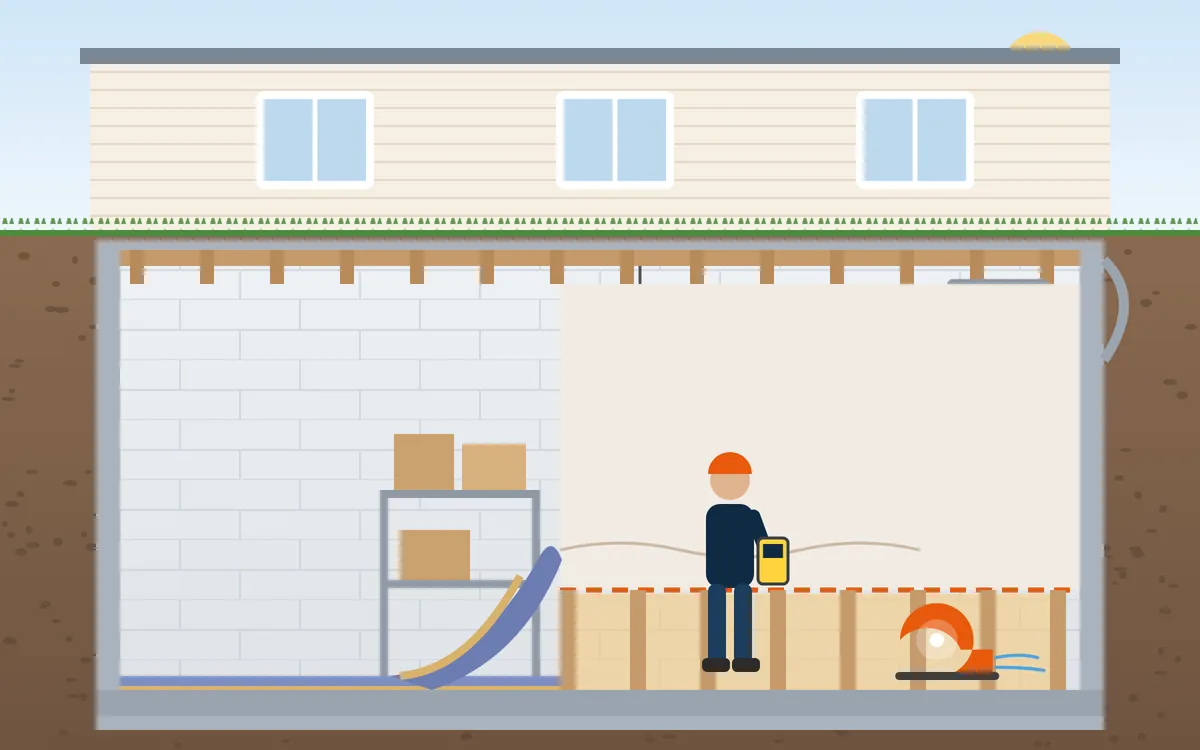
Baseboards may be pulled, small holes drilled in finished walls, or vinyl wallpaper removed so moisture can escape.
- 4
Place equipment
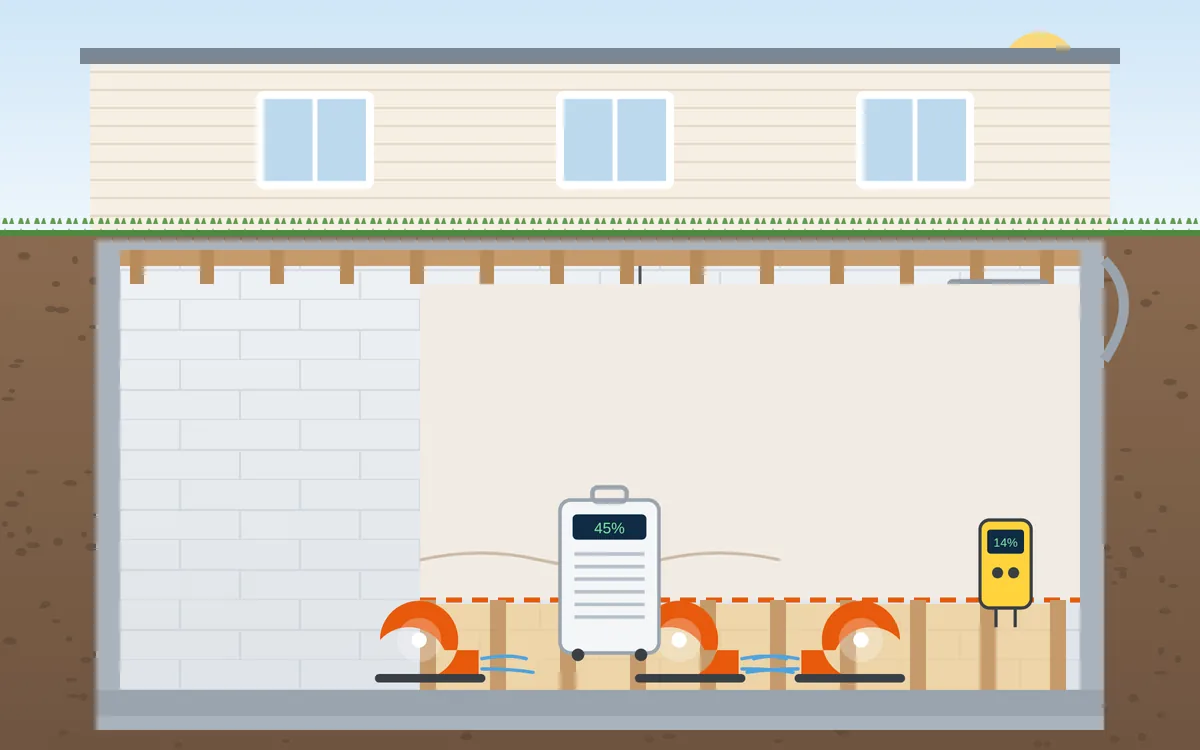
Air movers are angled along walls and dehumidifiers are sized to the space. The area is closed to hold drying conditions.
- 5
Monitor daily
Moisture and humidity readings are logged at the same points. Equipment is repositioned toward the wettest areas.
- 6
Verify and remove equipment
When readings match dry standards, equipment comes out and the final log is shared.
How Long Does It Take to Dry a Basement?
Drying time is the most common question, and the honest answer is that it depends on a handful of variables:
| Variable | Faster drying | Slower drying |
|---|---|---|
| How quickly drying started | Same day | Water sat for days |
| Materials | Thin drywall, open framing | Concrete, dense wood, plaster, built-ins |
| Finishes | Unfinished basement | Finished walls with vinyl wallpaper or paint layers |
| Basement temperature | Warmer | Cold slab and foundation walls |
| Equipment | Properly sized dehumidifiers | Undersized or household units |
| Outdoor conditions | Dry Colorado air in the house | Humid stretches or open windows during storms |
Colorado's generally dry climate helps, but basements stay cool, and concrete gives up water slowly. For slab and subfloor concerns, see subfloor drying and moisture removal.
Dealing with this right now? Call to be connected with a Colorado cleanup crew and talk through your options.
Call (800) 231-6861Drying in Place vs. Tear-Out
Good structural drying can save materials that would otherwise be torn out, which cuts cost and disruption. Drying in place makes sense with clean water caught early, drywall that's wet only near the bottom, and framing with no sign of contamination. It doesn't make sense with sewage, with water that sat long enough to grow microbes, with wet insulation, or with materials that have swollen or delaminated. Those decisions belong to basement flood damage cleanup, and a solid drying plan makes them easier.
Structural Drying Cost Factors
| Factor | Effect |
|---|---|
| Number of air movers and dehumidifiers | Sized to the affected square footage and moisture load. |
| Days of equipment run time | Billed per unit per day by many providers. |
| Monitoring visits | Daily readings and equipment adjustments. |
| Specialty drying | Wall cavity or under-cabinet systems add cost but can save materials. |
| Electricity | Equipment draws power; it's usually a modest cost on your utility bill. |
Drying Mistakes That Lead to Mold and Odor
- Pulling equipment when the room feels dry instead of when readings confirm it.
- Using household fans and a small dehumidifier on a large, saturated basement.
- Leaving windows open during humid weather.
- Sealing wet walls with new drywall or paint.
- Ignoring the slab under flooring that stayed in place.
Keeping Your Basement Dry Long-Term
- Run a quality dehumidifier and keep basement humidity in a normal range. The EPA suggests indoor humidity ideally between 30 and 50 percent.
- Fix drainage, grading, and gutter problems that let water in.
- Insulate cold water pipes to cut condensation.
- Recheck any area that was dried if you notice odor or staining later.
Basement Structural Drying & Dehumidification FAQs
How long does it take to dry a basement after a flood?
Typically several days, often three to five, but drying time depends on materials, how fast drying started, temperature, and equipment. Readings, not the calendar, decide when it's done.
Can a household dehumidifier dry a flooded basement?
It helps with ongoing humidity but can't match commercial LGR or desiccant units on a saturated basement. Undersized equipment is a common cause of lingering odor.
Do I need to open windows to dry my basement?
Only when outdoor air is drier than basement air. During storms or humid stretches, open windows add moisture. Closed-system dehumidification is usually more reliable.
Why do drying crews drill holes in walls?
Small holes near the base of a finished wall let dry air into the cavity so the inside can dry without tearing out the drywall.
What moisture level means a basement is dry?
There isn't one number for every material. Crews compare affected materials to dry reference readings from unaffected parts of your home.
Is the equipment loud?
Air movers and dehumidifiers are noisy and run around the clock during drying. Closing the basement door helps.
Can I turn the equipment off at night?
It's best not to. Turning equipment off stalls drying and can let humidity rise again, which extends the job.
Sources and further reading
- EPA: A Brief Guide to Mold, Moisture and Your Home
- EPA: Flood Cleanup to Protect Indoor Air Quality
- IICRC: ANSI/IICRC S500 water damage restoration standard
These public sources were used to check the safety, drying, and insurance information on this page. They are not endorsements of MH Restoration.