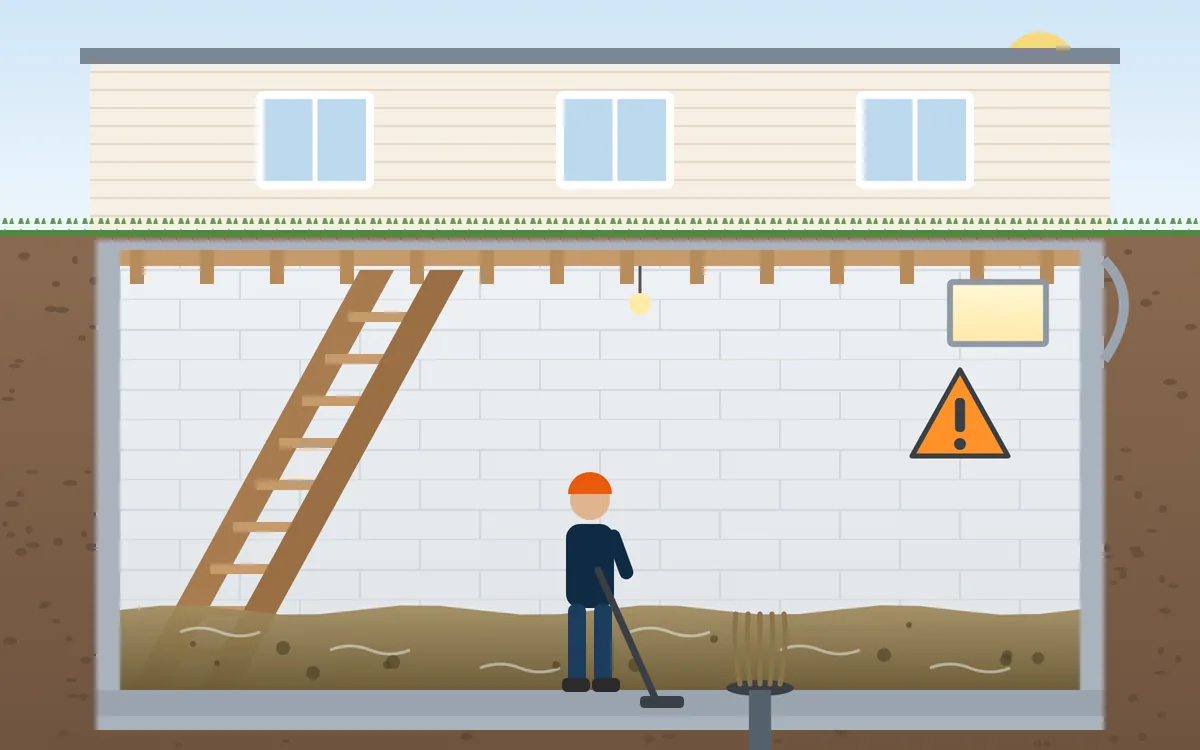
How do you get rid of a musty smell after a basement flood?
Find and remove the moisture first: wet drywall, insulation, carpet pad, or a damp slab under flooring is usually the source. Then clean affected surfaces, apply an appropriate disinfectant or antimicrobial where contaminated water was present, dry everything to verified levels, and keep humidity down with a dehumidifier. Air fresheners and ozone alone only hide the odor.
How to Get Rid of Musty Smell After Basement Flood: First Steps
- Sniff out where the odor is strongest: a wall, a corner, under the stairs, or the laundry area.
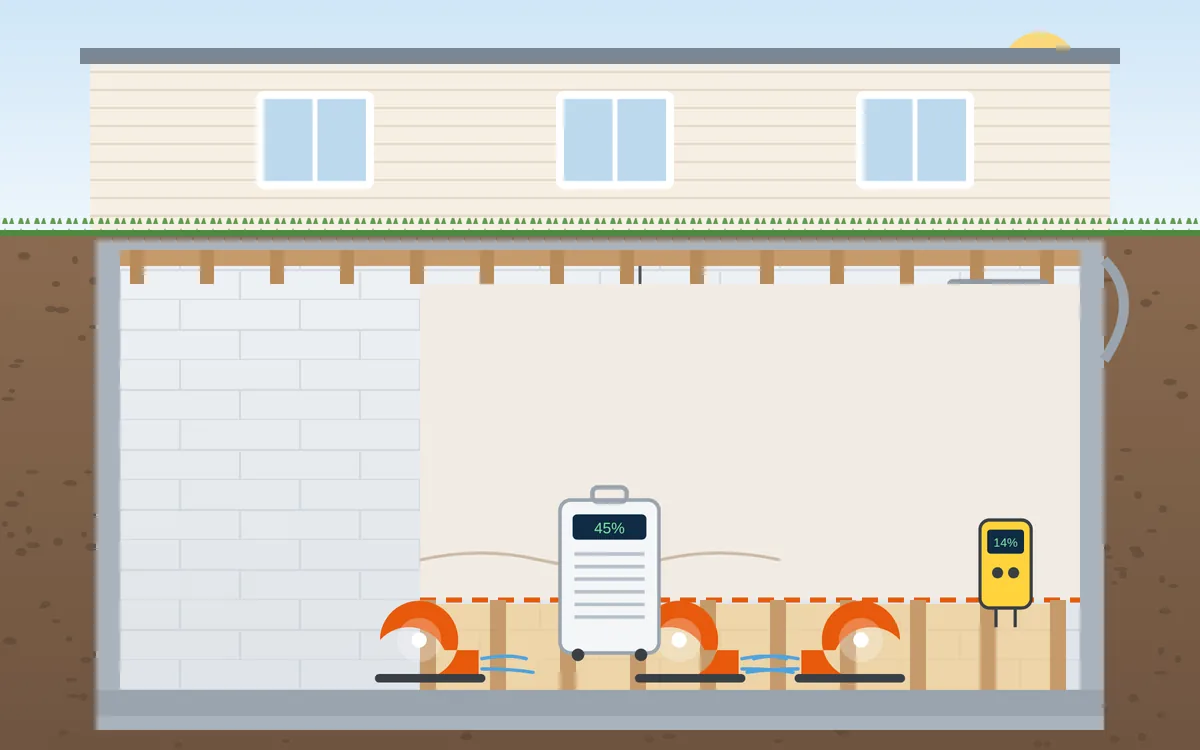
- Run a dehumidifier and keep the basement closed during humid weather.
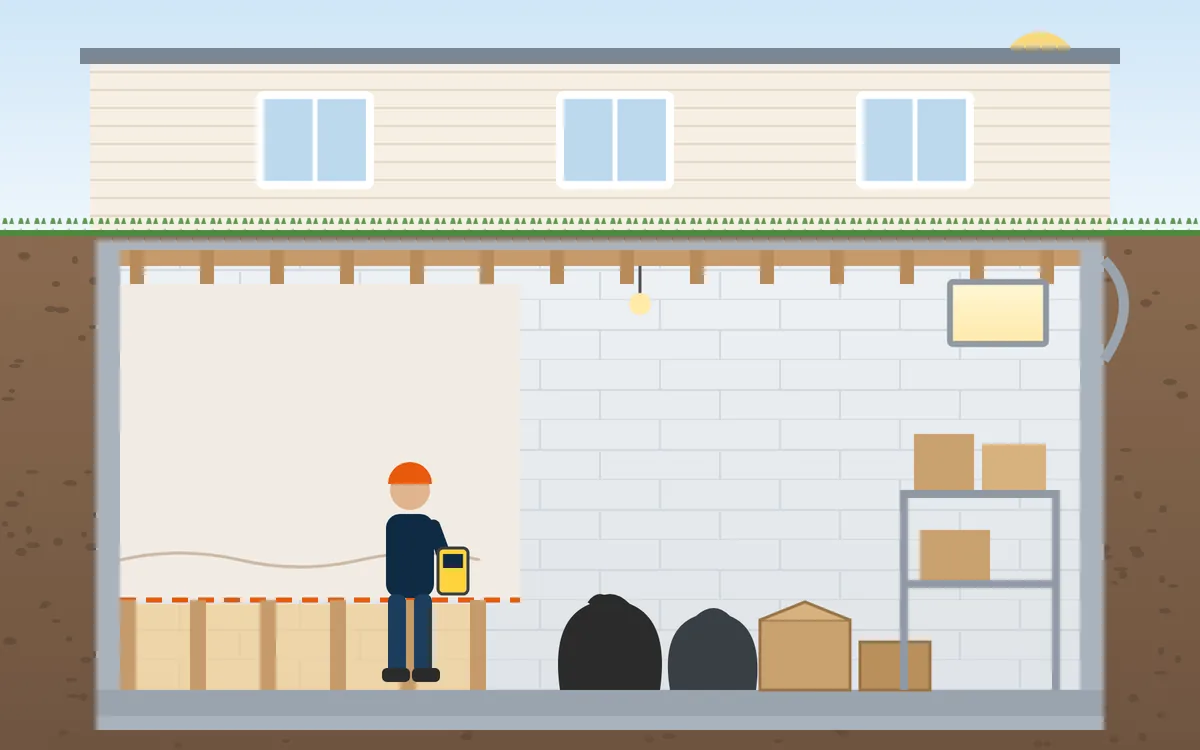
- Remove wet cardboard, rugs, and fabric items. They often carry the smell.
- Don't mix cleaning products. Bleach and ammonia together create toxic gas.
- Call (800) 231-6861 for basement flood sanitization.
What Causes a Musty Basement Smell After Flooding
Hidden moisture
Wet drywall, insulation, wall cavities, or slab under flooring. This is the most common cause.
Microbial growth
Mold and bacteria start growing on damp materials within a day or two, and they produce the musty smell.
Contaminated residue
Sewage or floodwater leaves organic residue on surfaces that keeps smelling until it's cleaned.
HVAC spread
Returns and ducts near the floor can pull odor through the house.
Saturated contents
Boxes, books, upholstered furniture, and rugs hold water and odor.
Floor drains
A dry floor drain trap lets sewer gas into the basement. Pouring water into it fixes this.
Clean, Disinfect, Dry: Why the Order Matters
Disinfectants don't work well on dirty surfaces, because soil and residue shield microbes. That's why basement disinfection after flooding is done in order:
| Step | What it does |
|---|---|
| 1. Remove | Porous materials that can't be cleaned, especially after contaminated water, are removed. |
| 2. Clean | Hard surfaces are scrubbed with detergent and water to remove residue. |
| 3. Disinfect or treat | An appropriate disinfectant or antimicrobial is applied, following its label and contact time. |
| 4. Dry | The structure is dried to verified levels so growth can't restart. |
How Much Sanitization Does Your Basement Need?
Category 1: clean water
Water from a supply line, a water heater, or rain that hasn't touched soil or sewage. Most materials have a real chance of being dried in place if work starts quickly.
Category 2: gray water
Water carrying some contamination: washing machine discharge, dishwasher overflow, or clean water that has sat long enough to start breaking down. Porous materials need a closer look.
Category 3: black water
Sewage, toilet backflow, and outside floodwater that ran across soil. Treat it as unsanitary. Carpet, pad, and wet drywall usually come out.
These three categories come from the ANSI/IICRC S500 standard that the restoration industry uses to describe water. The category decides what can be saved, what protective gear the crew wears, and how much the job costs.
Clean-water floods often need cleaning and drying more than heavy disinfection. Gray and black water call for thorough cleaning and an appropriate antimicrobial on every exposed hard surface.
The Basement Flood Sanitization Process
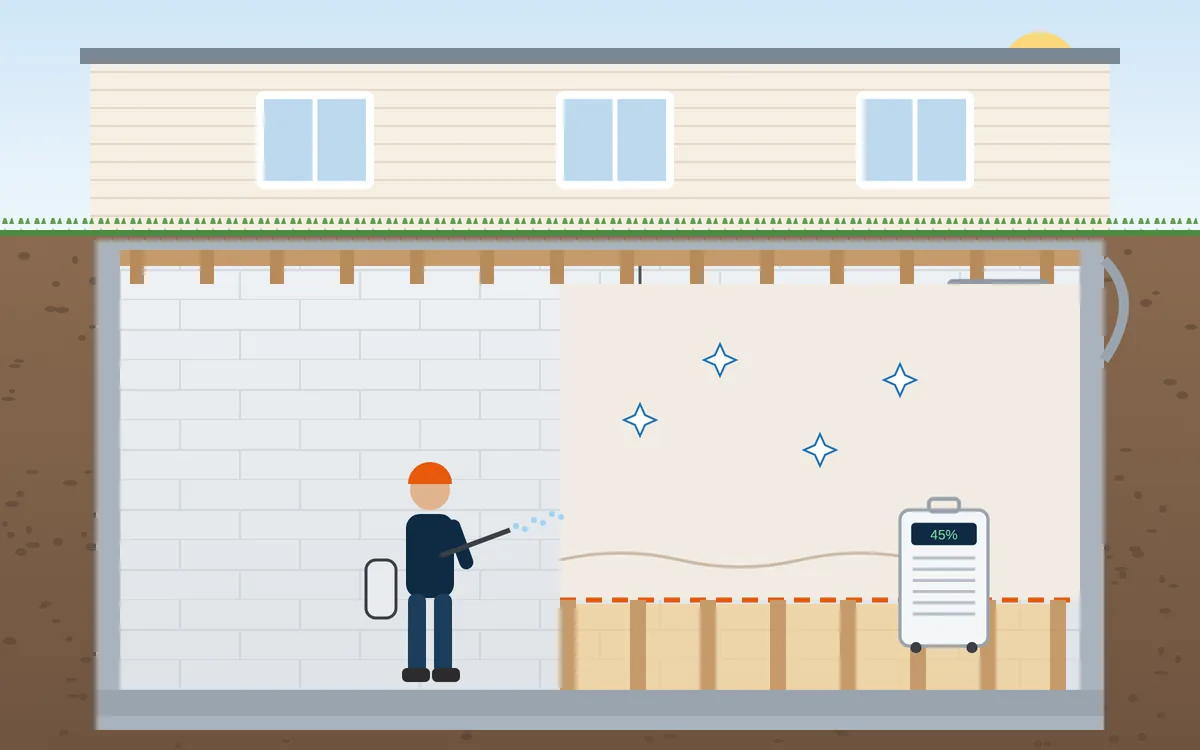
Here is how a professional crew typically handles basement flood sanitization, from arrival to sign-off.
- 1
Find the source
Meters and inspection locate wet materials and hidden moisture behind the odor.
- 2
Remove unsalvageable materials
Wet or contaminated porous materials are removed and bagged.
- 3
Clean surfaces
Hard surfaces are cleaned with detergent to remove residue and soil.
- 4
Disinfect and treat
An appropriate disinfectant or antimicrobial is applied where contaminated water was present.
- 5
Dry and verify
Structural drying runs until moisture readings confirm the space is dry.
- 6
Deodorize if needed
With the source gone, specialized deodorization can remove any residual odor.
Air Fresheners, Ozone, and Other Shortcuts
Fragrance sprays, candles, and plug-ins only mask odor. Ozone generators and hydroxyl machines are sometimes used by professionals for stubborn odors once the source is gone, but they don't dry materials or remove mold, and ozone shouldn't be used in occupied spaces. The EPA notes that ozone generators sold as air cleaners can irritate the lungs. Treat these as finishing tools at most, not a fix for flood odor removal.
Dealing with this right now? Call to be connected with a Colorado cleanup crew and talk through your options.
Call (800) 231-6861When Odor Points to Mold
A musty smell that comes back after cleanup, visible spotting on drywall or wood, or allergy-like symptoms that get worse in the basement can all point to mold. The EPA's guidance is to fix the moisture problem first, then clean up mold. Small areas can sometimes be handled by a homeowner, while larger areas, contaminated-water situations, or HVAC involvement call for a professional.
Sanitization and Odor Removal Cost Factors
| Factor | Effect |
|---|---|
| Water category | Contaminated water means more surfaces to clean and treat. |
| Area | Square footage of exposed framing and concrete. |
| Hidden moisture | Finding and removing the odor source may add removal. |
| HVAC involvement | Duct cleaning is a separate service. |
| Odor equipment | Specialty deodorization adds cost and time. |
Odor and Sanitization Mistakes
- Spraying fragrance or ozone without finding the moisture.
- Applying disinfectant to dirty surfaces without cleaning first.
- Mixing bleach with other cleaners.
- Painting over mold or water stains.
- Keeping wet cardboard and fabric items that keep smelling.
Keeping the Basement Fresh After Cleanup
- Keep basement humidity in a normal range. The EPA recommends indoor humidity ideally between 30 and 50 percent.
- Pour water into floor drains every few weeks so the trap doesn't dry out.
- Store items in plastic bins on shelving.
- Act on any new dampness or odor right away.
Basement Flood Sanitization, Disinfection & Odor Removal FAQs
How to get rid of musty smell after basement flood?
Find and remove the hidden moisture, clean and disinfect affected surfaces, dry to verified levels, and keep humidity down. Masking products won't fix it.
Is bleach good for basement disinfection after flooding?
Diluted bleach can disinfect some hard, non-porous surfaces after cleaning, but it doesn't penetrate porous materials and must never be mixed with ammonia. Follow product labels.
Why does my basement still smell after the flood was cleaned up?
Usually because moisture remains in drywall, insulation, the slab, or contents, or because contaminated residue wasn't fully cleaned.
Does ozone remove basement flood odor?
It can reduce odor once the source is gone, but it doesn't dry or remove mold, and it shouldn't be used in occupied spaces.
What is antimicrobial treatment?
Products applied to cleaned surfaces to reduce bacteria and mold growth, used mainly after contaminated water. They don't replace drying.
Is a musty basement smell dangerous?
The smell itself is a sign of moisture and possible microbial growth, which can affect indoor air quality, especially for people with allergies or asthma.
Can a floor drain cause sewer smell in the basement?
Yes. If the drain's trap dries out, sewer gas can come up. Pour water into the drain to refill the trap.
Sources and further reading
- EPA: A Brief Guide to Mold, Moisture and Your Home
- EPA: Flood Cleanup to Protect Indoor Air Quality
- CDC: Floods and your safety
- IICRC: ANSI/IICRC S500 water damage restoration standard
These public sources were used to check the safety, drying, and insurance information on this page. They are not endorsements of MH Restoration.