How high do you cut drywall after a flood?
Above the highest point where a moisture meter still reads wet, with a margin. That's usually several inches to a foot or more above the visible waterline. Common practice is a cut at 2 or 4 feet so replacement drywall lines up with standard sheet sizes. With contaminated water, cuts go higher and all wet insulation comes out.
What to Do Right Now
- Turn off power to any outlets on wet walls.
- Pull furniture, shelves, and boxes away from walls so air can reach them.
- Remove baseboards if you can do it without damaging them, which lets the wall bottom start drying.
- Don't paint over stains or close up walls yet.
- Call (800) 231-6861 for basement wall and drywall water damage cleanup.
Why Wet Drywall in a Basement Spreads
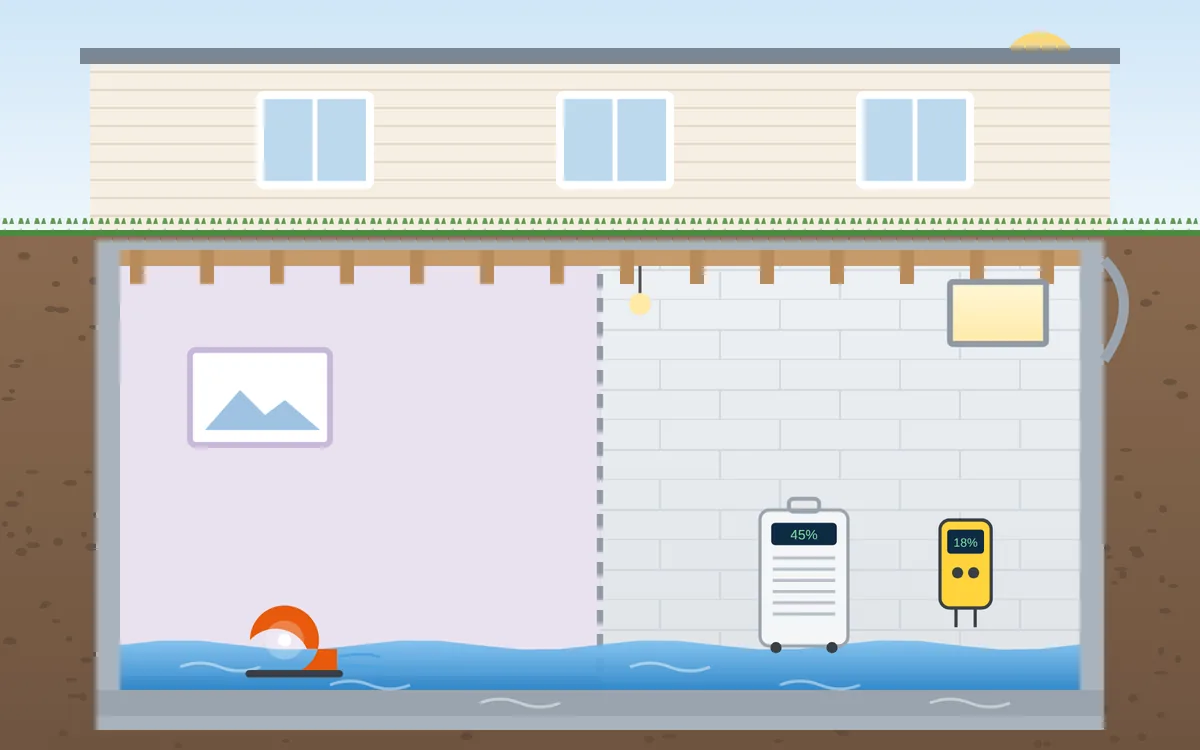
Gypsum drywall is porous. Its paper facing and core draw water up through capillary action, often well above the line where standing water stopped. Behind it, fiberglass insulation soaks up water and holds it against the drywall and foundation. The bottom plate, the horizontal wood at the base of a framed wall, sits right in the water. That's why basement drywall water damage looks like a stain at the bottom of the wall but is really a wet wall assembly.
The Flood Cut: How High to Cut Drywall After a Flood
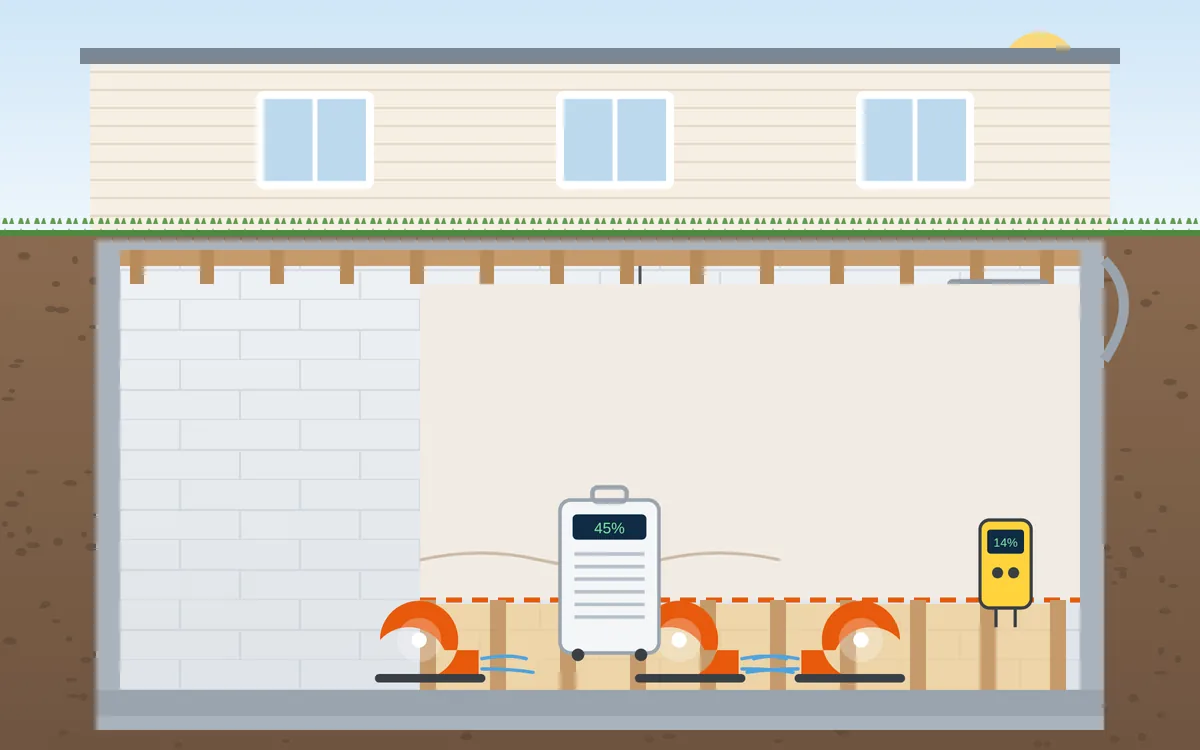
With basement drywall water damage, a flood cut is the standard fix. It's a straight horizontal cut that removes wet drywall below a set height. Doing it right saves money and prevents mold:
| Situation | Typical approach |
|---|---|
| Clean water, short exposure, minor wicking | Drywall may be dried in place with baseboards off and cavity drying |
| Clean water, wicking up to a foot or so | Flood cut around 2 feet, above the highest wet reading |
| Contaminated water (Category 2 to 3) | Cut higher, often 2 to 4 feet, and remove all wet insulation |
| Water sat for days or visible mold | Remove all affected drywall and insulation in the area |
Concrete, Block, and Framed Walls
Poured concrete walls
Clean, disinfect if needed, and dry. Watch for new cracks or efflorescence, the white mineral deposits that point to ongoing seepage.
Block (CMU) walls
Hollow cores can hold water. They dry slowly and may need extra dehumidification.
Framed walls
Bottom plates and studs are dried in place and checked with meters. They're replaced only if rotted or contaminated beyond cleaning.
Insulation
Fiberglass batts are removed once wet. Rigid foam board can often be dried and reused if water didn't get behind it.
Basement Flooring After Water Damage
| Basement flooring | Usual outcome |
|---|---|
| Ceramic or porcelain tile | Often saved; check grout and underlayment |
| Sealed or bare concrete | Cleaned and dried in place |
| Waterproof vinyl plank (glueless) | Often lifted, dried, and reinstalled; check the slab |
| Laminate | Usually swells at seams; often replaced |
| Engineered wood | Usually cups or delaminates; often replaced |
| Carpet and pad | Pad replaced; carpet depends on water category |
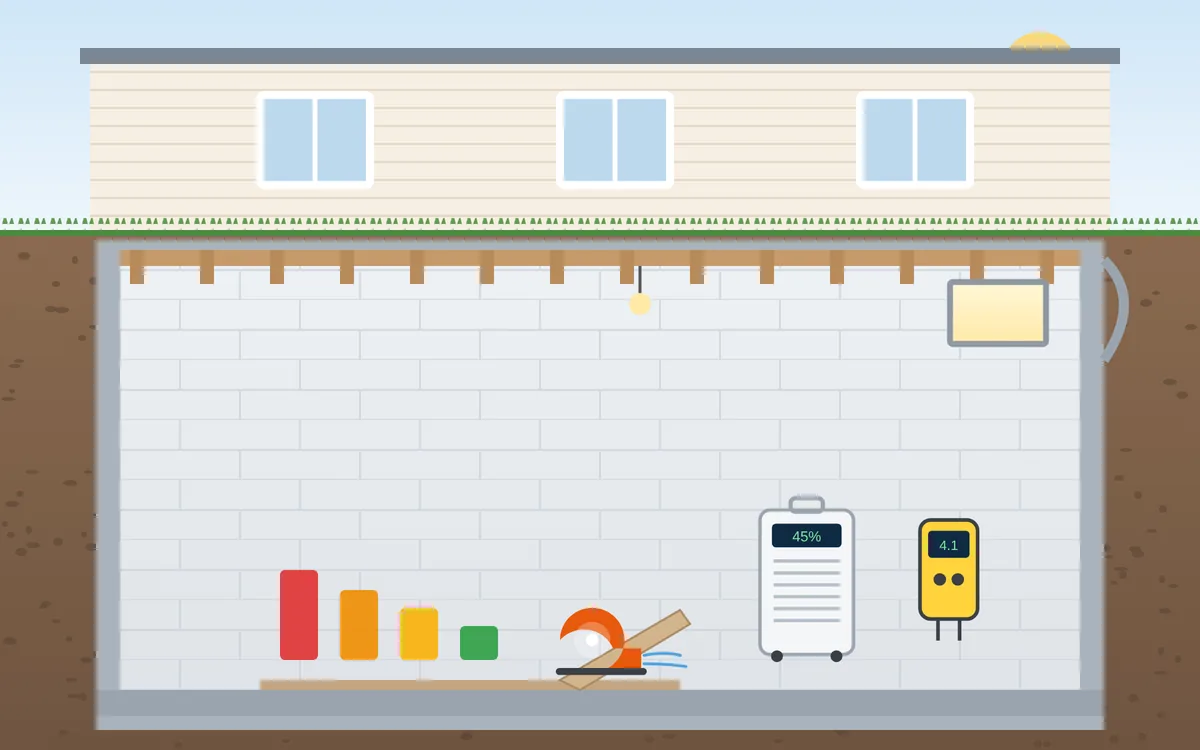
Whatever stays in place, the slab underneath needs to be checked. Moisture trapped under flooring is a common cause of odor weeks later. See subfloor drying for testing methods.
Water Category and Basement Wall Water Damage
Category 1: clean water
Water from a supply line, a water heater, or rain that hasn't touched soil or sewage. Most materials have a real chance of being dried in place if work starts quickly.
Category 2: gray water
Water carrying some contamination: washing machine discharge, dishwasher overflow, or clean water that has sat long enough to start breaking down. Porous materials need a closer look.
Category 3: black water
Sewage, toilet backflow, and outside floodwater that ran across soil. Treat it as unsanitary. Carpet, pad, and wet drywall usually come out.
These three categories come from the ANSI/IICRC S500 standard that the restoration industry uses to describe water. The category decides what can be saved, what protective gear the crew wears, and how much the job costs.
Dealing with this right now? Call to be connected with a Colorado cleanup crew and talk through your options.
Call (800) 231-6861The Basement Drywall Water Damage Cleanup Process
Here is how a professional crew typically handles basement drywall water damage, from arrival to sign-off.
- 1
Map the moisture
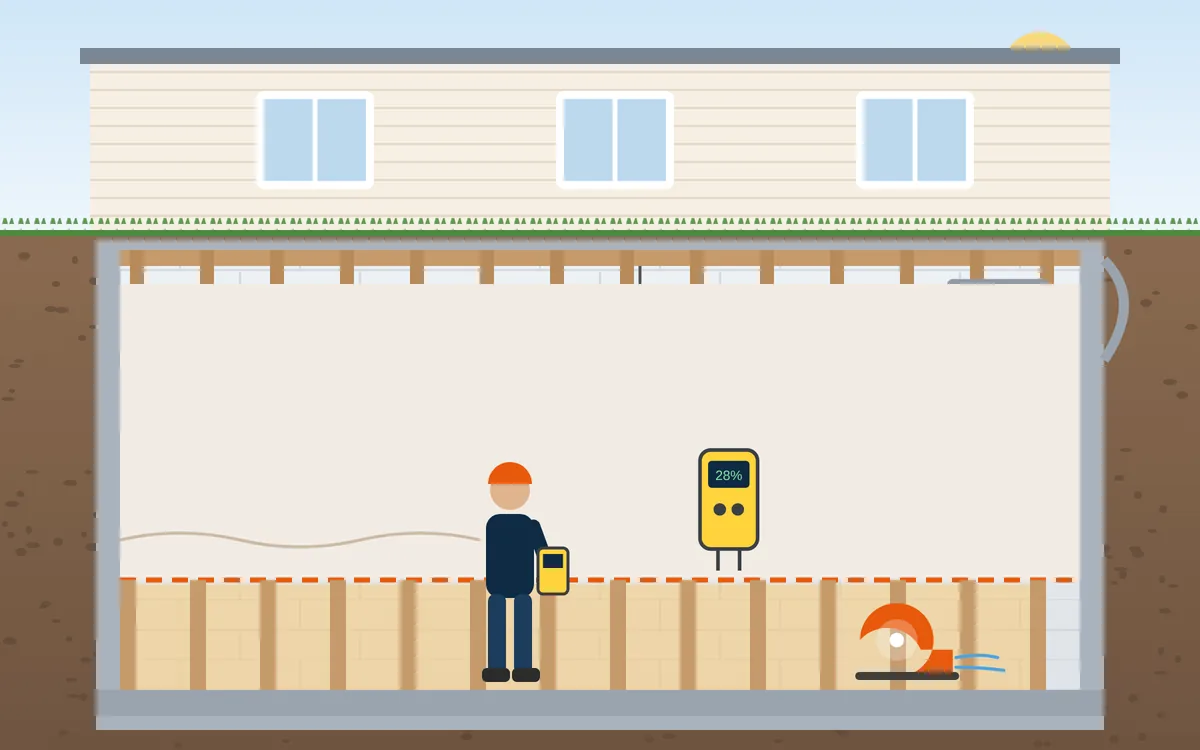
Moisture meters check every wall and floor area to find how high and how far water traveled.
- 2
Remove baseboards and trim
Trim is pulled so the bottom of the wall is exposed and can start drying.
- 3
Make the flood cut
Drywall is cut above the highest wet reading and removed with wet insulation.
- 4
Address the flooring
Flooring is lifted or removed as needed so the slab can dry.
- 5
Clean and dry
Exposed framing and concrete are cleaned, treated if needed, and dried with air movers and dehumidifiers.
- 6
Verify and rebuild
When readings confirm dry framing and slab, insulation, drywall, trim, and flooring are installed.
Basement Drywall Water Damage Cost Factors
| Factor | Effect |
|---|---|
| Linear feet of wall affected | Sets how much drywall and insulation comes out. |
| Cut height | Higher cuts mean more material and rebuild. |
| Flooring type | Replacement flooring is often the largest line item. |
| Wall type | Block walls and plaster dry more slowly. |
| Rebuild | Drywall, tape, texture, paint, and trim after drying. |
Basement Drywall Water Damage Mistakes
- Cutting drywall only at the visible stain.
- Leaving wet insulation inside the wall.
- Leaving baseboards on, which slows drying.
- Hanging new drywall before studs and plates are verified dry.
- Painting over water stains without fixing the moisture.
Building Basement Walls That Handle Water Better
- Use moisture-resistant or paperless drywall near the floor.
- Leave a half-inch gap between drywall and the slab.
- Use rigid foam insulation against foundation walls.
- Choose PVC or composite baseboards instead of MDF.
- Fix exterior grading and drainage that sends water to the walls.
Basement Floor, Wall & Drywall Water Damage Cleanup FAQs
How high to cut drywall after a flood?
Above the highest wet moisture reading with a margin, often at 2 or 4 feet to match sheet sizes. Contaminated water usually calls for a higher cut.
Can wet drywall dry out on its own?
Lightly wetted drywall from clean water can sometimes be dried in place with professional equipment. Drywall that's soft, crumbling, sagging, or contaminated should be removed.
Do I need to remove insulation behind wet drywall?
Wet fiberglass batt insulation is usually removed. It holds water and loses its insulating value.
How do I know if the studs are dry?
A moisture meter reading on the wood, compared with dry framing elsewhere in the house, is the only reliable way.
Can laminate flooring be saved after a basement flood?
Usually not. Laminate swells at the seams once water gets in. Tile and some waterproof vinyl plank fare much better.
What is the white powder on my basement walls?
That's efflorescence, minerals left behind as water moves through concrete. It suggests ongoing moisture or seepage.
Does wet drywall always grow mold?
Not always, but the risk climbs after 24 to 48 hours. Fast drying or removal is the best protection.
Sources and further reading
- EPA: A Brief Guide to Mold, Moisture and Your Home
- EPA: Flood Cleanup to Protect Indoor Air Quality
- IICRC: ANSI/IICRC S500 water damage restoration standard
These public sources were used to check the safety, drying, and insurance information on this page. They are not endorsements of MH Restoration.