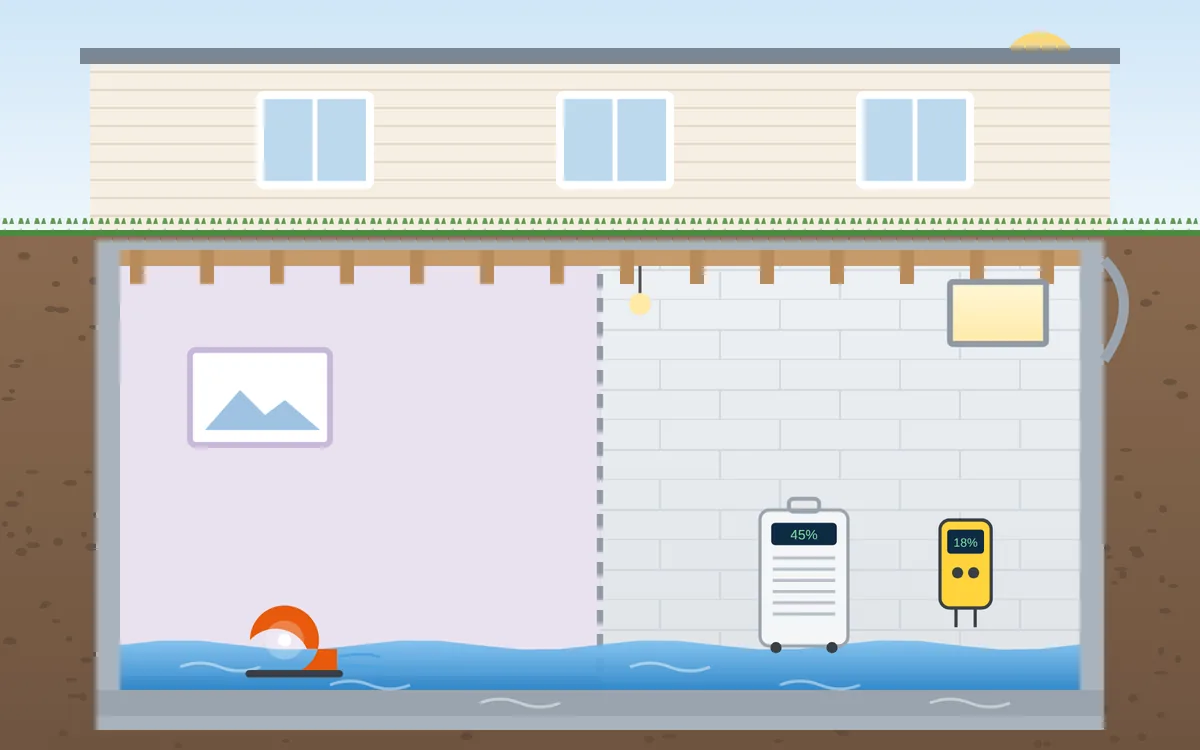
What does basement flood damage cleanup include?
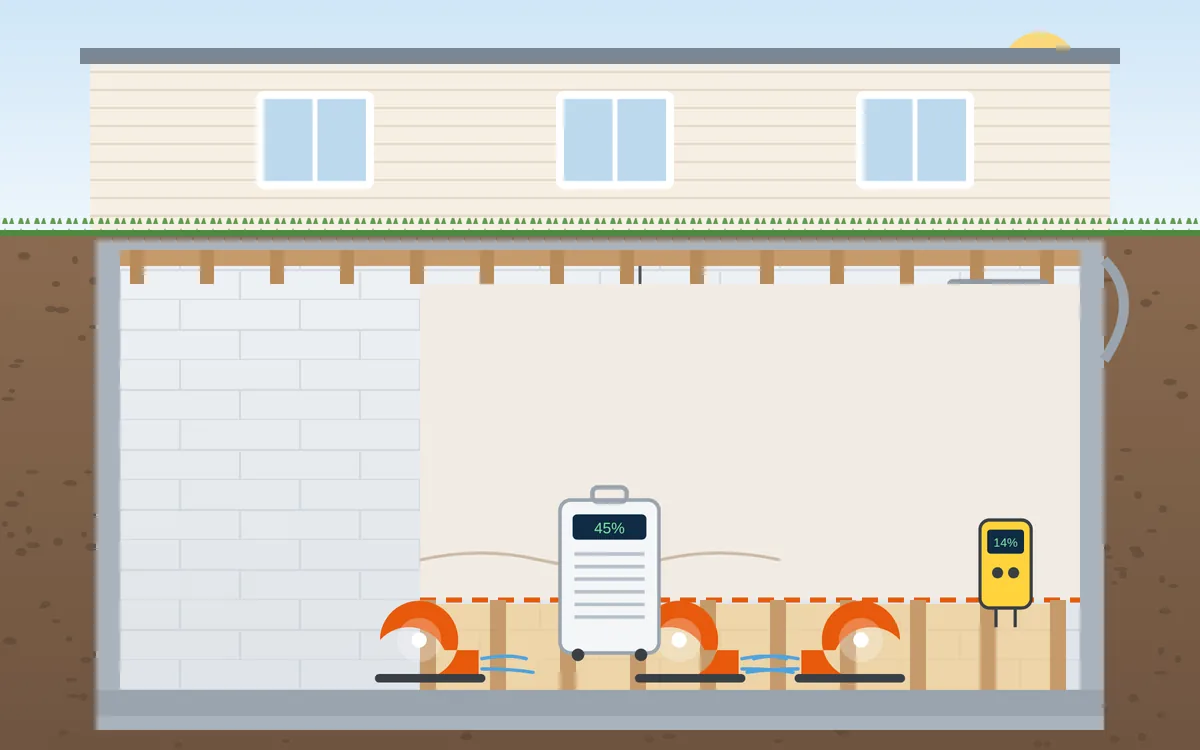
Assessment of every wet material, removal of what can't be dried (usually carpet pad, wet insulation, and drywall below the wick line), cleaning and disinfecting where needed, structural drying with daily moisture readings, and then rebuild: drywall, paint, flooring, and trim. Rebuild should start only after readings confirm the structure is dry.
What to Do Right Now
- Photograph every room, the waterline on walls, and damaged belongings before anything is thrown out.
- Pull wet rugs and boxes off the floor and move them somewhere they can dry or be documented.
- Open interior doors to the basement only if drying equipment is running. Otherwise keep the space closed so humidity doesn't spread.
- Don't paint, caulk, or install anything new yet.
- Call your insurer to open a claim, and call (800) 231-6861 for basement flood damage cleanup.
Assessing Basement Water Damage Material by Material
The first job in basement flood damage cleanup is an honest inventory. Every material reacts to water differently, and the water category raises or lowers the bar for keeping it.
| Material | Clean water (Category 1) | Contaminated water (Category 2 to 3) |
|---|---|---|
| Carpet | Often dryable if extracted quickly | Usually removed |
| Carpet pad | Usually replaced | Removed |
| Drywall | May dry if wet briefly and below the wick line | Removed above the waterline |
| Fiberglass batt insulation | Removed; loses performance when wet | Removed |
| Wood framing and studs | Dried in place, then verified | Cleaned, treated, dried |
| Concrete slab and block walls | Dried and verified | Cleaned, disinfected, dried |
| Laminate and engineered wood | Often swells; frequently replaced | Removed |
| Tile and sealed vinyl | Often saved; check underneath | Cleaned and disinfected; underlayment checked |
For walls and flooring in detail, see basement floor, wall, and drywall water damage cleanup.
Contamination and Basement Flood Restoration Decisions
Category 1: clean water
Water from a supply line, a water heater, or rain that hasn't touched soil or sewage. Most materials have a real chance of being dried in place if work starts quickly.
Category 2: gray water
Water carrying some contamination: washing machine discharge, dishwasher overflow, or clean water that has sat long enough to start breaking down. Porous materials need a closer look.
Category 3: black water
Sewage, toilet backflow, and outside floodwater that ran across soil. Treat it as unsanitary. Carpet, pad, and wet drywall usually come out.
These three categories come from the ANSI/IICRC S500 standard that the restoration industry uses to describe water. The category decides what can be saved, what protective gear the crew wears, and how much the job costs.
The Basement Flood Restoration Process
Here is how a professional crew typically handles basement flood damage cleanup, from arrival to sign-off.
- 1
Document and assess
Every affected room is photographed, the water category is confirmed, and moisture is mapped in walls, floors, and contents.
- 2
Remove unsalvageable materials
Pad, wet insulation, and drywall above the wick line are removed and bagged. Flooring is lifted where water got underneath.
- 3
Clean and disinfect
Exposed framing and concrete are cleaned. Contaminated water calls for antimicrobial treatment.
- 4
Structural drying
Air movers and dehumidifiers run with daily readings until materials match dry reference points.
- 5
Final verification
Moisture readings are recorded and shared so the rebuild crew and your insurer have proof the space is dry.
- 6
Reconstruction
Insulation, drywall, paint, trim, and flooring are installed. Moisture-resistant products are recommended.
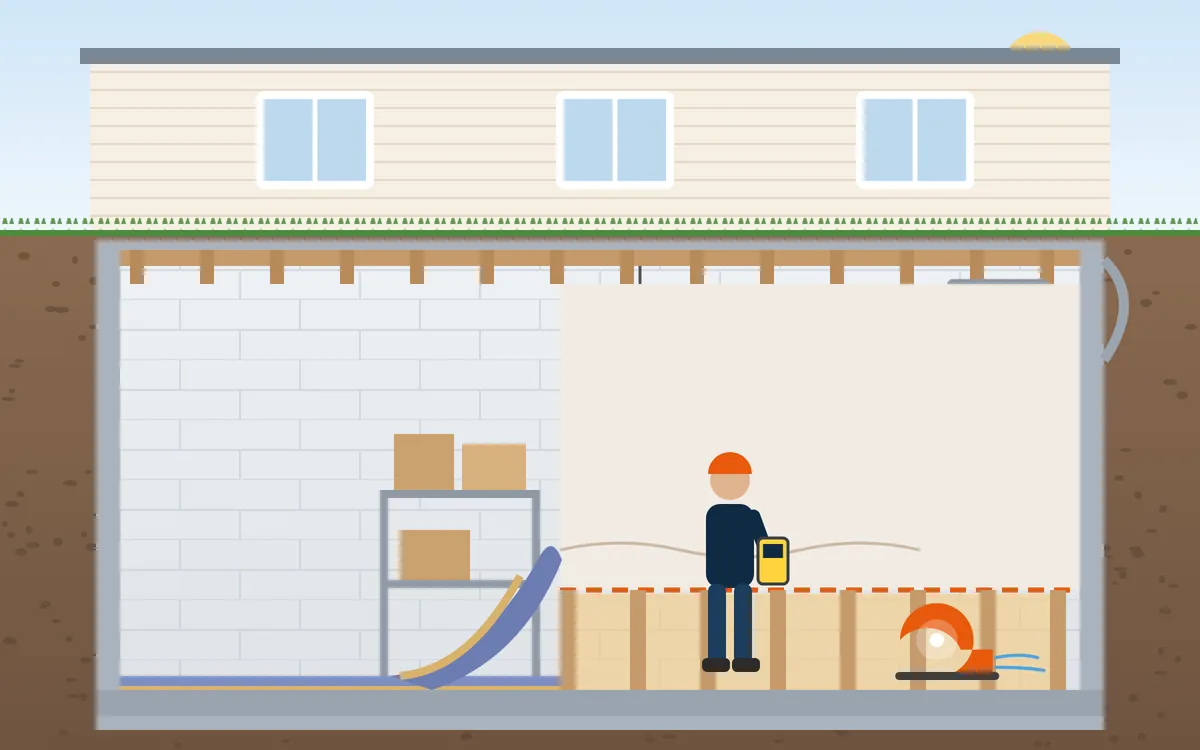
From Cleanup to Rebuild: Basement Flood Damage Cleanup Done in the Right Order
Basement flood damage cleanup and reconstruction are separate phases, and the order matters. New drywall over wet studs traps moisture. New flooring over a damp slab can cup, separate, or grow mold underneath. A sensible restoration timeline looks like this:
1. Clean and remove
Wet porous materials come out. Surfaces are cleaned and disinfected to match the water category.
2. Dry and verify
Equipment runs until readings match unaffected areas of the house. This is documented.
3. Rebuild
Drywall, insulation, paint, trim, and flooring go back. Moisture-resistant choices are worth considering.
Debris haul-off, contents cleaning, and reconstruction are covered on our debris removal, contents cleaning, and reconstruction page.
Dealing with this right now? Call to be connected with a Colorado cleanup crew and talk through your options.
Call (800) 231-6861Basement Flood Cleanup Cost: What Drives the Number
Basement flood cleanup cost varies more than almost any other home repair, because two basements with the same water depth can need very different work. These are the drivers to ask about:
| Driver | Why it matters |
|---|---|
| Water category | Contaminated water means more removal, disposal, and disinfection. |
| Square footage and wall height affected | Sets how much drywall, insulation, and flooring comes out. |
| Finished vs. unfinished | Finished basements have far more material to assess and replace. |
| Drying time | Equipment days add up. Dense materials and cool basements take longer. |
| Rebuild scope | Drywall, paint, flooring, and trim are often the largest part of the total. |
| Contents | Cleaning, pack-out, or disposal of belongings is priced separately. |
Ask for an itemized estimate that separates mitigation (extraction, removal, drying) from reconstruction. Insurers often handle these as separate line items, and it makes comparing quotes much easier.
Insurance and Water Damage Restoration Paperwork
A clean paper trail makes a claim go faster. Keep photos from before, during, and after; the daily moisture log; the itemized scope of work; and a list of damaged contents with approximate age and value. The Colorado Division of Insurance encourages homeowners to understand the difference between sudden water damage, water backup, and flood coverage. Those three often decide whether a basement flood restoration claim is paid.
Restoration Mistakes That Cost Homeowners Later
- Rebuilding before moisture readings confirm the structure is dry.
- Cutting drywall exactly at the visible waterline instead of above the wick line.
- Keeping wet insulation because it looks fine.
- Discarding damaged items before they're documented.
- Choosing the same water-sensitive flooring in a basement that has flooded more than once.
Colorado Homes and Basement Flood Damage
Many Colorado homes have finished basements that serve as bedrooms, offices, and family rooms. That raises the stakes of flood damage. Along the Front Range, swelling clay soils can crack foundations over time, and freeze-thaw cycles can widen those cracks. When you rebuild, it's worth asking whether the cause was a one-time event, such as a burst pipe, or a recurring one, such as groundwater or grading. Restoring a basement without fixing a recurring cause usually means doing it again.
Making the Restored Basement More Flood-Resilient
- Use moisture-resistant drywall near the floor and leave a small gap at the bottom.
- Choose tile, sealed concrete, or waterproof vinyl over carpet and laminate.
- Raise outlets and keep the furnace, water heater, and panel on raised pads where possible.
- Store belongings in plastic bins on shelving.
- Fix the entry point first: grading, gutters, sump capacity, or plumbing.
Basement Flood Damage Cleanup & Restoration FAQs
What's the difference between basement flood cleanup and restoration?
Cleanup (often called mitigation) gets the water out, removes damaged materials, and dries the structure. Restoration includes that plus rebuilding: new drywall, paint, flooring, and trim.
How much does basement flood restoration cost?
Costs depend on water category, square footage, finished materials, drying time, rebuild scope, and contents. An itemized estimate that separates mitigation from reconstruction is the best way to compare.
How long does basement flood damage cleanup take?
Mitigation and drying usually take several days. Rebuild adds time depending on materials and scheduling. Readings, not a calendar, should decide when rebuild starts.
Can I live upstairs during basement water damage restoration?
Usually yes for clean-water jobs. With sewage contamination, the crew may recommend containment, and in some cases you may want to stay elsewhere during removal.
Will flood damage cause mold?
It can if materials stay wet. Drying within 24 to 48 hours and removing materials that won't dry greatly reduce the risk.
Do I need to replace all the drywall?
Usually not. Drywall is typically cut above the highest point where meters still read wet, and dry sections above are kept.
Should I file an insurance claim for basement flood damage?
That depends on the cause, your coverage, and your deductible. Document everything first, then talk with your agent about whether the cause is covered.
Sources and further reading
- EPA: A Brief Guide to Mold, Moisture and Your Home
- EPA: Flood Cleanup to Protect Indoor Air Quality
- IICRC: ANSI/IICRC S500 water damage restoration standard
- Colorado Division of Insurance
- Colorado Geological Survey: swelling soils
These public sources were used to check the safety, drying, and insurance information on this page. They are not endorsements of MH Restoration.