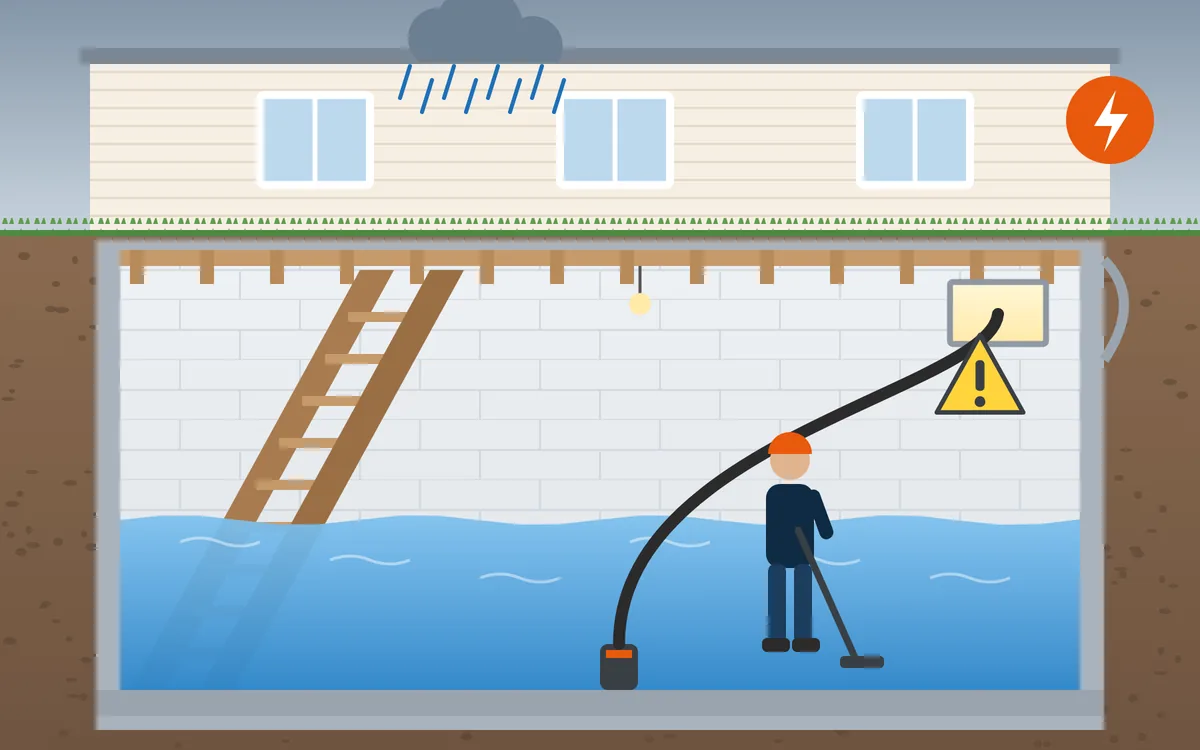
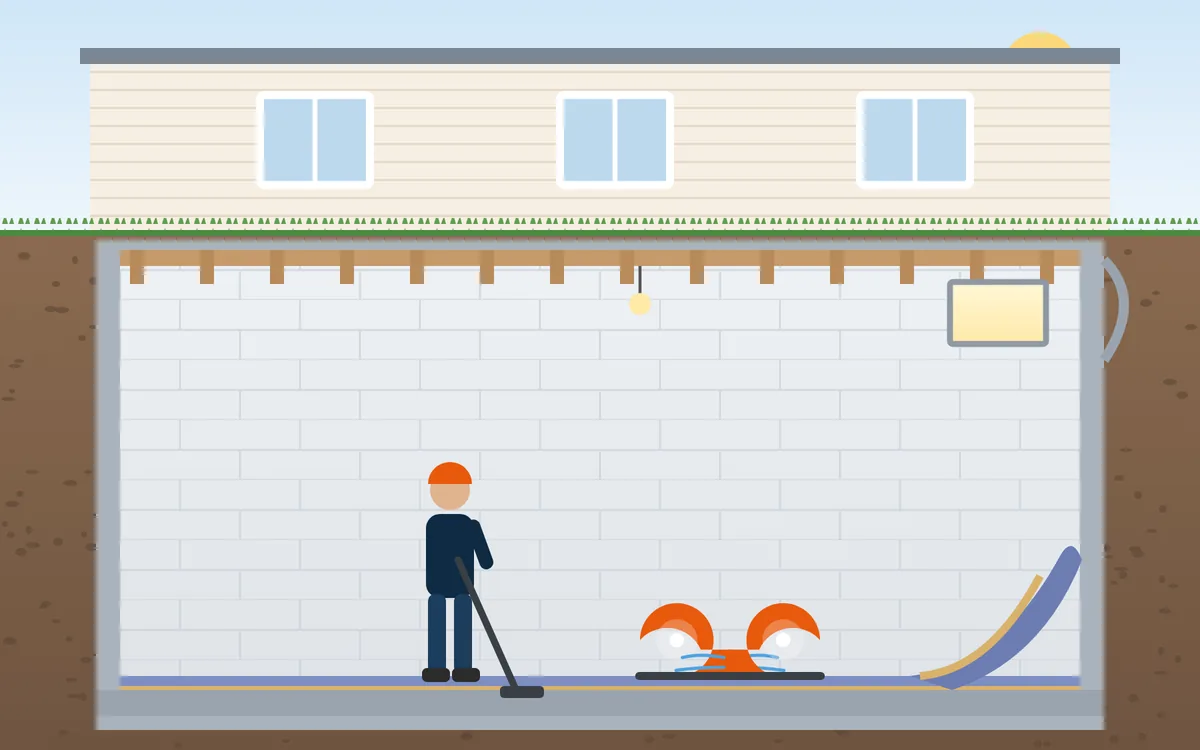
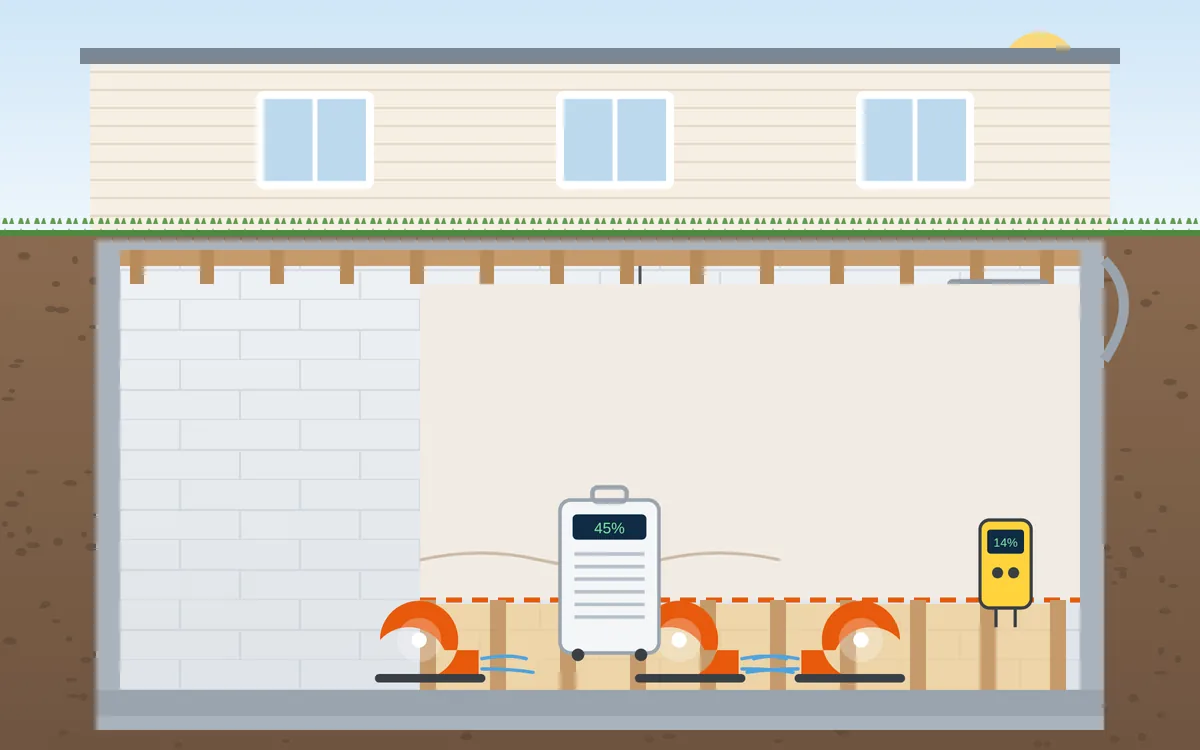
How is water removed from a flooded basement?
Deep water is pumped out first with submersible or trash pumps, then truck-mounted or portable extractors pull remaining water from carpet, pad, and floors. A shop vac only works for small clean-water spills. After extraction, meters check how much water is still in walls and the slab, and that drives the drying plan.
What to Do Right Now
- Confirm the basement power is off from a dry location before anyone steps into standing water.
- Stop the inflow if you can: close the main water valve for a plumbing leak, or check whether the sump pump is running.
- Measure the water depth at the bottom stair with a tape measure and take a photo. It helps the crew bring the right pumps.
- Move rugs, boxes, and furniture off the floor if it's safe. Put foil or blocks under furniture legs that have to stay.
- Don't use a regular household vacuum, and don't run extension cords through the water.
- Call (800) 231-6861 for basement water removal.
Basement Water Removal Methods by Water Depth
The right method depends mostly on how deep the standing water is and what's in it. Using the wrong tool doesn't just waste time. It can leave water in carpet pad and framing that comes back as odor and mold.
| Situation | Typical method | Notes |
|---|---|---|
| Under 1 inch, clean water, small area | Wet/dry vac, squeegee, extraction wand | Fine for a homeowner if it's truly clean water and caught fast. |
| 1 to 6 inches across the floor | Submersible pump, then portable or truck-mounted extractor | Most common basement water extraction scenario. |
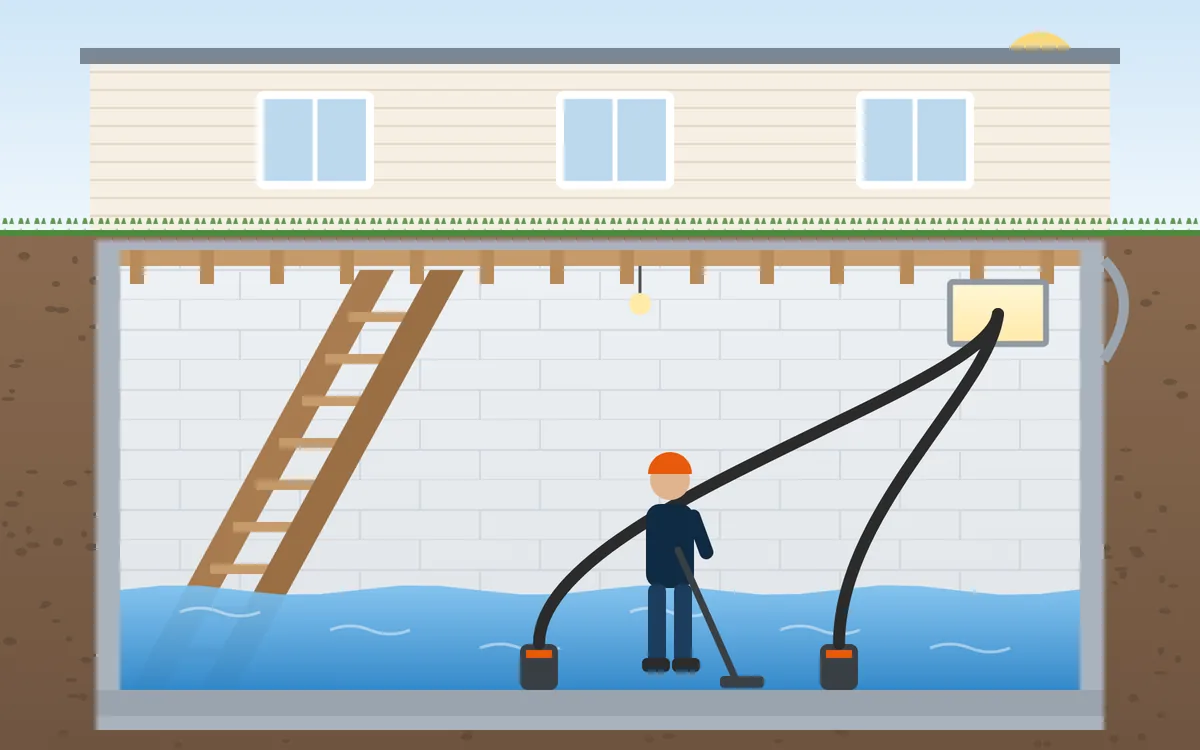
| More than 6 inches or debris present | Trash pump or multiple submersibles, staged pumping | Gas-powered pumps must run outside with hoses brought in. |
| Water soaked into carpet and pad | Weighted extraction tools or a truck-mounted unit | Removes far more water than surface passes. |
| Sewage or outside floodwater | Pumping plus extraction, with protective equipment | Porous materials are usually removed after extraction. |
Pumping Out a Flooded Basement Safely
Pumping out a flooded basement sounds simple: put a pump in the water and run a hose outside. A few details make the difference between a clean pump-out and a new problem.
Where the hose drains
Discharge should go well away from the foundation and downhill, or it just soaks back in. Many cities limit pumping onto sidewalks or into sanitary sewers, so check local rules.
Staged pumping after outside flooding
When soil outside is saturated, it pushes on basement walls. Lowering the water a few feet a day after a major outside flood relieves pressure gradually. This matters after river or flash flooding, not after a burst pipe.
Debris and clogging
Mud, insulation, and leaves clog standard submersibles. Trash pumps and screened intakes keep the water moving.
Basement Water Extraction from Carpet, Pad, and Floors
Once the standing water is gone, the real basement water extraction begins. Carpet pad holds much of a flooded basement's water, and a quick pass with a wet vac barely touches it. Weighted extraction tools and truck-mounted units press down and pull water from the pad and backing. That can turn several days of drying into a much shorter job.
Hard floors get attention too. Water runs under vinyl plank and laminate seams and sits on the slab. Tile grout and the gap under baseboards hold water against the wall. After extraction, a good crew lifts a corner of the flooring or removes a baseboard to check, rather than assuming.
If your carpet may be savable, see basement carpet water extraction and drying for how that decision is made.
Water Category and What Extraction Can Save
Category 1: clean water
Water from a supply line, a water heater, or rain that hasn't touched soil or sewage. Most materials have a real chance of being dried in place if work starts quickly.
Category 2: gray water
Water carrying some contamination: washing machine discharge, dishwasher overflow, or clean water that has sat long enough to start breaking down. Porous materials need a closer look.
Category 3: black water
Sewage, toilet backflow, and outside floodwater that ran across soil. Treat it as unsanitary. Carpet, pad, and wet drywall usually come out.
These three categories come from the ANSI/IICRC S500 standard that the restoration industry uses to describe water. The category decides what can be saved, what protective gear the crew wears, and how much the job costs.
The Basement Water Removal Process, Step by Step
Here is how a professional crew typically handles basement water removal, from arrival to sign-off.
- 1
Confirm safety and the source
Power status, gas, and structural concerns are checked, and the source is stopped or isolated.
- 2
Measure and plan
Water depth, area, and category set the pump choice and discharge route.
- 3
Pump out standing water
Submersible or trash pumps lower the water. Discharge is routed away from the foundation.
- 4
Extract from flooring
Truck-mounted or portable extractors pull water from carpet, pad, and hard floor surfaces.
- 5
Check hidden water
Baseboards, flooring edges, and walls are checked with meters to find trapped water.
- 6
Hand off to drying
Air movers and dehumidifiers are set so the structure dries, and readings are recorded.
Dealing with this right now? Call to be connected with a Colorado cleanup crew and talk through your options.
Call (800) 231-6861After Water Extraction: Why the Job Isn't Done
Pump-out and extraction handle the standing water you can see. It doesn't dry the water that has already moved into drywall, the bottom of framed walls, insulation, and the concrete slab. Concrete is porous and can release moisture for days. That's why extraction is followed by structural drying and dehumidification, with moisture readings to confirm when things are actually dry.
Skipping that step is the most common reason a flooded basement smells musty weeks after it looked fine. If you've already had water pulled out and you're noticing odor, start with sanitization and odor removal.
What Affects Basement Water Removal Cost
| Factor | Effect on cost |
|---|---|
| Gallons and depth of standing water | Sets pump size, number of pumps, and hours on site. |
| Carpet and pad vs. bare concrete | Carpet and pad take more extraction time and may need removal. |
| Debris, mud, or sediment | Needs trash pumps, shoveling, and more cleaning. |
| Water category | Category 3 water adds protective gear, disposal, and disinfection. |
| Access | Narrow stairs, window wells, or long hose runs add setup time. |
| Timing | Night or weekend calls may be priced differently. Ask before work starts. |
Ask for a written scope that lists extraction separately from drying and repairs, so you can compare estimates line by line.
Basement Water Extraction Mistakes to Avoid
- Using a shop vac on a large area and stopping when the surface looks dry.
- Draining pump discharge right next to the foundation.
- Pumping a basement down fast right after major outside flooding.
- Leaving wet pad under carpet that was lifted to dry.
- Plugging pumps into basement outlets that were underwater.
Colorado Factors in Basement Water Removal
Along the Front Range, basement water often follows a summer thunderstorm or a spring stretch of snowmelt, when groundwater and surface runoff peak. In colder mountain towns, a basement pump out in winter brings its own problem: discharge hoses and the ground where water drains can freeze. That means hose routing and drainage location need more thought. If your discharge line froze and caused the flooding, see sump pump failure cleanup.
Reducing the Chance of Another Basement Pump Out
- Keep a working sump pump, and a backup if you depend on one.
- Make sure grading slopes away from the house and downspouts discharge well beyond the foundation.
- Keep floor drains clear and know where your main water shutoff is.
- Store belongings on shelves or in plastic bins, not cardboard on the floor.
Basement Water Removal, Extraction & Pump-Out FAQs
How long does basement water removal take?
Pumping a few inches of water from a typical basement can take hours. Extraction from carpet and pad adds more. Drying afterward usually takes several days and is measured with moisture readings.
Can I use a shop vac to remove basement water?
For a small, clean-water spill caught quickly, yes. For larger areas or any water in carpet pad, professional extractors remove much more water and shorten drying.
Where should basement pump discharge go?
Away from the house and downhill, so it doesn't soak back into the soil against your foundation. Many cities limit pumping into sanitary sewers or onto sidewalks, so check local rules.
Why shouldn't I pump the basement out all at once?
After major outside flooding, saturated soil pushes on basement walls. Removing all the water at once can let that pressure crack or bow the walls. This isn't usually a concern after a burst pipe.
Does basement water extraction remove all the moisture?
No. Extraction removes liquid water. Water already absorbed into drywall, framing, and concrete needs structural drying and moisture monitoring.
What does a basement pump out cost?
It depends on water volume, depth, debris, water category, access, and timing. Ask for an itemized scope instead of a single number.
Is basement water removal covered by insurance?
It follows the cause. Sudden internal leaks are often covered. Sewer backup and outside flooding usually need specific endorsements or flood insurance.
Sources and further reading
- CDC: Floods and your safety
- EPA: Flood Cleanup to Protect Indoor Air Quality
- Ready.gov: Floods
- IICRC: ANSI/IICRC S500 water damage restoration standard
- Colorado Division of Insurance
These public sources were used to check the safety, drying, and insurance information on this page. They are not endorsements of MH Restoration.