What should you do first in a basement flooding emergency?
Stay out of the water until power to the basement is off at a breaker you can reach from dry ground. Then shut off the water if a pipe or appliance is the source, move people and pets upstairs, photograph the damage, and call for emergency water removal. Don't run gas-powered pumps or generators indoors.
What to Do When Your Basement Floods
- Don't step into standing water if it could reach outlets, extension cords, the furnace, or the electrical panel. If you can't reach the breaker from a dry spot, leave it to the utility or an electrician.
- If the water comes from a pipe, water heater, or washer, close the main water shutoff. It's usually where the water line enters the house, often near the water heater or meter.
- If you smell gas, leave the house and call your gas utility from outside.
- Take photos and video of the water level, the room, and damaged items before anything is moved. Insurers ask for this.
- Lift what you can safely reach onto shelves or carry it upstairs, starting with documents, electronics, and anything irreplaceable.
- Call (800) 231-6861 to arrange emergency water removal and drying.
Why Emergency Basement Flood Cleanup Can't Wait
Water doesn't sit still in a basement. It wicks up drywall, soaks into carpet pad, and works its way under baseboards and into the bottom plates of framed walls. The EPA advises drying wet materials within 24 to 48 hours to limit mold growth. In a basement that's a tight window, because the space is cool, short on airflow, and often more humid than the rest of the house.
Speed also changes what's recoverable. Clean water from a burst supply line that's pulled out within hours often leaves carpet, framing, and much of the drywall dryable in place. The same water left over a weekend usually means more tear-out, a longer drying time, and a bigger bill. That's the core reason emergency basement flood cleanup is treated differently from a routine wet basement.
Hour 0 to 2
Safety check, source shutoff, photos, and moving belongings. Extraction starts as soon as the space is safe.
Hours 2 to 24
Standing water is pumped and extracted. Wet pad and saturated materials are identified. Air movers and dehumidifiers go in.
Days 1 to 4
Daily moisture readings. Equipment is moved as areas dry. Materials that won't dry are removed, not sealed in.
Find the Source: What Caused Your Flooded Basement
The source decides almost everything about your flooded basement cleanup: how urgent it is, how contaminated the water is, and whether the problem will come back next week. Most Colorado basement emergencies trace back to one of these:
| Source | What you usually see | Water category |
|---|---|---|
| Burst or split supply pipe | Spraying or steady flow from a ceiling or wall, often after a cold snap | Usually Category 1 |
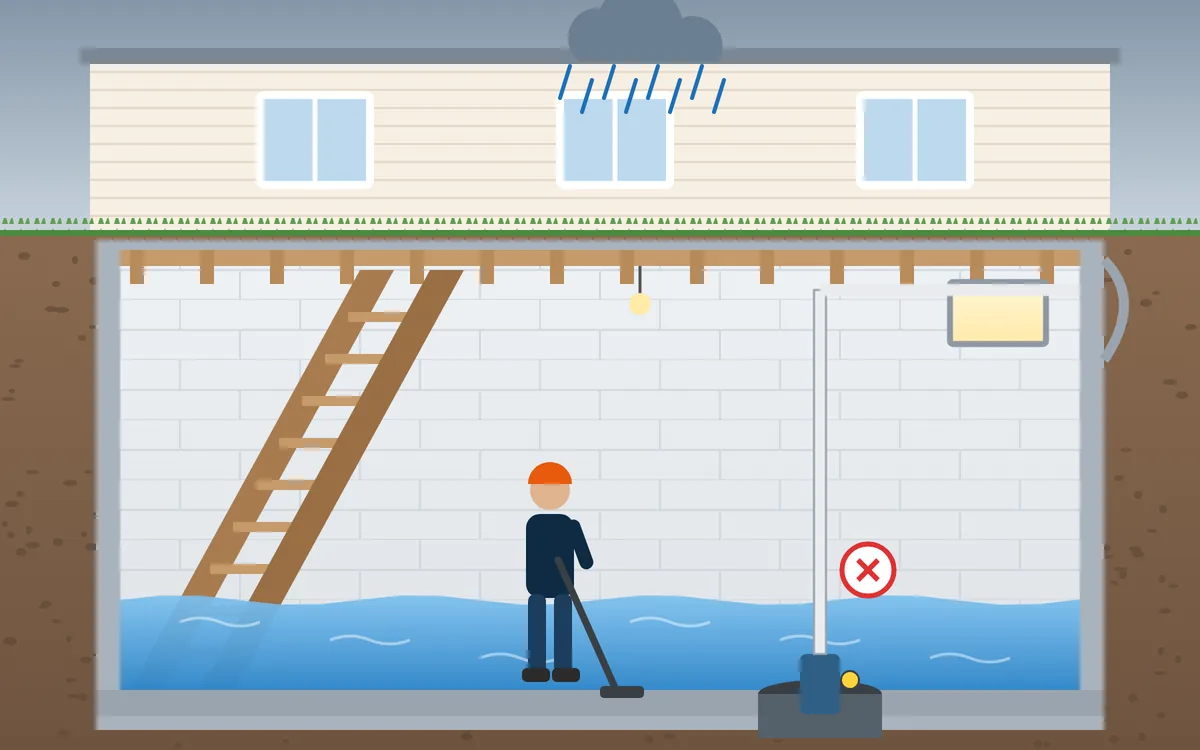
| Sump pump failure | Water rising from the sump pit, often during a storm or power outage | Category 1 to 3 depending on the source |
| Sewer or floor drain backup | Dark water and odor coming up through a floor drain or toilet | Category 3 |
| Storm runoff or window well | Water entering at a window, door, or foundation crack during heavy rain | Category 2 to 3 |
| Groundwater seepage | Water at the wall base or through floor cracks, sometimes without recent rain | Usually Category 1 to 2 |
| Water heater or washer | Pooling around the appliance that spreads across the floor | Category 1 to 2 |
Each of these has its own page with more detail: burst pipe water cleanup, sump pump failure cleanup, sewage backup cleanup, and stormwater and groundwater cleanup.
How Water Category Changes Emergency Basement Flood Cleanup
Category 1: clean water
Water from a supply line, a water heater, or rain that hasn't touched soil or sewage. Most materials have a real chance of being dried in place if work starts quickly.
Category 2: gray water
Water carrying some contamination: washing machine discharge, dishwasher overflow, or clean water that has sat long enough to start breaking down. Porous materials need a closer look.
Category 3: black water
Sewage, toilet backflow, and outside floodwater that ran across soil. Treat it as unsanitary. Carpet, pad, and wet drywall usually come out.
These three categories come from the ANSI/IICRC S500 standard that the restoration industry uses to describe water. The category decides what can be saved, what protective gear the crew wears, and how much the job costs.
Safety Rules for a Basement Flooding Emergency
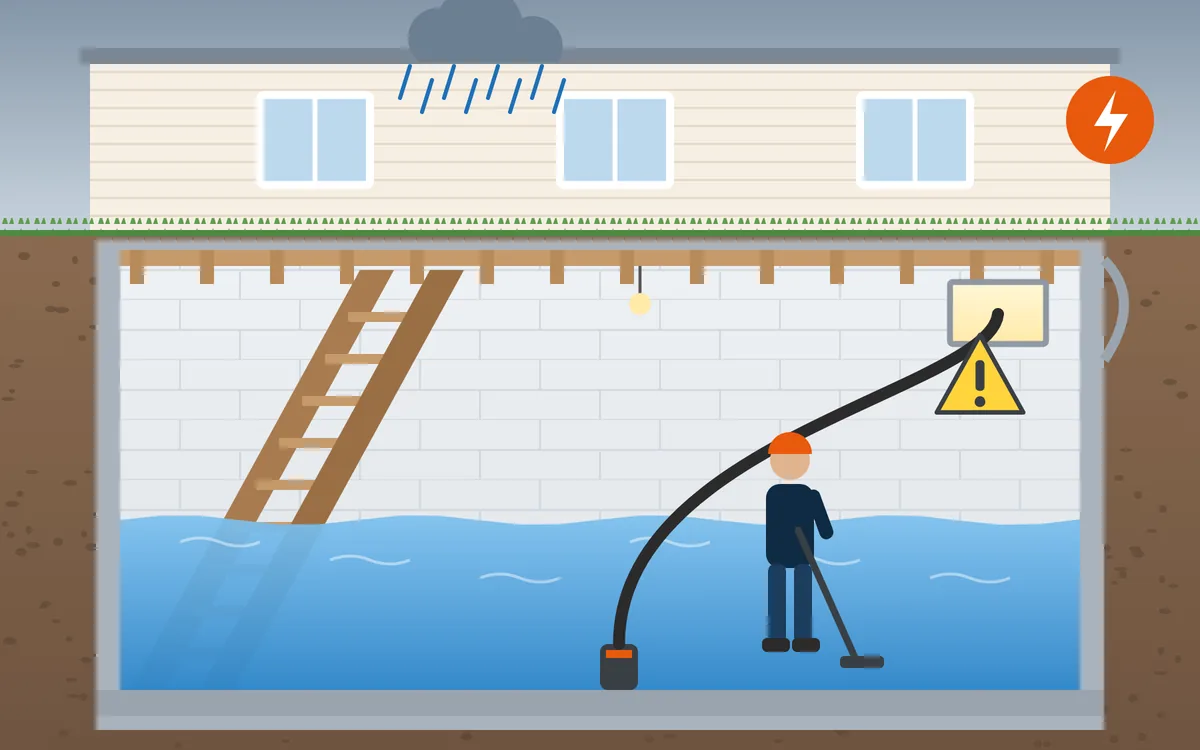
- Turn off basement power only if you can reach the panel without standing in water.
- Never run a gasoline pump, pressure washer, or generator inside, or near a window or door. The CDC warns that carbon monoxide from engines can build up fast in enclosed spaces.
- Wear rubber boots and gloves. If there's any chance of sewage, keep children and pets out entirely.
- Watch for sagging ceilings under a burst pipe. Wet drywall ceilings can collapse.
- Don't use a household vacuum on water. Use a wet/dry vac only for small clean-water spills.
What Emergency Water Removal and Drying Involves
Here is how a professional crew typically handles emergency basement flood cleanup, from arrival to sign-off.
- 1
Safety assessment
The crew confirms power status, checks for gas and structural hazards, and identifies the water source and category before anyone works in the water.
- 2
Stop the source
Supply water is shut off, a failed pump is bypassed, or work is staged around ongoing storm inflow so extraction isn't wasted.
- 3
Emergency water removal
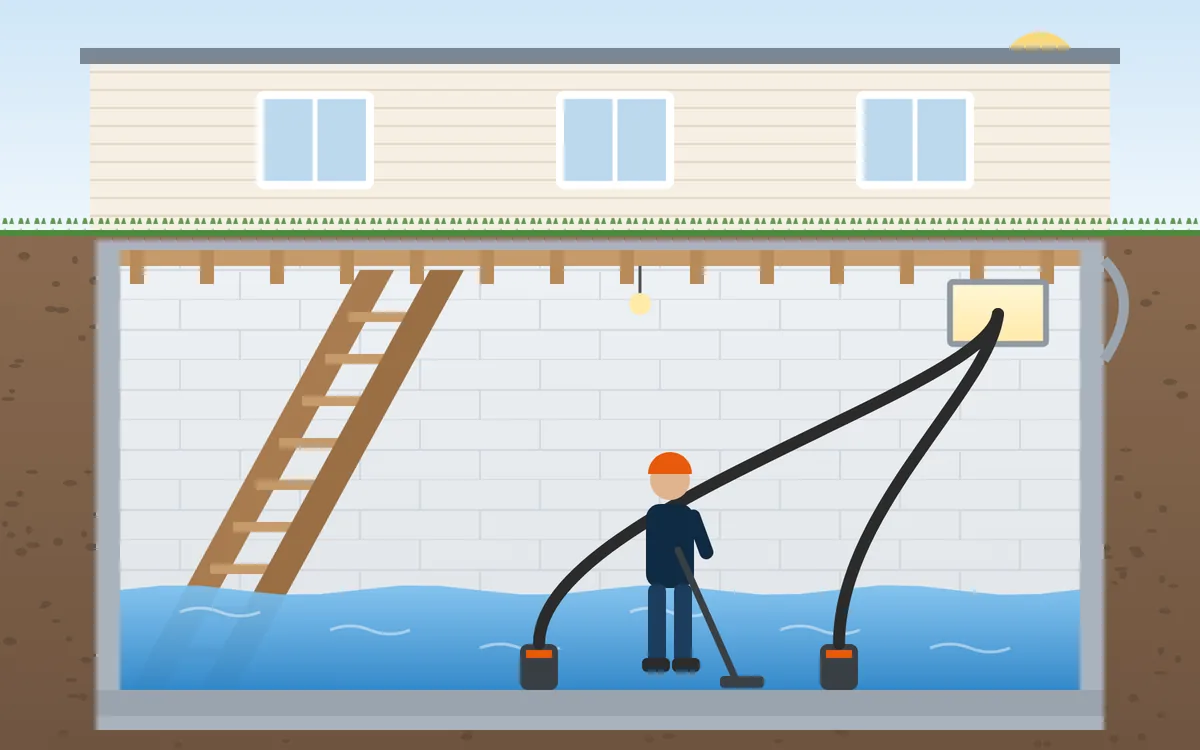
Submersible pumps remove standing water, then extractors pull water from carpet, pad, and hard floors.
- 4
Moisture mapping
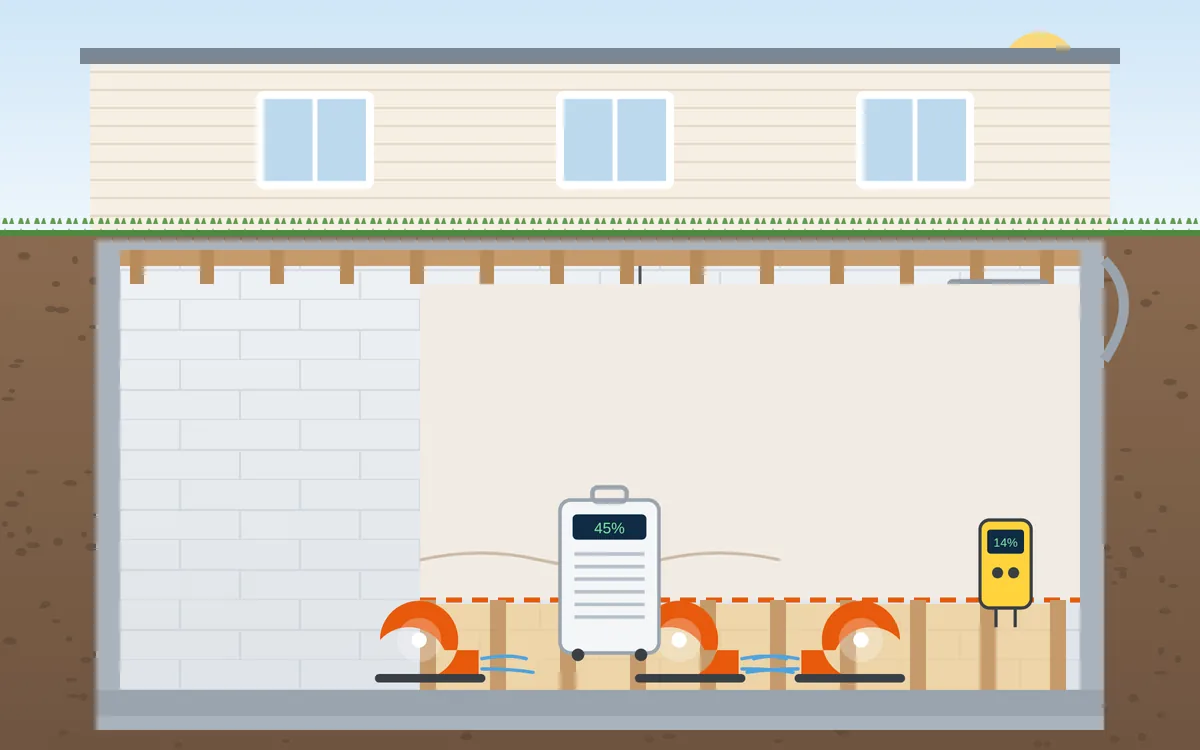
Meters and thermal imaging show how far water has traveled into walls, framing, and slab, so the drying plan covers hidden moisture.
- 5
Remove what won't dry
Saturated pad, wet insulation, and drywall below the wick line are removed. Category 3 water means more comes out.
- 6
Set up structural drying
Air movers and dehumidifiers are placed to dry the structure, not just the air, and the space is closed to hold the drying conditions.
- 7
Monitor and verify
Readings are taken daily until materials reach normal dry levels. Equipment comes out only when the numbers say it's dry.
Dealing with this right now? Call to be connected with a Colorado cleanup crew and talk through your options.
Call (800) 231-6861Equipment Used in Emergency Flooded Basement Cleanup
Professional emergency water removal relies on equipment that most homes don't have. Knowing what should show up helps you judge whether a crew is doing the job fully.
Submersible and trash pumps
For water more than an inch or two deep. Trash pumps handle debris-laden water. Gas pumps stay outside.
Truck-mounted or portable extractors
Pull water out of carpet and pad far better than a shop vac, which shortens drying time.
Air movers
High-velocity fans set at angles along walls to speed evaporation from wet surfaces.
Dehumidifiers (LGR or desiccant)
Remove the moisture the air movers release. Without them, a basement just gets humid.
Moisture meters and thermal cameras
Find wet framing, drywall, and slab that looks dry. Readings guide what stays and what goes.
Containment and HEPA air scrubbers
Used for contaminated water or when damaged materials are removed.
Emergency Basement Flood Cleanup Cost Factors
Nobody can give you an honest price for emergency basement flood cleanup without seeing the space. Price depends on a short list of factors, and you can ask about each one on the phone:
| Factor | Why it changes the price |
|---|---|
| How much water and how deep | More volume means more pumping, extraction time, and soaked material. |
| Water category | Category 3 water adds protective gear, removal of porous materials, and disinfection. |
| Square footage affected | Sets how many air movers and dehumidifiers are needed and for how long. |
| Finished or unfinished space | Drywall, insulation, carpet, and built-ins each need assessment and often removal. |
| How long the water sat | Delays turn dryable materials into tear-out. |
| After-hours timing | Some providers price nights and weekends differently. Ask up front. |
For a full breakdown of how pricing works, see our basement flood cleanup guide.
Insurance After a Flooded Basement Emergency
Coverage depends on where the water came from, not on how bad the damage is. A standard homeowners policy usually treats a sudden burst pipe differently from water that came in from outside. The Colorado Division of Insurance points out that sewer and drain backup is often excluded unless you've added a water-backup endorsement, and that true flood damage from outside water typically requires separate flood insurance, such as a National Flood Insurance Program policy.
- Photograph everything before cleanup starts and keep taking photos as materials are removed.
- Keep damaged items, or at least samples, until your adjuster says otherwise.
- Save every receipt: pumps, fans, hotel, and cleanup invoices.
- Ask the cleanup crew for moisture readings and a written scope of work. These records help a claim.
Common Mistakes in the First Hours
Most of these come from rushing. When you're figuring out what to do when your basement floods, slow down long enough to avoid them.
- Wading in to rescue boxes before the power is confirmed off.
- Running a gas generator or pump in the basement or garage.
- Pulling up carpet and leaving the pad, which holds most of the water.
- Turning the furnace up to dry the basement. Heat without dehumidification raises humidity throughout the house.
- Assuming the basement is dry because the surface feels dry. Framing and slab hold water long after.
- Throwing out damaged items before they're documented for insurance.
Colorado Conditions That Drive Basement Flooding Emergencies
Colorado basement emergencies follow the seasons. Winter cold snaps freeze pipes in unheated basements, crawl spaces, and along exterior walls, and the burst often shows up when temperatures rise and the ice thaws. Spring snowmelt and rising groundwater push water against foundations. Summer brings short, intense thunderstorms that overwhelm gutters, window wells, and storm drains in minutes. The National Weather Service treats flash floods, river floods, snowmelt, and burn-scar debris flows as separate Colorado hazards, and areas below recent wildfire burn scars can see fast runoff and mud even from moderate rain.
Expansive clay soils are common along the Front Range, according to the Colorado Geological Survey. As they swell and shrink they can crack foundations and open new paths for water. If you're dealing with a basement flooding emergency in one of these situations, mention it when you call. It changes the equipment that's needed and whether you also need a drainage or plumbing specialist.
After the Emergency: Preventing the Next One
Knowing what to do when your basement floods is half the job. The other half is making it less likely to happen again.
- Test your sump pump each spring and before monsoon season by pouring water into the pit.
- Add a battery or water-powered backup sump pump if you rely on one.
- Insulate pipes along exterior walls and in unheated spaces. Keep heat on when you travel in winter.
- Extend downspouts several feet from the foundation and keep window wells clear and covered.
- Ask a plumber about a backwater valve if your area has had sewer backups.
- Review your policy for water-backup and flood coverage before you need it.
Emergency Basement Flood Cleanup FAQs
How fast should emergency basement flood cleanup start?
As soon as the space is safe. The EPA's guidance is to dry wet materials within 24 to 48 hours to reduce mold risk, so extraction should begin the same day if at all possible.
Is it safe to stay in the house when the basement floods?
Usually yes for clean water, as long as the electrical hazard is controlled and there's no gas smell. With sewage backup, keep people away from the basement and consider whether the HVAC system is spreading odor or contamination.
Can I pump out my flooded basement myself?
You can remove a small amount of clean water with a wet/dry vac. For deeper water, keep in mind that pumping too fast after outside flooding can stress foundation walls when saturated soil is pushing on them. Pros often lower the water in stages for that reason.
What does emergency water removal cost?
It depends on water volume, category, affected area, materials, and timing. Ask for an itemized scope of work rather than a flat guess over the phone.
Will my homeowners insurance pay for emergency cleanup?
Sudden internal water, like a burst pipe, is often covered. Sewer backup usually needs a water-backup endorsement, and outside floodwater usually needs flood insurance. Check your policy and call your agent early.
What to do when your basement floods at night or on a weekend?
The steps don't change: control the electrical hazard, stop the water source, document the damage, and call for emergency water removal. Ask on the call whether after-hours rates apply.
Should I turn on the furnace or AC to dry the basement?
Not as your drying plan. Heat alone raises humidity. Proper drying pairs air movement with dehumidification and is checked with moisture readings.
What is the difference between emergency cleanup and regular water damage cleanup?
Emergency basement flood cleanup deals with active or recent water and focuses on safety, source control, and getting water out fast. Regular cleanup usually starts after the water is gone and focuses on drying and repairs.
Sources and further reading
- EPA: A Brief Guide to Mold, Moisture and Your Home
- CDC: Floods and your safety
- Colorado Division of Insurance
- FloodSmart (National Flood Insurance Program)
- National Weather Service, Boulder office
- IICRC: ANSI/IICRC S500 water damage restoration standard
These public sources were used to check the safety, drying, and insurance information on this page. They are not endorsements of MH Restoration.