Can I clean up a sewage backup in my basement myself?
For anything more than a small spill on a hard floor, it isn't recommended. Sewage is Category 3 water: porous materials it touched, like carpet, pad, insulation, and wet drywall, usually have to be removed, and the rest needs proper cleaning, disinfection, and drying while wearing protective gear. Household bleach and a mop don't make carpet or drywall safe.
What to Do Right Now
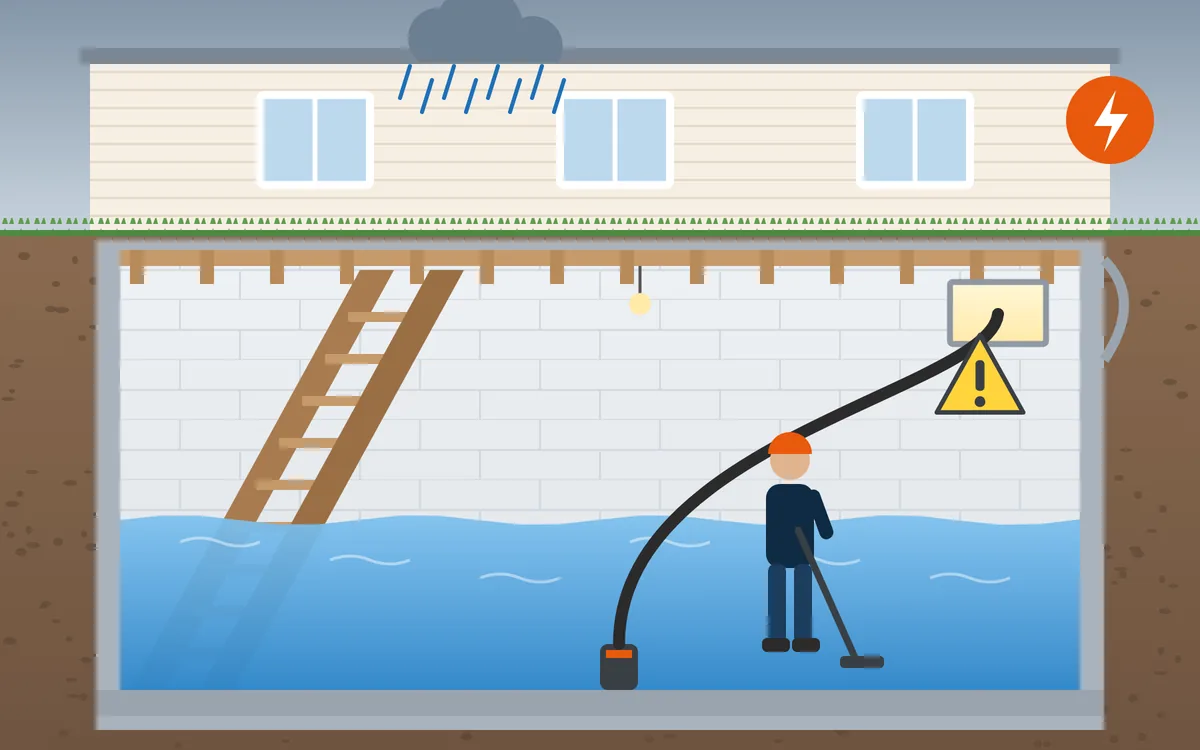
- Stop using water in the house: no flushing, showers, laundry, or dishwasher. Every gallon you use can come out of the floor drain.
- Keep children, pets, and anyone with a weakened immune system away from the basement.
- Don't touch the water with bare skin, and wash thoroughly if you do.
- If the furnace or return air vents are in the affected area, ask whether to shut the HVAC off to avoid spreading odor.
- Call your city's wastewater or utilities department to report it, and call (800) 231-6861 for sewage cleanup.
Why Basement Sewage Backup Cleanup Is Handled Differently
Under the ANSI/IICRC S500 standard, sewage is Category 3 water, the most contaminated class. The CDC warns that floodwater and sewage can carry germs that cause stomach illness and infections, especially through cuts or contact with the eyes and mouth. That changes the cleanup in a few concrete ways:
Protective gear
Gloves, boots, eye protection, and respiratory protection for anyone in the space.
Removal over drying
Porous materials that touched sewage are generally removed and bagged, not dried and kept.
Disinfection
Hard surfaces are cleaned first, then treated with an appropriate disinfectant, then dried.
Containment
Plastic barriers and negative air keep contamination out of the rest of the house during removal.
What Causes a Sewer Backup into the Basement
| Cause | What it often looks like | Who to call first |
|---|---|---|
| Blockage in your private sewer lateral (roots, grease, broken pipe) | Backup only in your home, often at the lowest drain | A licensed plumber or sewer contractor |
| Municipal sewer main overloaded or blocked | Several neighbors affected at once, often during heavy rain | Your city's wastewater or utilities department |
| Storm and groundwater entering sanitary lines | Backups during intense storms | City utilities, then a plumber about a backwater valve |
| Failed sewage ejector pump | Basement bathroom or laundry drains won't empty | Plumber |
Some cities spell out who is responsible for what. Fort Collins Utilities, for example, separates problems in the private sewer service line, which is the property owner's responsibility, from blockages in the city main, and it asks residents to call Utilities when sewage backs up. Check your own city's guidance before paying for a sewer repair.
Category 3 Water and What Has to Go
Category 1: clean water
Water from a supply line, a water heater, or rain that hasn't touched soil or sewage. Most materials have a real chance of being dried in place if work starts quickly.
Category 2: gray water
Water carrying some contamination: washing machine discharge, dishwasher overflow, or clean water that has sat long enough to start breaking down. Porous materials need a closer look.
Category 3: black water
Sewage, toilet backflow, and outside floodwater that ran across soil. Treat it as unsanitary. Carpet, pad, and wet drywall usually come out.
These three categories come from the ANSI/IICRC S500 standard that the restoration industry uses to describe water. The category decides what can be saved, what protective gear the crew wears, and how much the job costs.
| Material | Usual outcome after sewage contact |
|---|---|
| Carpet and pad | Removed and disposed of |
| Drywall and insulation | Removed above the highest wet point |
| Upholstered furniture and mattresses | Usually discarded |
| Wood framing | Cleaned, disinfected, dried; replaced if deteriorated |
| Concrete and tile | Cleaned, disinfected, dried |
| Hard plastics, metal, glass | Often cleanable |
Sewage Cleanup in a Basement: Step by Step
Here is how a professional crew typically handles basement sewage backup cleanup, from arrival to sign-off.
- 1
Stop inflow and protect people
Water use stops, the area is closed off, and the crew wears protective gear before entering.
- 2
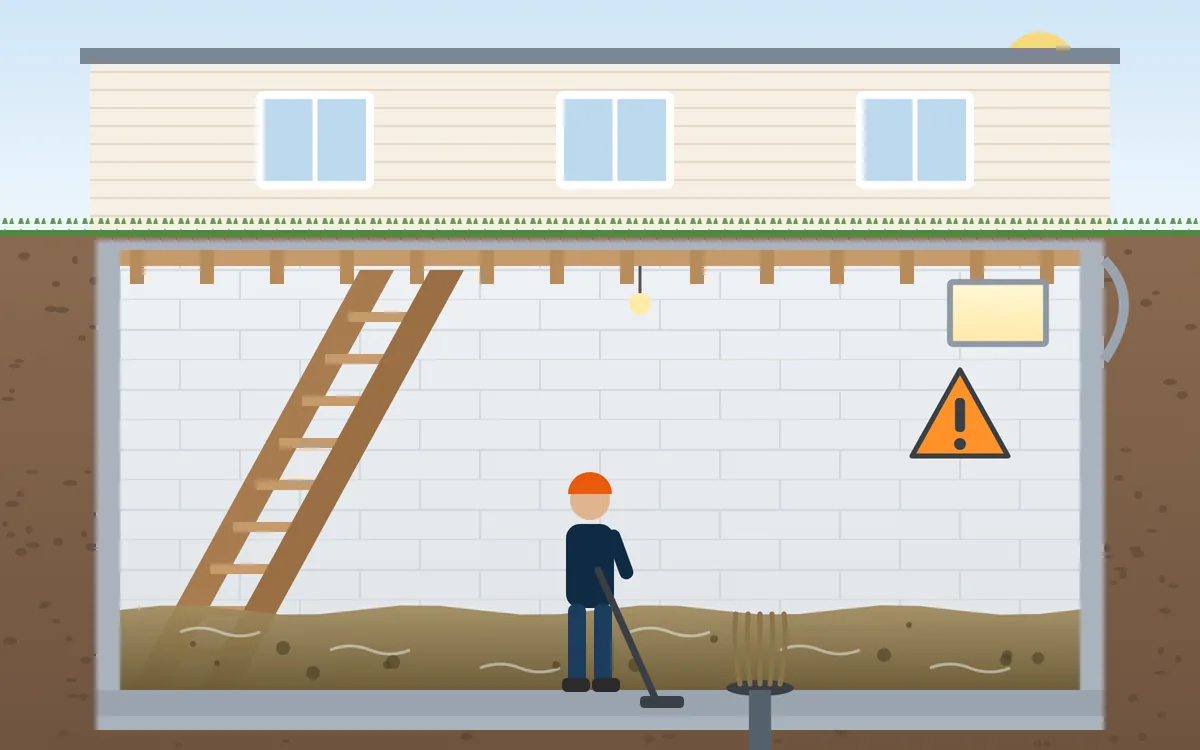
Extract contaminated water
Sewage water and solids are pumped and extracted with equipment kept for contaminated jobs.
- 3
Set up containment
Plastic barriers and negative-air machines with HEPA filters keep contamination in the work area.
- 4
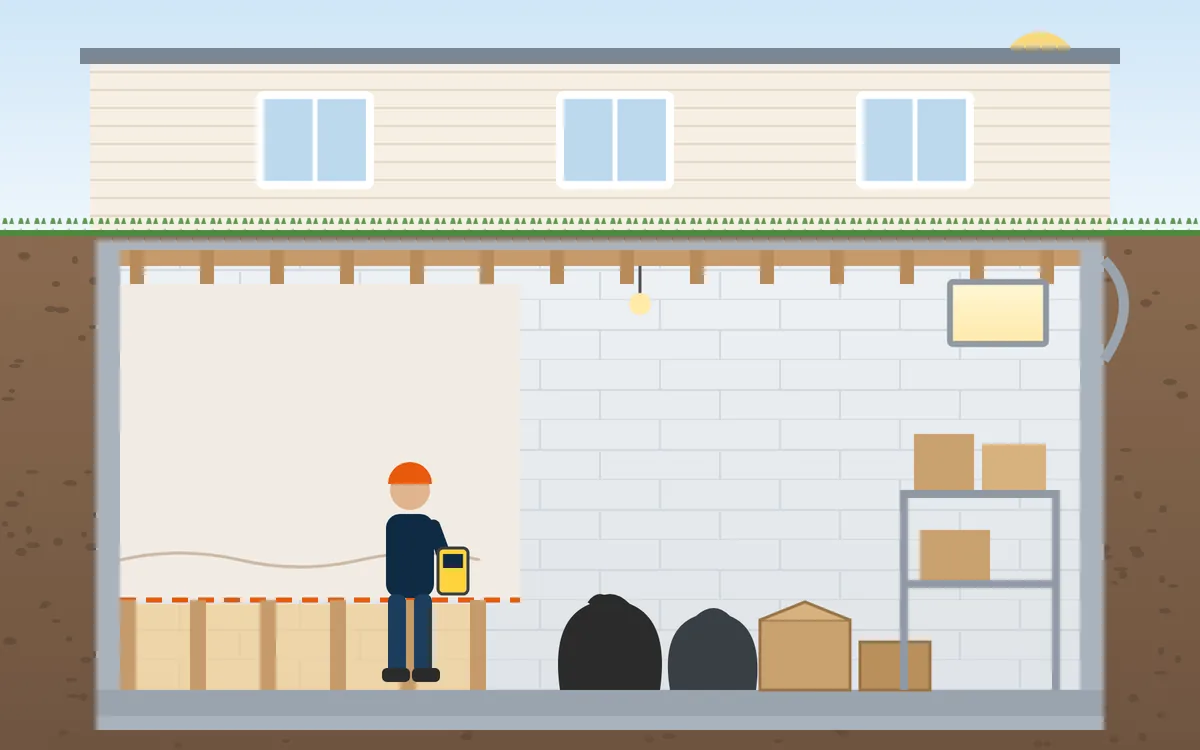
Remove porous materials
Carpet, pad, insulation, and drywall above the highest wet point are removed, bagged, and hauled away.
- 5
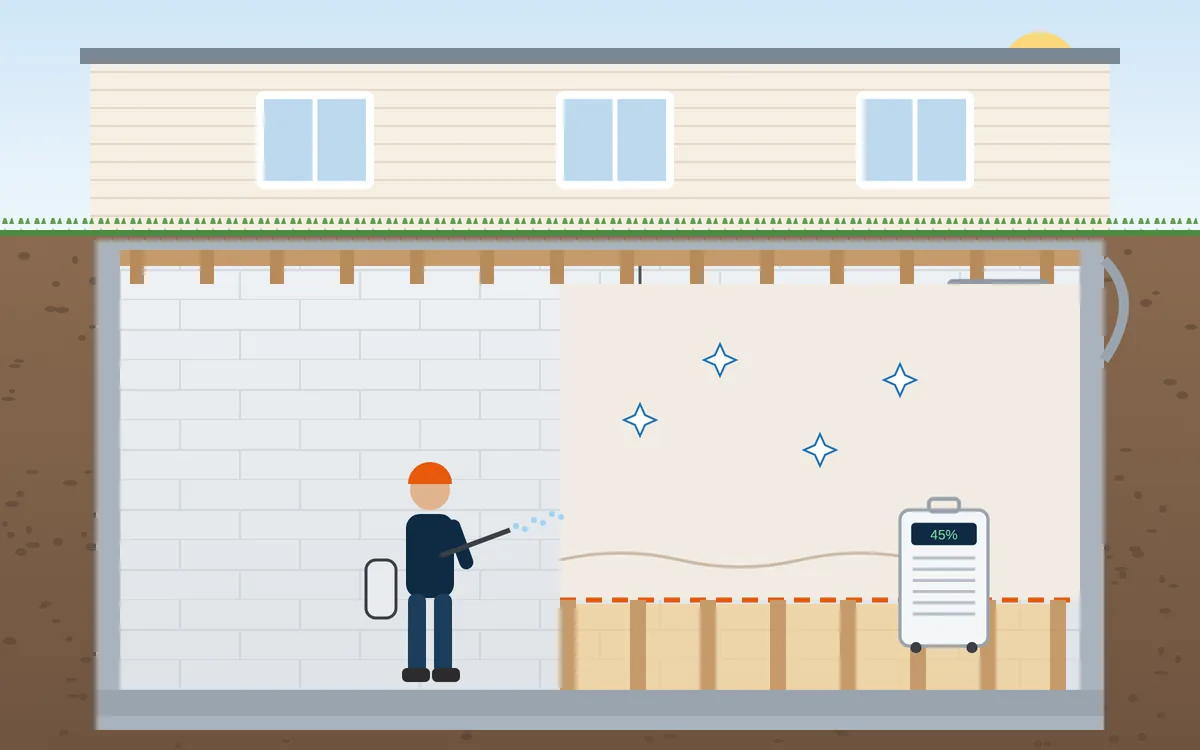
Clean, then disinfect
Hard surfaces are cleaned of residue first, then disinfected. Disinfectant doesn't work well on dirty surfaces.
- 6
Dry and verify
Structural drying runs with moisture readings until the space is dry, ready for rebuild.
Health Precautions During Contaminated Water Cleanup
- Keep the basement closed off until cleanup and disinfection are complete.
- Wash hands thoroughly after any contact. Keep wounds covered.
- Wash clothes worn in the basement separately in hot water.
- Don't eat or drink in the affected area.
- Ask whether HVAC ducts near the floor were exposed, since they may need cleaning.
Dealing with this right now? Call to be connected with a Colorado cleanup crew and talk through your options.
Call (800) 231-6861Sewer Backup Cleanup Cost Factors
Contaminated water cleanup usually costs more than clean-water extraction of the same size, because more material is removed and disposed of and every step takes longer with protective equipment.
| Factor | Why it matters |
|---|---|
| Affected area and wall height | More drywall, insulation, and flooring removal. |
| Finished basement contents | Furniture, rugs, and stored items often have to be discarded. |
| Containment and air scrubbing | Protects the rest of the home during removal. |
| Disinfection and drying | Applied to every exposed hard surface, then dried and verified. |
| Plumbing repair | Clearing or repairing the line is usually a separate plumbing cost. |
Is Sewage Backup Covered by Insurance?
Often, only if you've added coverage for it. The Colorado Division of Insurance notes that many standard homeowners policies exclude damage from water that backs up through sewers or drains unless the policy has a water-backup endorsement. Flood insurance through the National Flood Insurance Program covers flood events, but its coverage in basements is limited. Read your declarations page for a water-backup or sewer-backup endorsement and its limit, and call your agent early, ideally before basement sewage backup cleanup begins.
- Photograph the water, the drain it came from, and every damaged item.
- Keep a sample of carpet and pad if the adjuster may want to see it.
- Save the plumber's report on the cause, such as roots in the lateral or a city main blockage.
- Request an itemized scope that separates removal, disinfection, drying, and rebuild.
Basement Sewage Backup Cleanup Mistakes to Avoid
- Trying to shampoo or bleach sewage-soaked carpet and keep it.
- Running the house's water while the drain is still backed up.
- Mixing bleach with ammonia-based cleaners, which creates toxic gas.
- Drying and rebuilding without disinfecting first.
- Skipping the plumber, so the line backs up again next storm.
Preventing Another Basement Sewage Backup
Good basement sewage backup cleanup repairs the damage. Prevention keeps you from paying for it twice.
- Ask a plumber about a backwater valve on your main sewer line.
- Have the sewer lateral camera-inspected if you have large trees or an older clay or cast-iron line.
- Keep grease, wipes, and paper towels out of drains and toilets.
- Make sure downspouts and sump pumps don't discharge into the sanitary sewer.
- Add or raise your water-backup endorsement limit.
Basement Sewage Backup & Contaminated Water Cleanup FAQs
Is a sewage backup in the basement dangerous?
Yes. Sewage is Category 3 water and can carry bacteria and viruses. Keep people and pets away, avoid skin contact, and leave cleanup of porous materials to properly equipped crews.
Can sewage-soaked carpet be cleaned and kept?
In almost all cases, no. During basement sewage backup cleanup, carpet and pad that contacted sewage are removed and discarded, along with most other porous materials.
Who pays when the city sewer backs up into my basement?
It depends on your city's rules, the cause, and your insurance. Report it to your city's wastewater department, document everything, and check your policy for a water-backup endorsement.
Is sewage backup covered by insurance in Colorado?
Often only with a water-backup endorsement. Many standard policies exclude it without one. Check your policy and ask your agent.
How long does sewer backup cleanup take?
Removal and disinfection usually happen over a day or two, followed by several days of drying. Rebuild comes after the space is verified dry.
Should I use bleach after a sewage backup?
Cleaning comes before disinfecting, and bleach is only suitable for some hard surfaces. Never mix it with ammonia products. It doesn't make porous materials safe.
Can I stay in my house during sewage cleanup?
Often yes, if the work area is contained and the HVAC isn't spreading odor. People with health concerns may want to stay elsewhere during removal.
Sources and further reading
- CDC: Floods and your safety
- EPA: Flood Cleanup to Protect Indoor Air Quality
- IICRC: ANSI/IICRC S500 water damage restoration standard
- Colorado Division of Insurance
- FloodSmart (National Flood Insurance Program)
- City of Fort Collins Utilities
These public sources were used to check the safety, drying, and insurance information on this page. They are not endorsements of MH Restoration.