Why is water coming up through my basement floor?
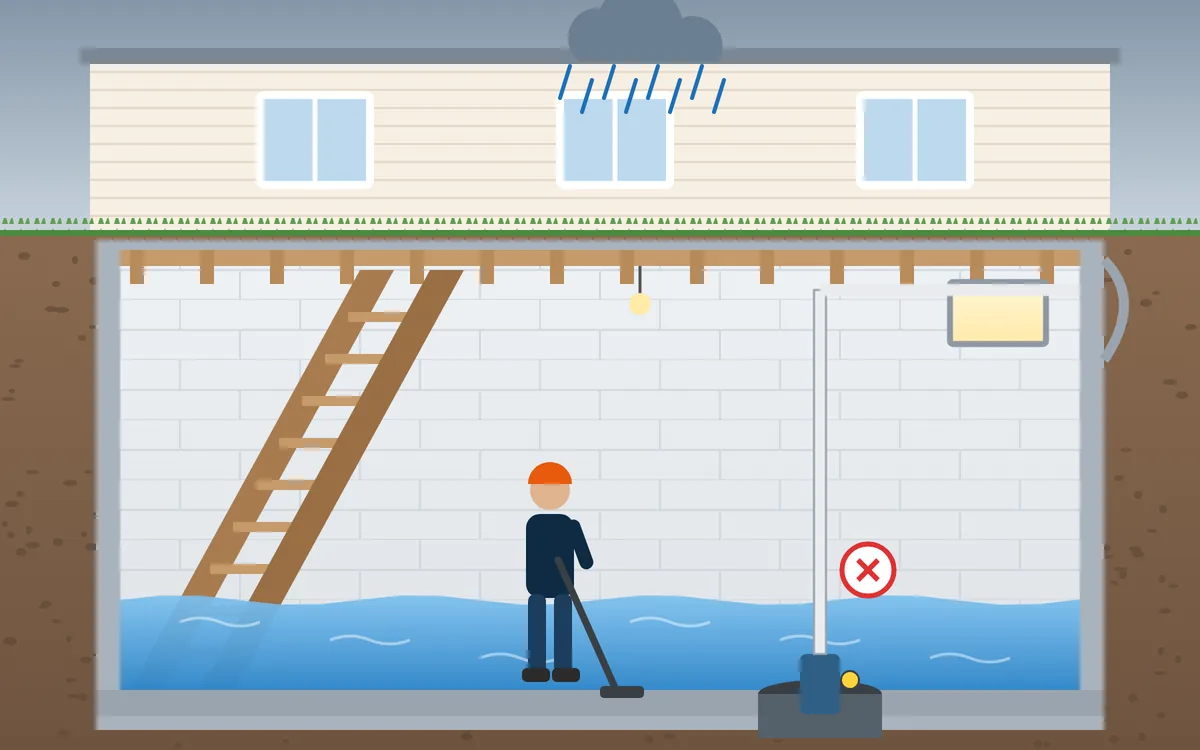
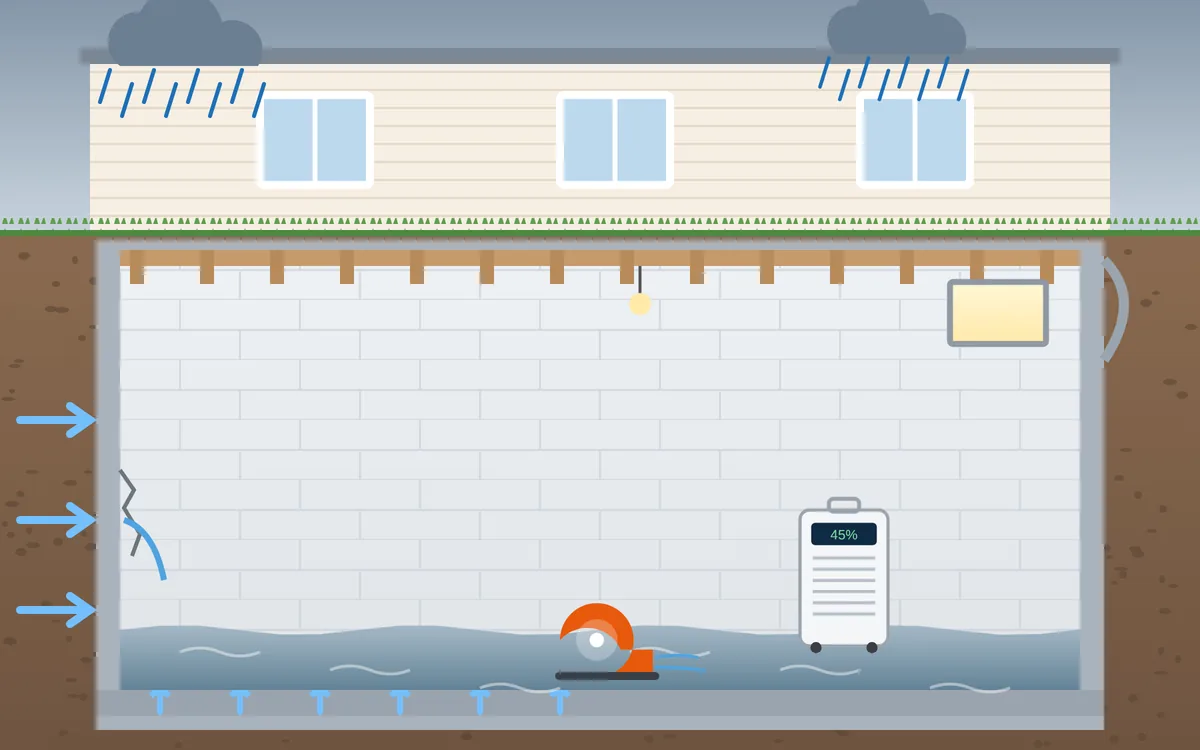
Usually because groundwater around and under the house has risen high enough to push through cracks, the joint where the floor meets the wall, or the slab itself. That push is called hydrostatic pressure. It often follows heavy rain or snowmelt, but in some areas, including parts of Boulder, groundwater can rise even without recent rain. A plumbing leak can look similar, so the source should be confirmed.
What to Do Right Now
- Check for an obvious plumbing source first: run your finger along supply lines and look at the water heater. If nothing's leaking, outside water is likely.
- Note where water is entering: a window well, a wall crack, the floor-wall joint, or the middle of the slab. Take photos and short videos.
- Clear leaves from window wells and make sure downspouts are attached and pointed away from the house, if you can do it safely in the weather.
- Confirm your sump pump is running and discharging outside.
- Call (800) 231-6861 for basement groundwater flood cleanup.
Stormwater vs. Groundwater: Two Different Basement Problems
People use these terms loosely, but they behave differently and call for different follow-up after the cleanup.
| Stormwater (surface water) | Groundwater | |
|---|---|---|
| Where it comes from | Rain and snowmelt running over the ground | Water in the soil around and under the foundation |
| When it shows up | During or right after storms | During wet seasons, and in some places even without rain |
| Typical entry points | Window wells, doors, wall cracks, poor grading | Floor cracks, floor-wall joint, through the slab |
| What usually fixes it | Grading, gutters, downspouts, window well covers | Interior or exterior drainage, sump system, waterproofing |
| Water category | Often Category 2 to 3 once it crosses soil | Often Category 1 to 2 |
Water in basement after rain points toward surface water and drainage. Water that appears days after a storm, or seeps steadily from the floor, points toward groundwater and hydrostatic pressure.
Common Ways Outside Water Gets into Colorado Basements
Window wells
Wells fill with rain or snowmelt when their drains clog or they lack covers, then water pours past the window seal.
Grading and downspouts
Soil that slopes toward the house, or downspouts that dump at the foundation, send water straight to the walls.
Foundation cracks
Front Range swelling clay soils and freeze-thaw cycles can open cracks in walls and slabs over time.
The floor-wall joint
The seam where the slab meets the foundation wall is a common seepage path under hydrostatic pressure.
Overwhelmed sump systems
Pumps that are undersized, failed, or discharging too close to the house can't keep up during long wet stretches.
Burn-scar runoff
Below recent wildfire burn scars, the National Weather Service warns of rapid runoff and debris flows even from moderate rain.
Groundwater Seepage Without Rain: A Documented Colorado Issue
The City of Boulder documents that groundwater in some parts of the city can rise unpredictably, sometimes during periods without recent precipitation, and that managing groundwater on private property is the owner's responsibility. The city also limits certain sump pump discharge arrangements. Boulder isn't one of our listed service areas, but nearby foothill and creek-corridor communities with similar soil and drainage can see the same pattern. If water shows up in your basement on a dry day, groundwater seepage is a real possibility, not a mystery.
Is Stormwater Contaminated?
Category 1: clean water
Water from a supply line, a water heater, or rain that hasn't touched soil or sewage. Most materials have a real chance of being dried in place if work starts quickly.
Category 2: gray water
Water carrying some contamination: washing machine discharge, dishwasher overflow, or clean water that has sat long enough to start breaking down. Porous materials need a closer look.
Category 3: black water
Sewage, toilet backflow, and outside floodwater that ran across soil. Treat it as unsanitary. Carpet, pad, and wet drywall usually come out.
These three categories come from the ANSI/IICRC S500 standard that the restoration industry uses to describe water. The category decides what can be saved, what protective gear the crew wears, and how much the job costs.
Rain that runs across lawns, driveways, and soil before entering the basement picks up fertilizer, oil, and bacteria. Outside floodwater is treated as Category 3. Clean groundwater seeping through the slab is usually less contaminated, but if it has sat for days it can degrade.
The Basement Groundwater Flood Cleanup Process
Here is how a professional crew typically handles basement groundwater flood cleanup, from arrival to sign-off.
- 1
Identify the entry point
The crew looks at where water entered and checks for plumbing sources so the cleanup plan fits the cause.
- 2
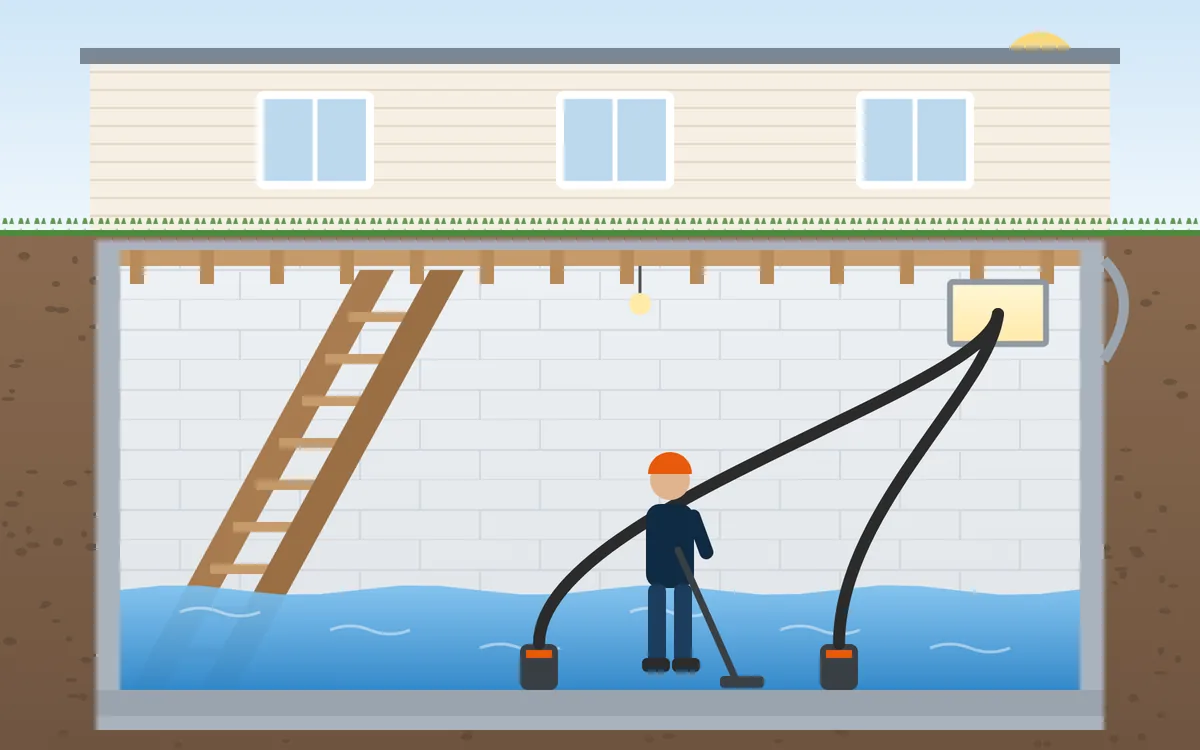
Remove water, in stages if needed
Standing water and sediment are removed. After outside flooding, pumping is staged to reduce wall pressure.
- 3
Clean mud and debris
Sediment is shoveled and washed out, and contaminated surfaces are cleaned and disinfected.
- 4
Remove wet porous materials
Drywall, insulation, and carpet along affected walls are removed where they can't be dried.
- 5
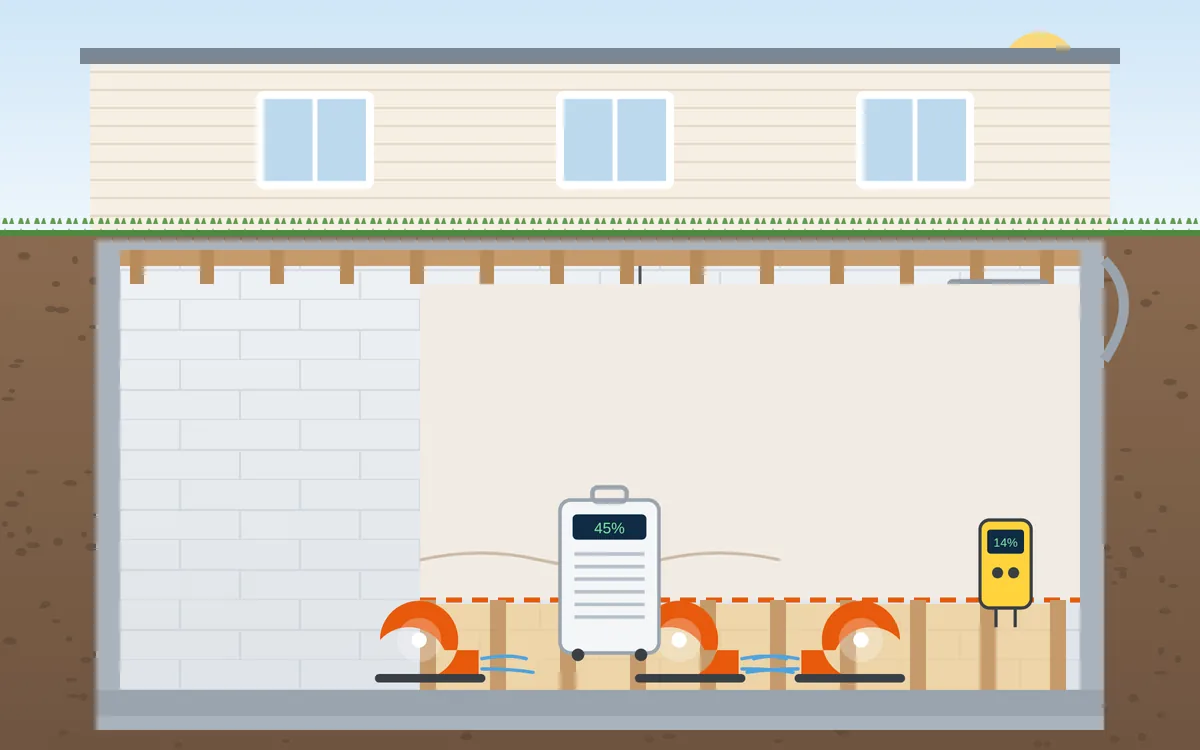
Dry the structure
Air movers and dehumidifiers run with daily moisture readings, paying attention to exterior walls and the slab.
- 6
Document for follow-up
Entry points and moisture data are recorded so a drainage or waterproofing contractor can address the cause.
Dealing with this right now? Call to be connected with a Colorado cleanup crew and talk through your options.
Call (800) 231-6861Hydrostatic Pressure and Why Pumping Speed Matters
When soil around a basement is saturated, the water in it presses against the walls and slab. That's hydrostatic pressure. After major outside flooding, pumping a full basement dry in one go removes the water pushing back from inside, and the outside pressure can crack or bow walls. FEMA and many flood-recovery guides recommend lowering the water gradually, roughly a few feet a day, when the ground outside is still waterlogged. This applies after river or flash flooding. It isn't a concern after ordinary seepage of a few inches.
Hydrostatic pressure is also the usual answer when homeowners ask why is water coming up through my basement floor. The slab and the floor-wall joint are the weakest points, so pressurized groundwater finds them first. Good basement groundwater flood cleanup records exactly where the water appeared, because that location tells a drainage contractor where to look.
What Affects Basement Groundwater Flood Cleanup Cost
| Factor | Effect |
|---|---|
| Volume and category of water | Outside floodwater means more removal and disinfection. |
| Mud and sediment | Adds shoveling, hauling, and cleaning time. |
| Ongoing inflow | If water keeps coming in, crews may need to work around it or return. |
| Finished materials | Drywall, insulation, and flooring along exterior walls often take the hit. |
| Follow-up drainage work | Waterproofing or drainage is a separate trade and separate cost. |
Insurance for Water from Outside
This is where many homeowners get surprised. Standard homeowners policies commonly exclude surface water and flooding from outside the home. The Colorado Division of Insurance points homeowners toward separate flood insurance for that risk, and its July 2026 advisory specifically warned about higher flood and mudflow risk below wildfire burn scars. National Flood Insurance Program coverage in basements is limited mostly to structural elements and essential equipment such as furnaces, water heaters, and sump pumps. It generally excludes finished flooring and most stored belongings. If your sump pump failed, a water-backup endorsement may apply instead. Check your policy before basement groundwater flood cleanup starts, so you know what to document.
Basement Groundwater Flood Cleanup Mistakes That Make Problems Worse
- Cleaning up repeatedly without tracking when and where the water enters.
- Sealing interior walls with paint-on coatings and assuming the problem is solved.
- Running sump discharge next to the foundation so it cycles right back in.
- Finishing a basement that has a known seepage problem.
- Pumping a fully flooded basement dry immediately after outside flooding.
Reducing Stormwater and Groundwater Entry
- Regrade soil so it slopes away from the foundation.
- Extend downspouts well past the foundation and keep gutters clear.
- Install window well covers and keep well drains open.
- Size the sump pump for your conditions and add a backup.
- Get a drainage or waterproofing assessment if seepage recurs.
- If you live below a burn scar, sign up for local emergency alerts and review flood coverage.
Basement Stormwater & Groundwater Flood Cleanup FAQs
Why is water coming up through my basement floor?
Most often, groundwater under hydrostatic pressure pushes through slab cracks or the floor-wall joint. Plumbing leaks under the slab can look similar, so the source should be confirmed.
Why do I get water in my basement after rain?
Usually grading, downspouts, window wells, or foundation cracks are sending surface water toward the walls. Track exactly where it enters to find the fix.
Can groundwater come into my basement when it hasn't rained?
Yes. Groundwater levels rise with snowmelt, irrigation, and seasonal patterns, and in some Colorado areas they can rise without recent rain.
Does basement flood cleanup stop groundwater seepage?
No. Cleanup removes the water and dries the structure. Stopping seepage takes drainage, sump, or waterproofing work.
Is stormwater in the basement dangerous?
Outside water that crossed soil and pavement is treated as contaminated. Avoid skin contact and have porous materials it touched assessed.
Is basement seepage covered by insurance?
Gradual seepage is often excluded. Sudden water from a failed sump may fall under a water-backup endorsement, and outside flooding usually needs flood insurance.
Should I seal my basement walls from the inside?
Interior coatings can reduce minor dampness but don't stop water under real hydrostatic pressure. Get a drainage assessment first.
Sources and further reading
- National Weather Service, Boulder office
- Colorado Division of Insurance
- FloodSmart (National Flood Insurance Program)
- Colorado Geological Survey: swelling soils
- EPA: Flood Cleanup to Protect Indoor Air Quality
- Ready.gov: Floods
These public sources were used to check the safety, drying, and insurance information on this page. They are not endorsements of MH Restoration.