Why did my sump pump fail?
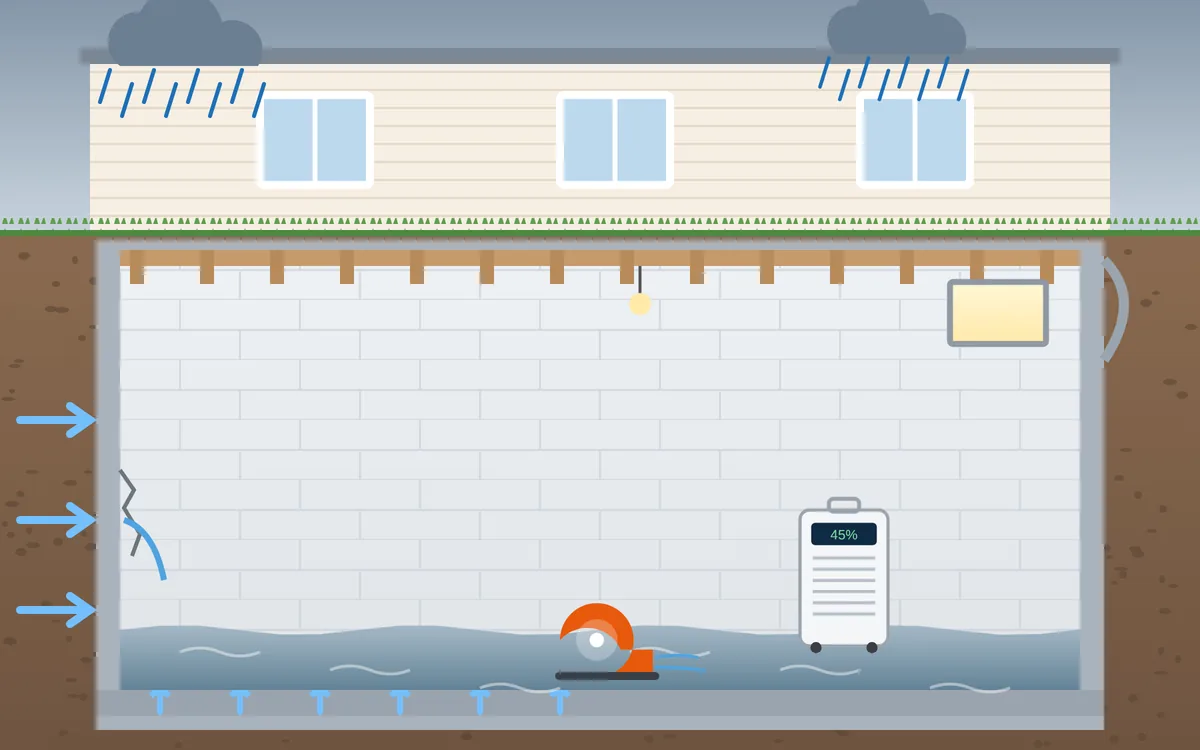
The most common reasons are a power outage during a storm, a stuck or broken float switch, a clogged or frozen discharge line, a pump too small for the inflow, or simply an old pump that wore out. A tripped breaker or GFCI outlet is also common. Check those first, then have the pump inspected before relying on it again.
What to Do Right Now
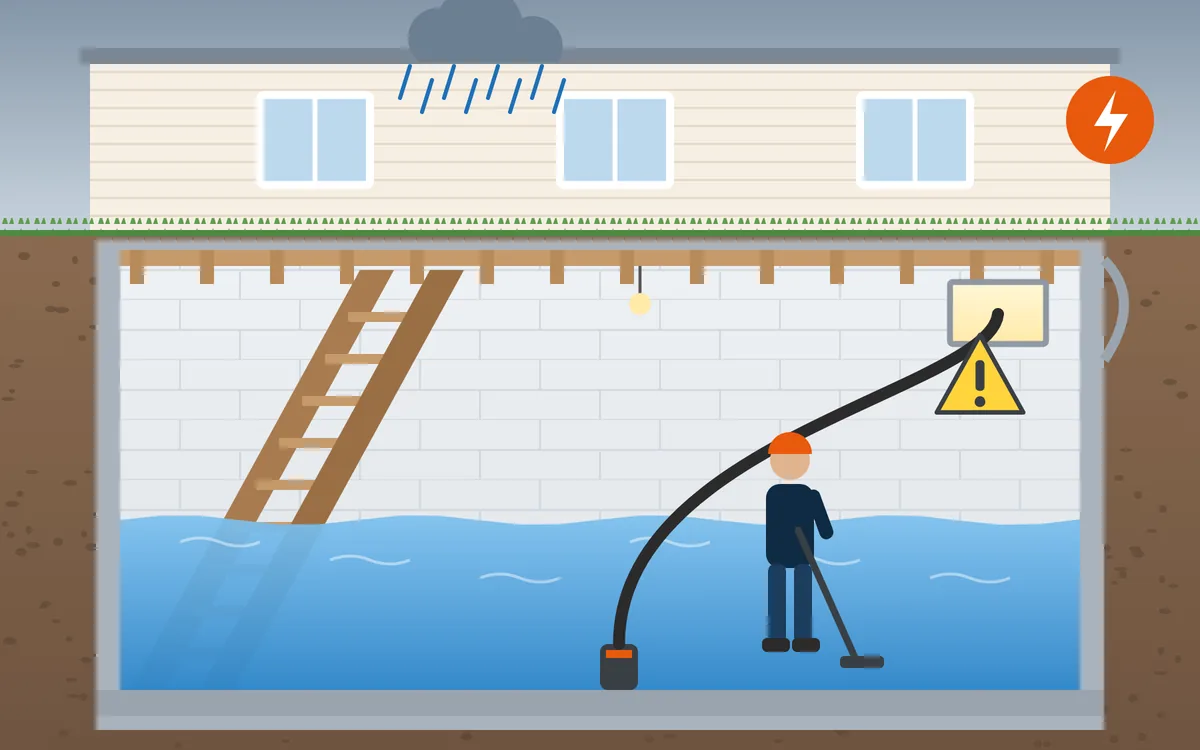
- Don't reach into the sump pit or touch the pump while it's plugged in and standing in water.
- If the power is out, a battery backup sump pump or portable generator running outside can help. Never run a generator indoors.
- If you have power, check whether the breaker tripped or the GFCI outlet the pump plugs into needs resetting.
- Look outside at the discharge pipe. If it's frozen, crushed, or buried in snow, water can't leave.
- Call (800) 231-6861 for sump pump failure cleanup.
Why Did My Sump Pump Fail? The Usual Causes
| Cause | Signs | Fix to discuss |
|---|---|---|
| Power outage | Pump silent during a storm; house power out | Battery or water-powered backup sump pump |
| Tripped breaker or GFCI | Other basement outlets dead too | Reset; have an electrician check repeated trips |
| Stuck or failed float switch | Water high in the pit, pump silent or running nonstop | Clear debris; replace switch or pump |
| Clogged or frozen discharge line | Pump runs but water level doesn't drop | Clear line; add freeze protection at the outlet |
| Undersized or worn pump | Can't keep up in heavy rain; runs constantly | Larger pump, second pump, or backup |
| Failed check valve | Water flows back into the pit after each cycle | Replace check valve |
A pump that runs constantly during dry weather can mean groundwater is high, or that the check valve is letting the same water cycle back. Both shorten pump life.
Sump Pump Failure in Colorado Conditions
Colorado puts specific stress on sump systems. Spring snowmelt and summer thunderstorms bring the biggest inflow. Winter brings a less obvious risk: discharge lines that run above ground or end in a shallow outlet can freeze, so the pump runs against a blocked pipe until it burns out or the pit overflows. Some Colorado cities also regulate where sump water may discharge. Boulder, for example, restricts certain connections. Check local rules before rerouting a line.
The Sump Pump Failure Cleanup Process
Here is how a professional crew typically handles sump pump failure cleanup, from arrival to sign-off.
- 1
Make the pit area safe
Power to the pump is disconnected before anyone works near the pit, and the water category is confirmed.
- 2
Restore pumping
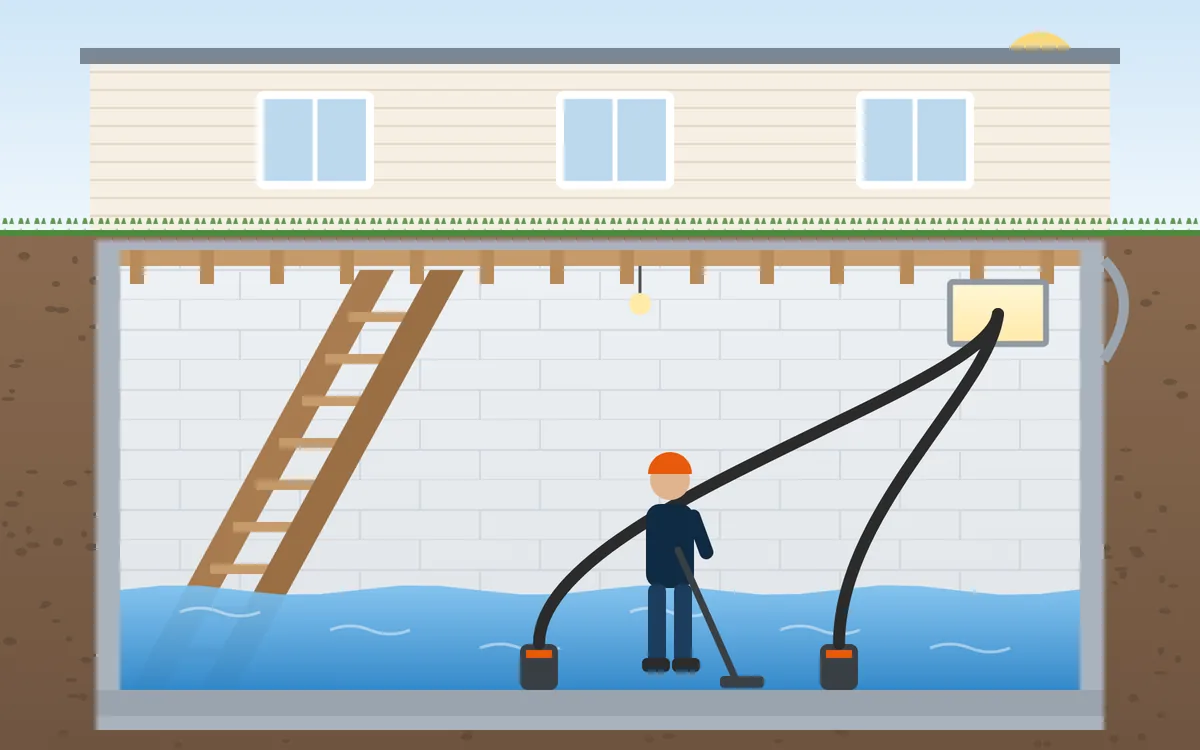
A temporary pump keeps the pit from refilling while the failed pump is diagnosed.
- 3
Remove standing water
Water is pumped and extracted from floors, carpet, and pad around the pit and beyond.
- 4
Diagnose the failure
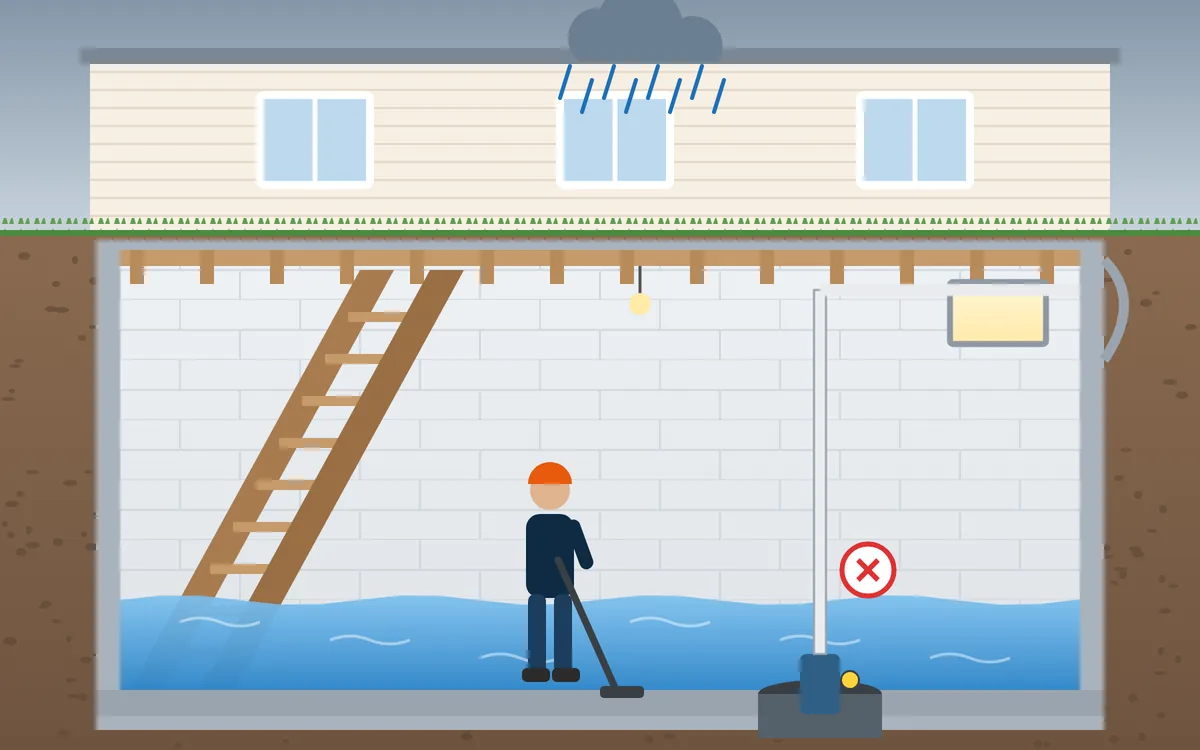
Float, power, check valve, and discharge line are checked so you know what to repair or replace.
- 5
Remove and dry
Materials that won't dry are removed. Air movers and dehumidifiers run with daily moisture readings.
- 6
Verify and recommend
Final readings are recorded, and backup or alarm options are discussed.
What Kind of Water Came Out of the Sump Pit?
Category 1: clean water
Water from a supply line, a water heater, or rain that hasn't touched soil or sewage. Most materials have a real chance of being dried in place if work starts quickly.
Category 2: gray water
Water carrying some contamination: washing machine discharge, dishwasher overflow, or clean water that has sat long enough to start breaking down. Porous materials need a closer look.
Category 3: black water
Sewage, toilet backflow, and outside floodwater that ran across soil. Treat it as unsanitary. Carpet, pad, and wet drywall usually come out.
These three categories come from the ANSI/IICRC S500 standard that the restoration industry uses to describe water. The category decides what can be saved, what protective gear the crew wears, and how much the job costs.
Sump pits collect groundwater, which is usually fairly clean. But if the water rose high enough to mix with floor-drain water, or sat for days, it should be treated as more contaminated. That affects whether carpet and drywall can be saved.
Battery Backup Sump Pump and Other Safeguards
Battery backup sump pump
A second pump on a battery that takes over when power fails or the main pump quits. Battery runtime is limited, so it's a bridge, not a permanent solution during long outages.
Water-powered backup
Uses municipal water pressure to pump the pit with no electricity. It needs good water pressure and adds to your water use.
High-water alarm
An inexpensive alarm that sounds when water rises above normal. It often buys enough time to act.
Second primary pump
For basements with heavy inflow, a second pump in the same or a separate pit adds capacity.
Freeze-protected discharge
Burying the line below frost depth or adding a freeze-resistant outlet keeps winter discharge flowing.
Annual testing
Pour water into the pit until the float lifts. Watch the pump start, empty the pit, and shut off.
Dealing with this right now? Call to be connected with a Colorado cleanup crew and talk through your options.
Call (800) 231-6861Sump Pump Failure Cleanup Cost Factors
| Factor | Effect |
|---|---|
| How long the pump was down | Hours of overflow versus a full storm cycle changes the water volume. |
| Finished vs. unfinished | Water spreading under carpet and drywall raises costs. |
| Water category | Mixed or sitting water means more material removal. |
| Pump repair or replacement | Separate from cleanup, usually handled by a plumber. |
| Drying time | Depends on materials and how far water traveled from the pit. |
Insurance and a Flooded Basement from Sump Pump Failure
Many standard homeowners policies exclude water that backs up or overflows from a sump pump unless you've added a water-backup endorsement. The Colorado Division of Insurance lists this as one of the coverage gaps homeowners should check. Endorsements often carry a specific dollar limit, so check the amount, not just whether you have one. Flood insurance generally covers outside flooding, not a pump that failed on a dry day.
Mistakes After a Sump Pump Failure
- Replacing the pump without finding why it failed.
- Running a generator in the garage or basement to power the pump.
- Letting the discharge line end right next to the foundation.
- Skipping drying because the water level went down once the pump restarted.
- Assuming insurance covers it without a water-backup endorsement.
Preventing the Next Sump Pump Failure
- Test the pump each spring and before monsoon season.
- Add a battery backup sump pump and a high-water alarm.
- Keep the sump pit free of debris and make sure the float moves freely.
- Protect the discharge line from freezing and route it well away from the house.
- Replace aging pumps on a schedule rather than waiting for failure.
Basement Sump Pump Failure Cleanup FAQs
Why did my sump pump fail?
Power loss, a tripped breaker or GFCI, a stuck float switch, a clogged or frozen discharge line, a failed check valve, or an undersized or worn pump are the usual causes.
How do I know if my sump pump is working?
Pour a bucket of water into the pit. The float should rise, the pump should start, empty the pit, and shut off. If it doesn't, have it serviced.
Is a battery backup sump pump worth it?
If your basement depends on a sump pump, a battery backup covers the most common failure, a storm-related power outage. Runtime is limited, so check its rating.
Can I use a generator for my sump pump?
Yes, if it runs outdoors well away from windows, doors, and vents. Never run a generator in a basement or garage.
How long does sump pump failure cleanup take?
Water removal often takes a day. Drying usually takes several more days depending on how far the water spread.
Does insurance cover sump pump failure?
Often only with a water-backup endorsement. Check your policy and its limit.
How often should a sump pump be replaced?
It depends on the pump and how often it runs. Many homeowners replace pumps every several years, sooner if the pump runs constantly.
Sources and further reading
- Colorado Division of Insurance
- CDC: Floods and your safety
- IICRC: ANSI/IICRC S500 water damage restoration standard
- EPA: A Brief Guide to Mold, Moisture and Your Home
These public sources were used to check the safety, drying, and insurance information on this page. They are not endorsements of MH Restoration.