Can wet carpet be saved?
Sometimes. Carpet that got wet with clean water and is extracted and dried within about 24 to 48 hours often can be saved, though the pad underneath is usually replaced. Carpet soaked by sewage or outside floodwater, carpet that stayed wet for days, or carpet with delaminated backing generally can't be saved and should be removed.
What to Do Right Now
- Turn off power to the area if outlets or cords are near the wet carpet.
- Lift furniture off the carpet, or put foil or plastic blocks under the legs to stop stains and rust marks.
- Pull back a corner at the wall to check the pad. If it squishes, it's saturated.
- Don't walk on wet carpet more than necessary. It can stretch and the backing can separate.
- Call (800) 231-6861 for basement carpet water extraction.
Can Wet Carpet Be Saved? The Decision Factors
| Factor | Better odds of saving | Usually replaced |
|---|---|---|
| Water source | Clean supply line, water heater | Sewage, outside floodwater, drain backup |
| Time wet | Extracted within hours | Wet for more than 48 hours |
| Backing condition | Backing still bonded | Delaminated, bubbling, or rippled |
| Odor | No odor after drying | Musty or sour odor |
| Carpet type | Synthetic broadloom | Natural fibers, some rugs, glue-down carpet |
| Pad | Rarely saved | Usually replaced |
These are the same factors professionals use. They come straight from the water category and time-wet principles in the ANSI/IICRC S500 standard.
Why Carpet Padding Usually Goes
Carpet padding is foam or rebond built to absorb, which is exactly what you don't want during a flood. It holds much of the water in a wet basement carpet, dries slowly, and is cheap compared with carpet. That's why the pad is usually removed even when the carpet stays. Removing it also lets the slab underneath dry, which it can't do with a soaked pad pressed against it. New pad is installed once the slab is verified dry.
Water Category and Wet Basement Carpet
Category 1: clean water
Water from a supply line, a water heater, or rain that hasn't touched soil or sewage. Most materials have a real chance of being dried in place if work starts quickly.
Category 2: gray water
Water carrying some contamination: washing machine discharge, dishwasher overflow, or clean water that has sat long enough to start breaking down. Porous materials need a closer look.
Category 3: black water
Sewage, toilet backflow, and outside floodwater that ran across soil. Treat it as unsanitary. Carpet, pad, and wet drywall usually come out.
These three categories come from the ANSI/IICRC S500 standard that the restoration industry uses to describe water. The category decides what can be saved, what protective gear the crew wears, and how much the job costs.
The Basement Carpet Water Extraction Process
Here is how a professional crew typically handles basement carpet water extraction, from arrival to sign-off.
- 1
Identify the water
Source and category decide whether carpet is extracted for drying or removed.
- 2
Extract thoroughly
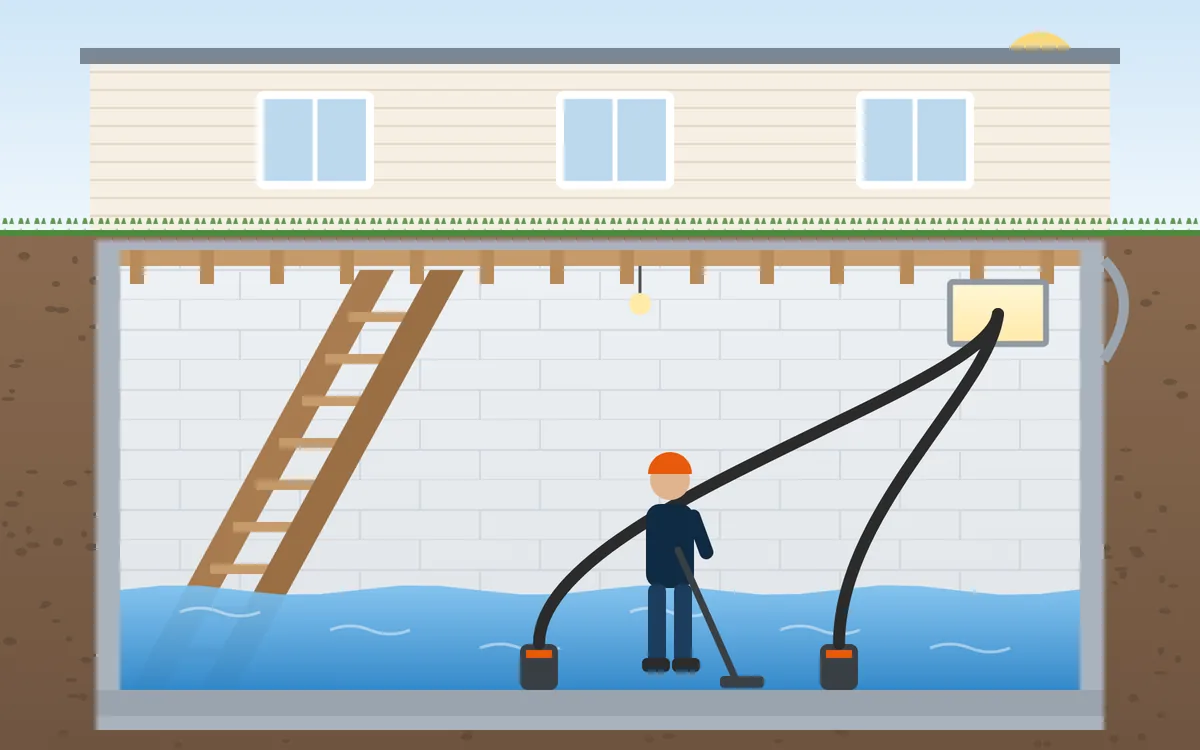
Weighted extraction tools or a truck-mounted unit pull water from carpet and pad, with repeated passes.
- 3
Lift and remove pad
Carpet is released from tack strip, and saturated pad is cut out and removed.
- 4
Dry the slab and carpet
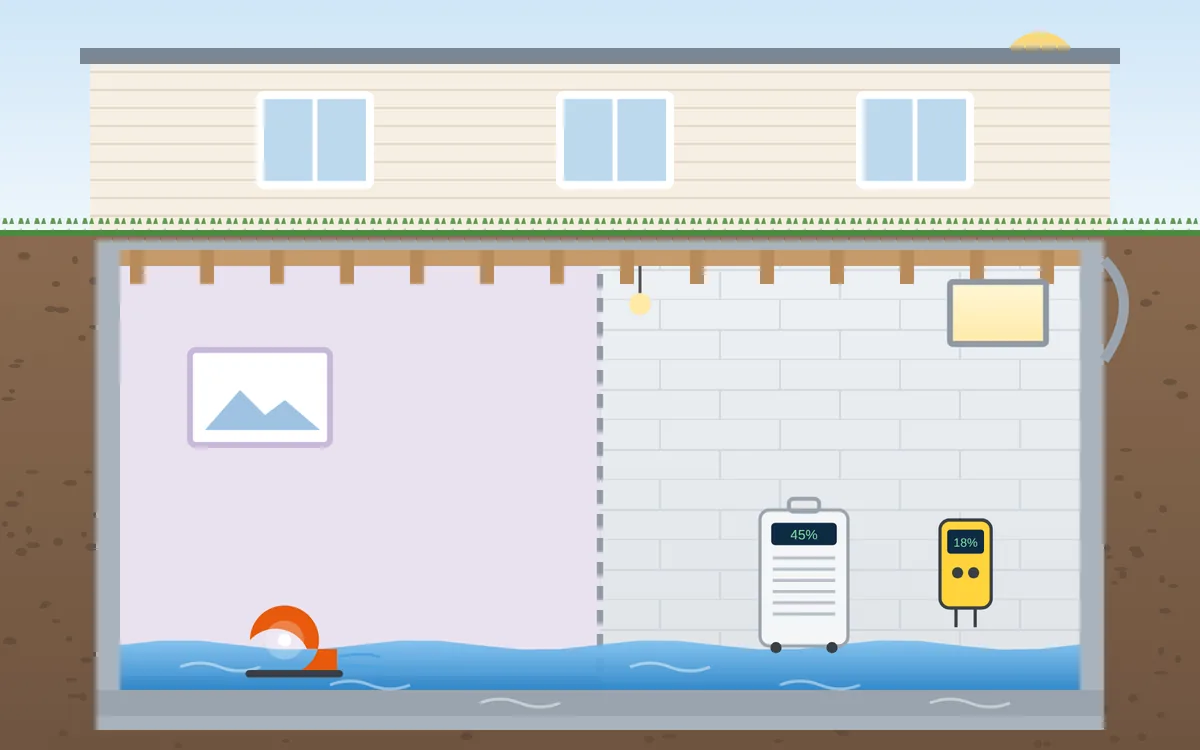
Carpet is float-dried with air movers underneath, while dehumidifiers dry the air and slab.
- 5
Check and clean
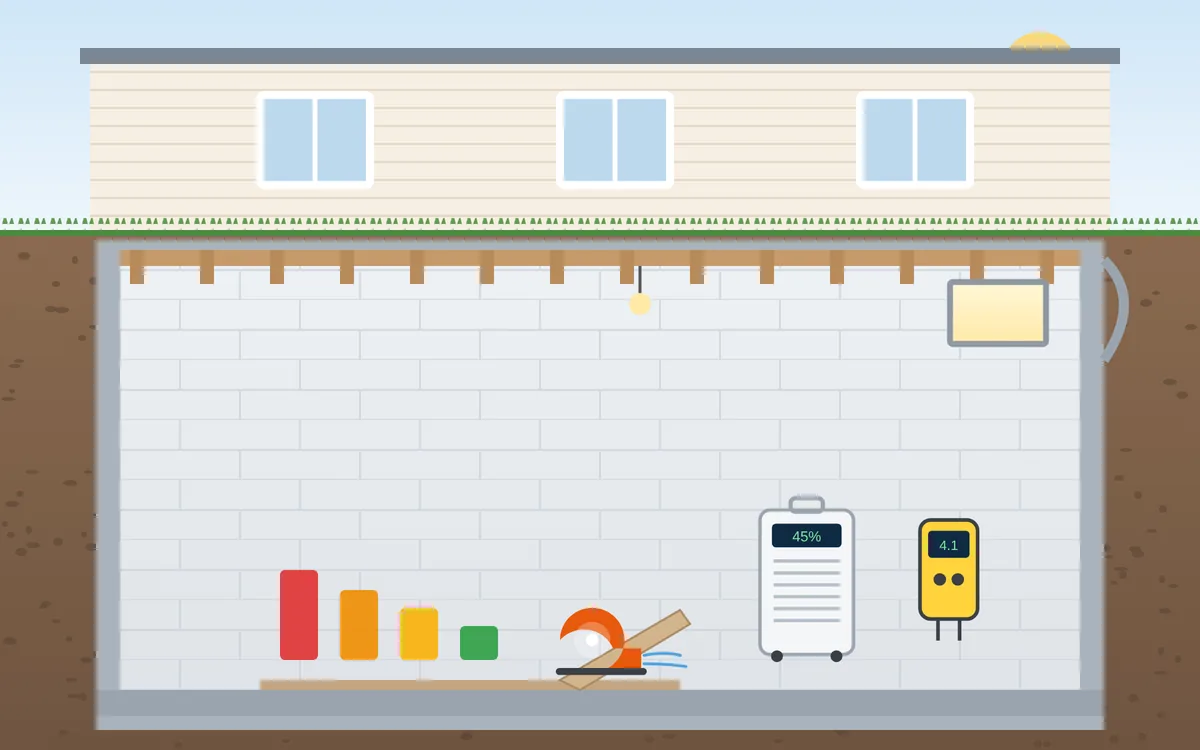
Carpet and slab are checked with meters. Clean-water carpet is cleaned or treated as needed.
- 6
Reinstall
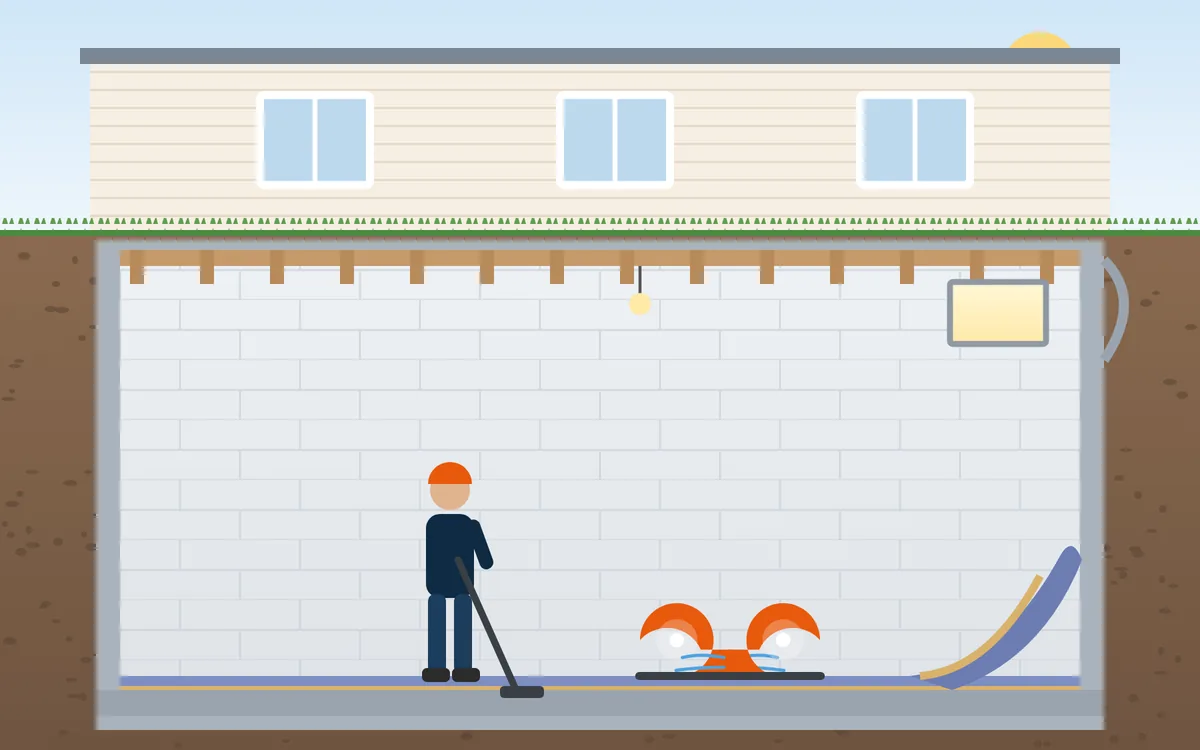
New pad is installed on a dry slab, and carpet is re-stretched and seamed.
Carpet Drying Methods
Float drying
Carpet is lifted and air is blown underneath it, drying both sides while the pad is replaced. Common for clean-water jobs.
Top-down drying
Specialized mats pull air through the carpet and pad in place. Used selectively when the pad is worth saving.
Remove and dispose
For contaminated water or failed backing. The slab is then cleaned and dried on its own.
Whichever method is used, carpet drying should be paired with dehumidification. Fans alone move moisture into the basement air, where it can soak into drywall.
Dealing with this right now? Call to be connected with a Colorado cleanup crew and talk through your options.
Call (800) 231-6861Carpet Extraction and Drying Cost Factors
| Factor | Effect |
|---|---|
| Square footage | More carpet, more extraction and drying time. |
| Pad replacement | Material and labor for new pad after drying. |
| Contamination | Contaminated carpet is removed and disposed of. |
| Furniture moving | Heavy furniture adds labor. |
| Reinstallation and stretching | Carpet that was floated often needs re-stretching. |
Wet Carpet Mistakes
- Drying the carpet while leaving soaked pad underneath.
- Using a household carpet cleaner to extract flood water.
- Keeping carpet that contacted sewage.
- Laying new pad over a damp slab.
- Running fans without a dehumidifier in a closed basement.
Carpet in Colorado Basements
Carpet is still common in finished Front Range basements, and many homeowners replace it after a flood. If your basement has flooded from groundwater or storm entry more than once, think about switching to waterproof vinyl plank, tile, or sealed concrete with area rugs. Colorado's dry air helps carpet dry once it's extracted. But basements run cooler and more humid than the rest of the house, so drying basement carpet still needs dehumidification.
Protecting Basement Carpet in the Future
- Use area rugs on sealed or waterproof flooring in flood-prone basements.
- Fix the source: sump pump capacity, grading, or plumbing.
- Keep furniture on non-wicking glides.
- Install leak sensors near water heaters and washers.
Basement Carpet Water Extraction & Drying FAQs
Can wet carpet be saved?
Clean-water carpet extracted and dried quickly often can be. Carpet soaked by sewage or outside floodwater, or wet for days, is usually replaced.
Do I have to replace the carpet pad?
Usually yes. Pad holds the most water, dries slowly, and is inexpensive compared to carpet.
How long does it take to dry basement carpet?
With proper extraction and equipment, carpet drying usually takes a few days. The slab underneath may take longer.
Can I use a carpet cleaner to dry wet carpet?
Household carpet cleaners aren't built for flood volumes and can leave the pad saturated. Use professional extraction for anything beyond a small spill.
Will wet carpet grow mold?
It can if it stays wet more than a day or two. Fast extraction and drying greatly lower that risk.
Should I pull up wet carpet myself?
You can lift a corner to check, but pulling carpet can tear it and expose you to contaminated water. Let the crew handle removal if the water was dirty.
Is wet basement carpet covered by insurance?
It depends on the cause of the water. Sudden plumbing leaks are often covered. Sewer backup or outside flooding needs specific coverage.
Sources and further reading
- IICRC: ANSI/IICRC S500 water damage restoration standard
- EPA: A Brief Guide to Mold, Moisture and Your Home
- EPA: Flood Cleanup to Protect Indoor Air Quality
These public sources were used to check the safety, drying, and insurance information on this page. They are not endorsements of MH Restoration.