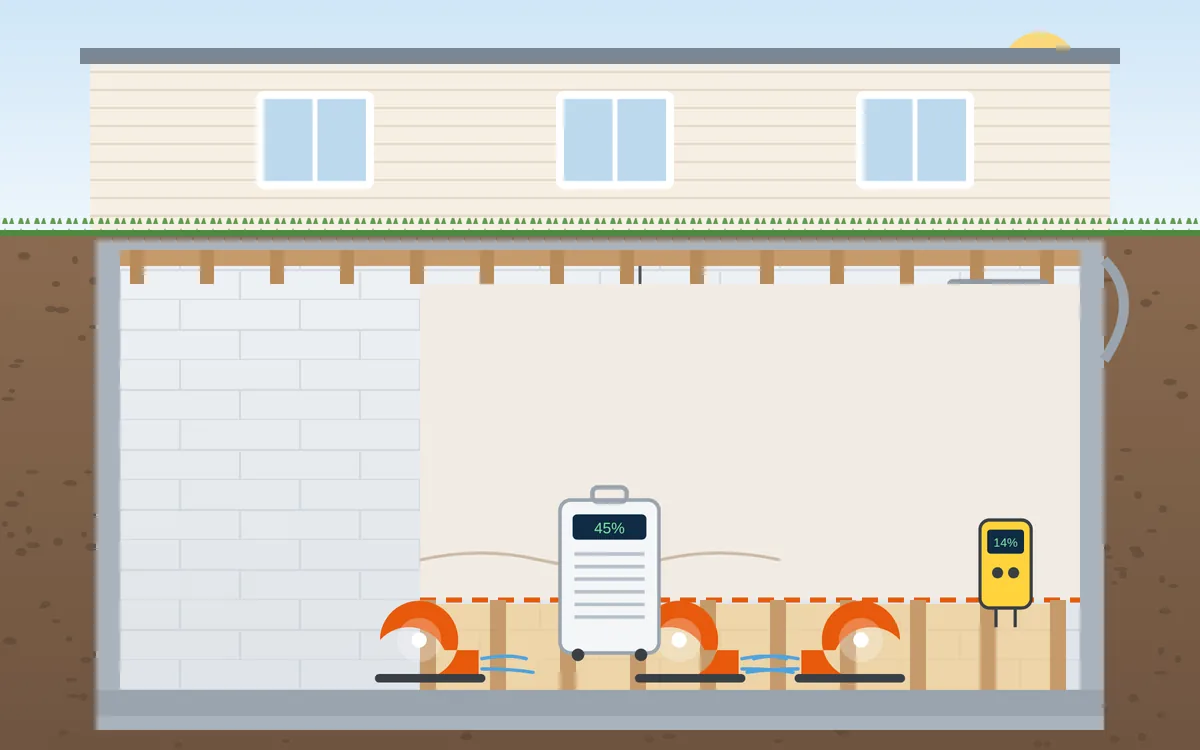
How do you tell if a concrete floor is dry?
Not by touch or appearance. Moisture testing with a concrete moisture meter gives a quick read, and for flooring decisions, installers often rely on relative humidity probes placed in the slab or a calcium chloride test. Readings are compared with the flooring manufacturer's limits and with dry areas of the same slab.
What to Do Right Now
- Pull up any flooring that's holding water against the slab, if you can do it safely.
- Remove rugs, mats, and boxes from the floor so it can breathe.
- Keep a dehumidifier running and the basement closed during humid weather.
- Don't order new flooring until the slab has been tested.
- Call (800) 231-6861 for basement subfloor drying.
Why Concrete Slab Moisture Lingers
Concrete looks solid, but it's full of tiny pores that absorb water. After a flood, the top of the slab dries first and starts to look and feel dry, while moisture deeper in the slab keeps moving upward. Basements make this slower. The slab sits on cool soil, the air is cooler and more humid, and some older Colorado homes were built without a vapor barrier under the slab, so ground moisture also wicks up.
Concrete Slab vs. Wood Subfloor
Concrete slab
Most Colorado basements have a slab on grade. It dries slowly and must be tested before flooring goes down.
Wood subfloor over sleepers
Some finished basements have plywood over wood strips. Water gets trapped between layers, and the plywood often swells or delaminates.
Dimpled membrane subfloor panels
Raised panels allow air under the floor and handle water better, but the slab under them still needs to dry.
Moisture Testing: How to Tell if a Concrete Floor Is Dry
| Method | What it tells you | Used for |
|---|---|---|
| Pin and pinless moisture meters | Relative moisture at or near the surface | Tracking drying progress daily |
| In-situ relative humidity (RH) probes | Moisture deeper in the slab | Flooring installation decisions |
| Calcium chloride test | Moisture vapor emission rate from the surface | Flooring installation decisions |
| Plastic sheet test | Rough check: condensation under taped plastic overnight | Quick homeowner screening only |
Flooring manufacturers usually set moisture limits for their products. Ask your installer which test and limit apply before you buy. If you're unsure how to tell if a concrete floor is dry enough, ask for the numbers in writing.
The Basement Subfloor Drying Process
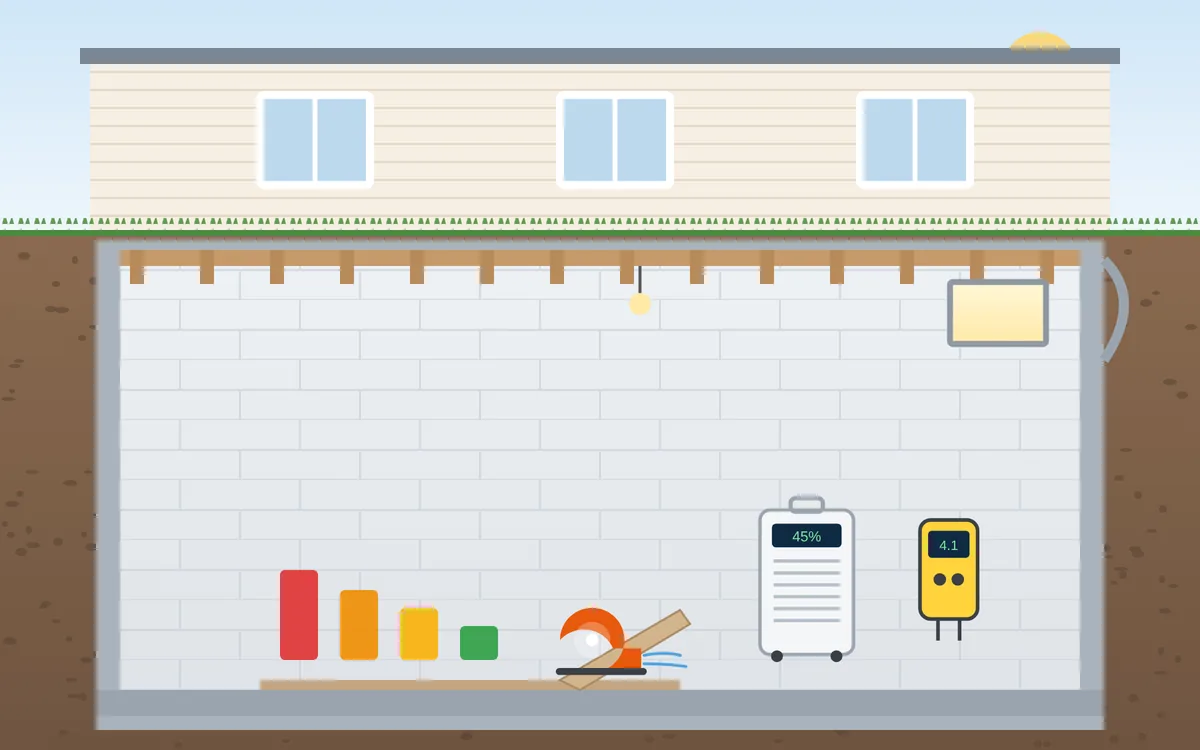
Here is how a professional crew typically handles basement subfloor drying, from arrival to sign-off.
- 1
Expose the slab
Flooring and pad holding water against the floor are lifted or removed.
- 2
Set baselines
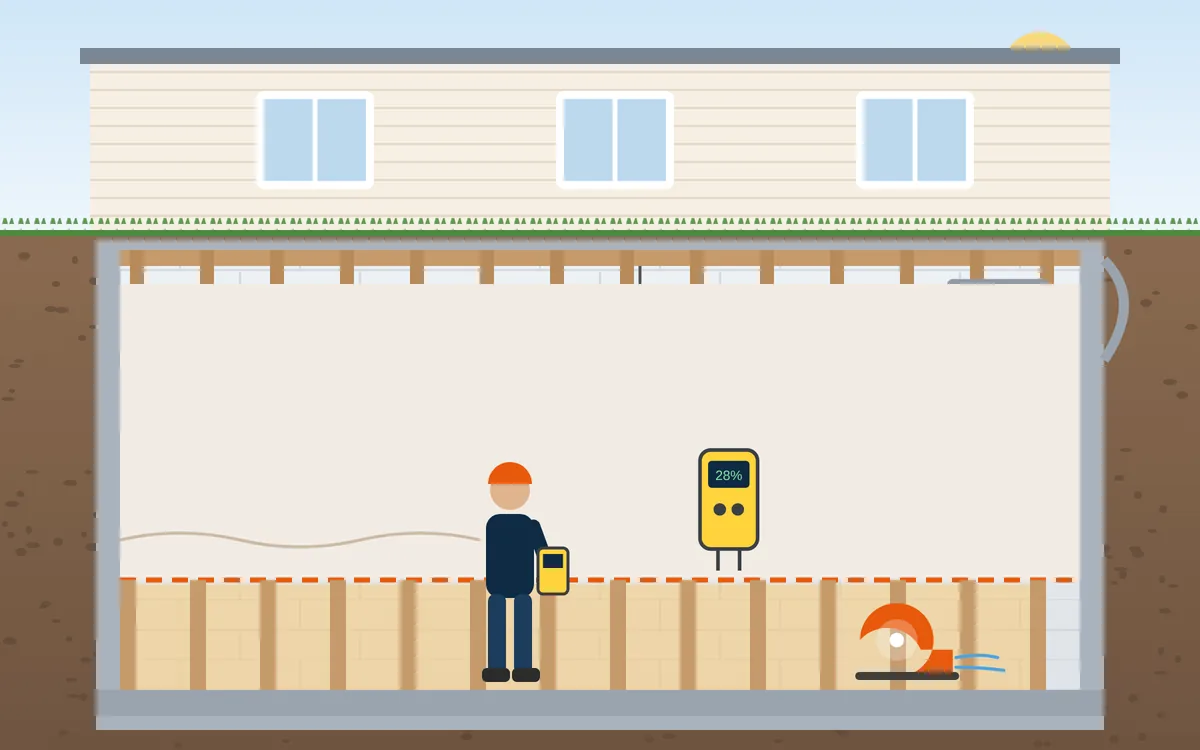
Moisture readings are taken on the wet slab and on an unaffected area for comparison.
- 3
Dry with dehumidification
Air movers sweep the surface while dehumidifiers keep humidity low enough for the slab to release water.
- 4
Target the wettest zones
Equipment is moved toward the high readings as drying progresses.
- 5
Test before flooring
Final readings, and RH or calcium chloride tests where needed, confirm the slab is ready.
- 6
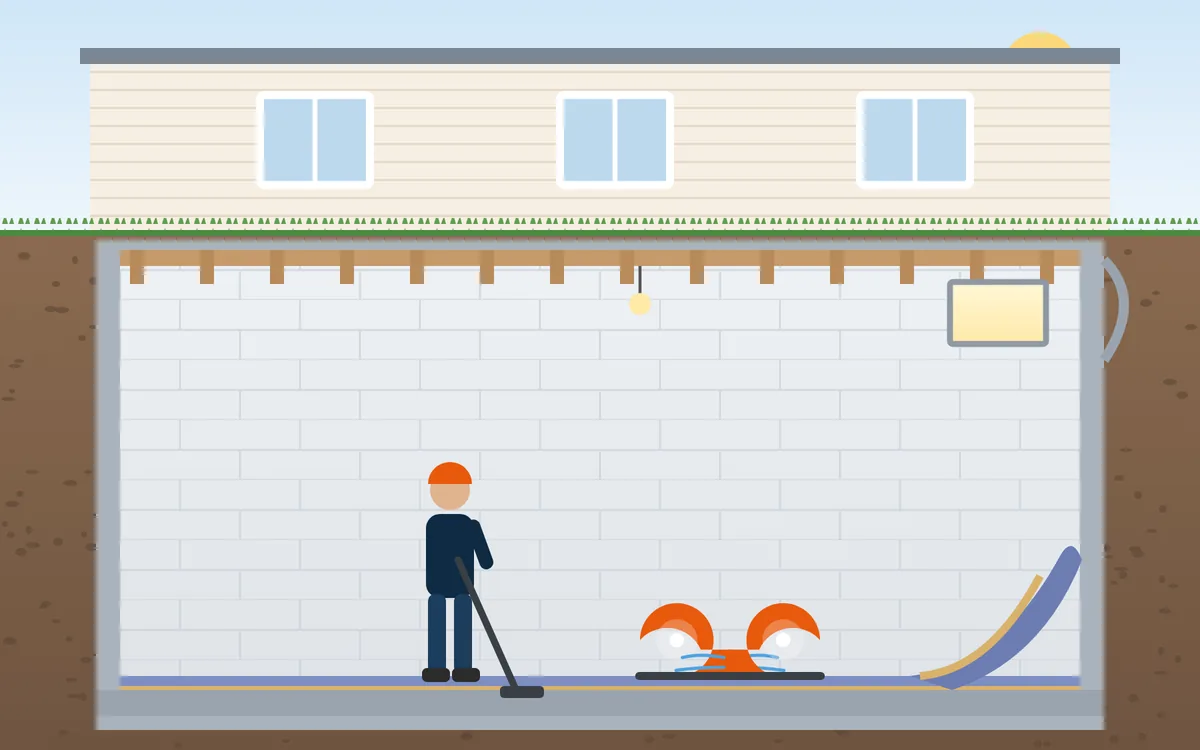
Rebuild the floor
Flooring goes down with the vapor barrier or underlayment the product requires.
When Subfloor Contamination Matters
Category 1: clean water
Water from a supply line, a water heater, or rain that hasn't touched soil or sewage. Most materials have a real chance of being dried in place if work starts quickly.
Category 2: gray water
Water carrying some contamination: washing machine discharge, dishwasher overflow, or clean water that has sat long enough to start breaking down. Porous materials need a closer look.
Category 3: black water
Sewage, toilet backflow, and outside floodwater that ran across soil. Treat it as unsanitary. Carpet, pad, and wet drywall usually come out.
These three categories come from the ANSI/IICRC S500 standard that the restoration industry uses to describe water. The category decides what can be saved, what protective gear the crew wears, and how much the job costs.
Dealing with this right now? Call to be connected with a Colorado cleanup crew and talk through your options.
Call (800) 231-6861Subfloor Drying Cost Factors
| Factor | Effect |
|---|---|
| Square footage | More slab, more equipment. |
| Flooring removal | Lifting or removing flooring adds labor. |
| Wood subfloor layers | Trapped water between layers can mean removal. |
| Drying time | Slabs can take longer than walls. |
| Testing for new flooring | RH probe or calcium chloride testing may be priced separately. |
Vapor Barriers and Rebuilding the Floor
Before new flooring goes in, it's worth asking whether you need a vapor barrier or moisture-tolerant underlayment. Many vinyl and laminate products require one over concrete. In basements with any history of seepage, a dimpled membrane or a floating floor with a vapor barrier lets the slab breathe without trapping water against the flooring. A vapor barrier helps with normal vapor from the slab. It doesn't solve active water entry, which needs groundwater and drainage attention.
Subfloor Mistakes That Ruin New Flooring
- Installing flooring because the slab feels dry.
- Leaving the old flooring down and drying only the room air.
- Skipping the vapor barrier the flooring manufacturer requires.
- Covering a slab that still shows efflorescence or damp spots.
- Assuming a wood subfloor over sleepers dried on its own.
Keeping Basement Floors Dry
- Run a dehumidifier and keep basement humidity in a normal range.
- Choose floating, waterproof flooring over a vapor barrier in basements.
- Fix drainage, gutters, and sump issues that send water under or onto the slab.
- Retest the slab before any future flooring project.
Basement Subfloor Drying & Moisture Removal FAQs
How to tell if a concrete floor is dry?
Use a concrete moisture meter for progress checks, and in-slab RH testing or a calcium chloride test before installing flooring. Appearance and touch aren't reliable.
How long does a basement slab take to dry after a flood?
Often longer than the walls, from several days to a couple of weeks, depending on how wet it got, temperature, and dehumidification.
Do I need a vapor barrier on a basement floor?
Many flooring products require one over concrete, and it's a good idea in basements with any moisture history.
Can I put new flooring down right after the water is gone?
No. Wait until moisture testing confirms the slab is within the flooring manufacturer's limits.
What does the plastic sheet test show?
Condensation under a taped plastic sheet overnight suggests moisture coming from the slab. It's a rough screening, not a substitute for proper testing.
My subfloor is plywood over concrete. Can it be dried?
Sometimes, but water often gets trapped between the plywood and the slab. Swollen or delaminated plywood is usually replaced.
Why does my basement floor feel damp in summer?
Warm, humid air can condense on a cool slab. A dehumidifier helps. Persistent dampness may point to ground moisture.
Sources and further reading
- EPA: A Brief Guide to Mold, Moisture and Your Home
- IICRC: ANSI/IICRC S500 water damage restoration standard
- Colorado Geological Survey: swelling soils
These public sources were used to check the safety, drying, and insurance information on this page. They are not endorsements of MH Restoration.