Does a finished basement flood cost more to clean up?
Almost always. A finished basement has drywall, insulation, carpet and pad, trim, doors, and often built-ins, each of which has to be assessed, dried, or removed and later rebuilt. An unfinished basement with a bare concrete slab usually needs extraction, cleaning, and drying, with far less tear-out and no rebuild.
What to Do Right Now
- Turn off power to the basement from a dry spot. Finished basements often have outlets low on the wall.
- Lift furniture onto blocks or foil, and move rugs, electronics, and boxes out.
- Pull back a corner of carpet to see whether the pad is wet. It usually is.
- Photograph walls, flooring, trim, and contents before anything is removed.
- Call (800) 231-6861 for basement flood cleanup.
Finished vs. Unfinished: How the Cleanup Differs
| Finished basement | Unfinished basement | |
|---|---|---|
| What gets wet | Carpet, pad, drywall and insulation, trim, doors, cabinets | Concrete slab, block or poured walls, framing, stored items |
| Hidden moisture | Inside wall cavities, under flooring, behind built-ins | Inside the slab and the base of walls |
| Typical removal | Pad, often carpet, drywall above the wick line, wet insulation | Damaged stored items, wet cardboard, any framing that won't dry |
| Drying time | Longer; more material and enclosed cavities | Usually shorter, but concrete releases water slowly |
| Rebuild | Drywall, insulation, paint, flooring, trim | Usually none |
| Relative cost | Higher | Lower |
Finished Basement Flood Cleanup: What to Expect
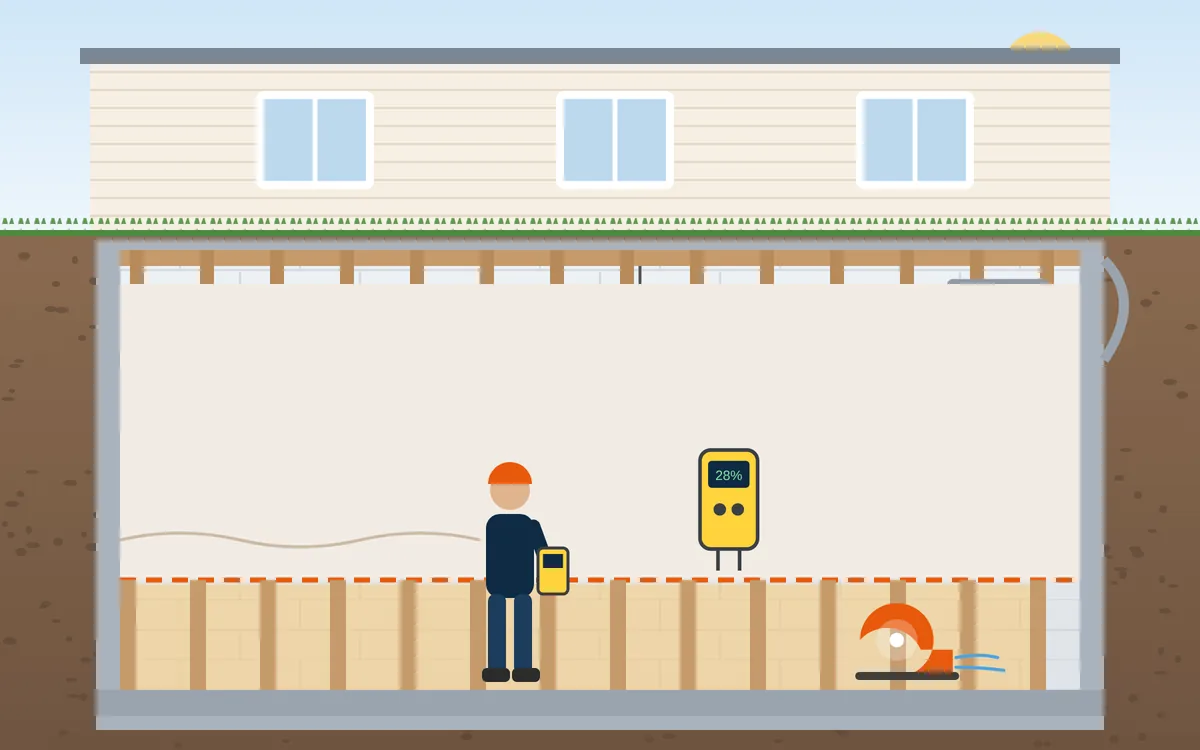
Finished basement flood cleanup is mostly about getting at the water that's out of sight. That's why finished basement flood cleanup takes longer than people expect. Drywall wicks water upward, often 12 inches or more above the visible line. Fiberglass batt insulation behind it soaks up water and doesn't dry well, so it's usually removed. Carpet pad holds water like a sponge. Laminate and engineered wood swell at the seams.
Walls
Meters find the highest wet point. Drywall and insulation below that line are removed. Walls with clean water caught early may be dried in place with cavity drying.
Floors
Pad is usually removed. Carpet may be saved if the water was clean and extraction was fast. Laminate is often replaced.
Trim and doors
Baseboards are pulled so walls can dry. MDF trim and hollow-core doors usually swell and are replaced.
Built-ins and bars
Cabinets and bars hide water underneath. Toe kicks may be removed to dry the space behind them.
For walls and flooring specifics, see floor, wall, and drywall water damage cleanup.
Unfinished Basement Flood Cleanup: Don't Skip the Concrete Slab
Unfinished basement flood cleanup looks simpler, and usually is. But a concrete slab and foundation walls absorb water and release it slowly, especially in a cool basement. If you plan to finish the basement later, that moisture matters. Flooring or framing installed over a damp slab can trap moisture and grow mold. Stored items in cardboard wick water up and hold it against the floor. Exposed framing for a furnace room or stairs needs to be dried and checked like any other wood.
See subfloor drying and moisture removal for how slab moisture is tested.
Water Category Matters More in a Finished Basement
Category 1: clean water
Water from a supply line, a water heater, or rain that hasn't touched soil or sewage. Most materials have a real chance of being dried in place if work starts quickly.
Category 2: gray water
Water carrying some contamination: washing machine discharge, dishwasher overflow, or clean water that has sat long enough to start breaking down. Porous materials need a closer look.
Category 3: black water
Sewage, toilet backflow, and outside floodwater that ran across soil. Treat it as unsanitary. Carpet, pad, and wet drywall usually come out.
These three categories come from the ANSI/IICRC S500 standard that the restoration industry uses to describe water. The category decides what can be saved, what protective gear the crew wears, and how much the job costs.
With clean water, a flooded finished basement often keeps much of its drywall and sometimes its carpet. With contaminated water, almost every porous finish comes out.
The Finished Basement Flood Cleanup Process
Here is how a professional crew typically handles finished basement flood cleanup, from arrival to sign-off.
- 1
Extract water
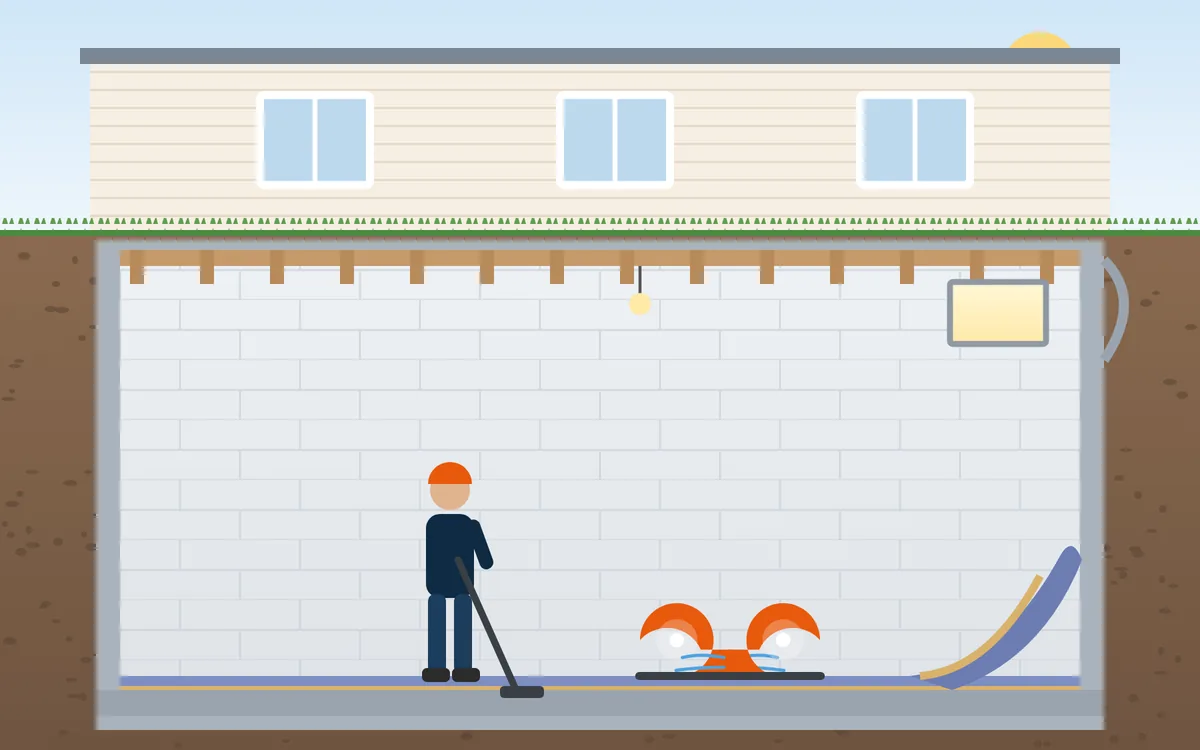
Standing water and water in carpet and pad are removed as quickly as possible.
- 2
Assess every finish
Drywall, insulation, flooring, trim, and built-ins are checked with meters to find the highest wet point.
- 3
Remove what won't dry
Pad, wet insulation, swollen trim, and drywall below the wick line are removed. More comes out with contaminated water.
- 4
Clean and treat
Exposed framing and concrete are cleaned, and treated with antimicrobial products where needed.
- 5
Dry the structure
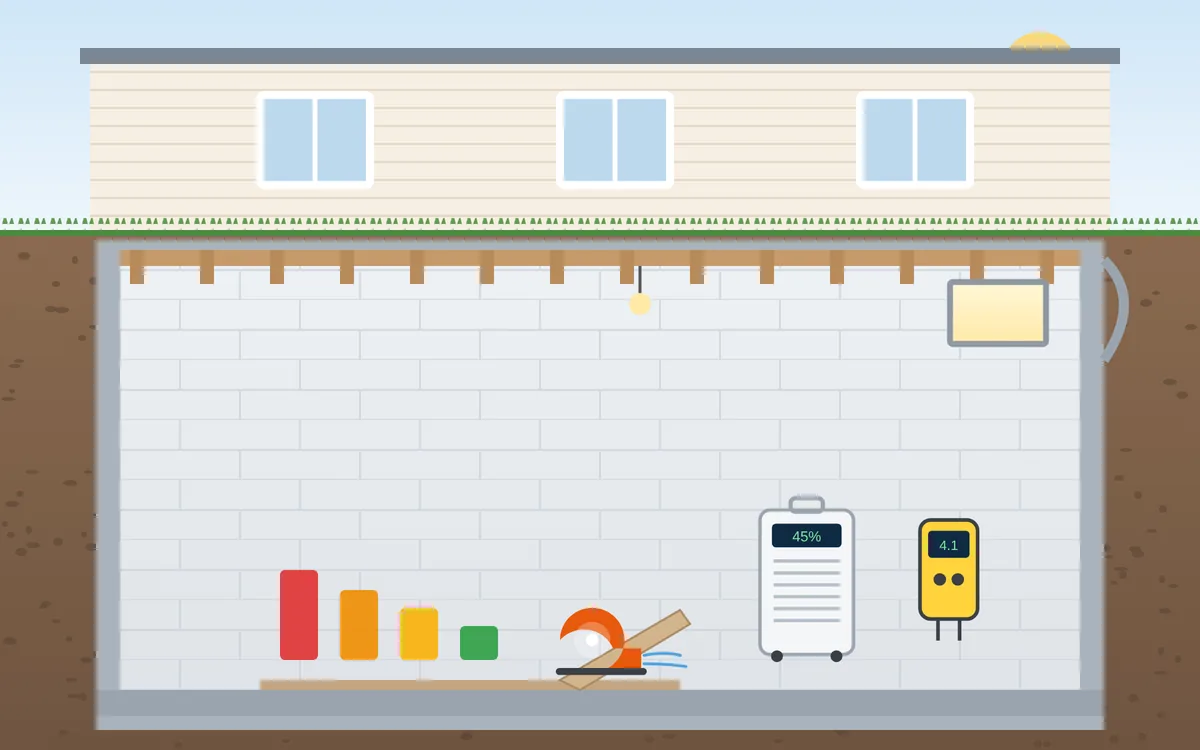
Air movers, dehumidifiers, and cavity drying run with daily readings, including on the slab.
- 6
Verify, then rebuild
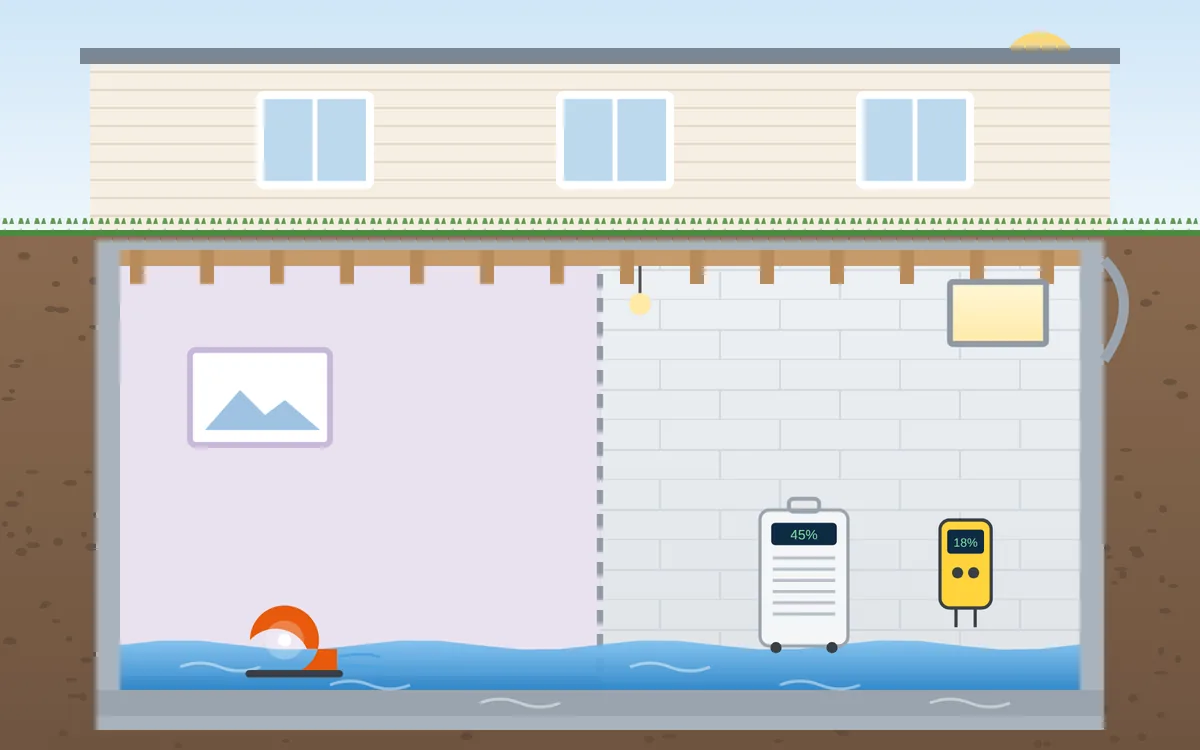
Once readings match dry standards, the rebuild can start: insulation, drywall, flooring, and trim.
Dealing with this right now? Call to be connected with a Colorado cleanup crew and talk through your options.
Call (800) 231-6861Does a Finished Basement Flood Cost More to Clean Up?
Yes, and usually by a wide margin. The cleanup portion takes longer, and there's a rebuild phase that an unfinished basement doesn't need. The biggest cost drivers are:
| Driver | Finished basement impact |
|---|---|
| Drywall and insulation | Removal and replacement along every affected wall |
| Flooring type | Carpet, pad, and laminate often replaced; tile may be saved |
| Wall height affected | Higher wicking means more drywall removed |
| Built-ins, bathrooms, bars | More materials to remove, dry, and rebuild |
| Contents | Furniture, electronics, and stored items |
Finished Basements in Colorado Homes
Finished basements are common in Front Range homes, and many hold bedrooms, offices, and media rooms. That puts drywall and insulation along exterior foundation walls, the same walls that take on water from grading problems, window wells, and groundwater. If a finished basement has flooded once from outside water, fix the entry point before rebuilding, or the next finished basement flood cleanup will cost as much as this one. Otherwise the next storm repeats the job.
Finished Basement Flood Cleanup Mistakes
- Drying the carpet but leaving soaked pad underneath.
- Leaving baseboards on, which traps water against the wall.
- Cutting drywall only at the visible stain.
- Keeping wet insulation because it's hidden behind dry-looking drywall.
- Rebuilding with the same water-sensitive materials in a basement that floods.
Finishing (or Re-Finishing) a Basement to Handle Water Better
- Fix grading, gutters, window wells, and sump capacity first.
- Use moisture-resistant drywall and leave a small gap above the slab.
- Choose tile, sealed concrete, or waterproof vinyl flooring.
- Use rigid foam insulation against foundation walls instead of fiberglass batts.
- Raise electrical outlets and keep mechanicals on raised pads.
Finished & Unfinished Basement Flood Cleanup FAQs
Does a finished basement flood cost more to clean up?
Yes. Drywall, insulation, flooring, trim, and built-ins all need assessment and often removal and rebuild, which unfinished basements don't.
How high should drywall be cut in a flooded finished basement?
Above the highest point where a moisture meter still reads wet, which is often higher than the visible waterline.
Can carpet in a flooded finished basement be saved?
Sometimes, with clean water and fast extraction. The pad is usually replaced. With contaminated water, carpet is removed.
Is an unfinished basement flood a big deal?
Usually less so, but the slab and walls still hold moisture, and stored items can be ruined. Dry and verify before finishing later.
Should I finish a basement that has flooded before?
Only after the cause is fixed. Otherwise, the finishes are at risk the next time it happens.
What flooring is best for a basement that might flood?
Tile, sealed concrete, and waterproof vinyl plank handle water far better than carpet or laminate.
Do I have to remove insulation after a basement flood?
Wet fiberglass batts are usually removed. They lose effectiveness and hold water against the wall.
Sources and further reading
- EPA: A Brief Guide to Mold, Moisture and Your Home
- IICRC: ANSI/IICRC S500 water damage restoration standard
- Colorado Geological Survey: swelling soils
- Colorado Division of Insurance
These public sources were used to check the safety, drying, and insurance information on this page. They are not endorsements of MH Restoration.