
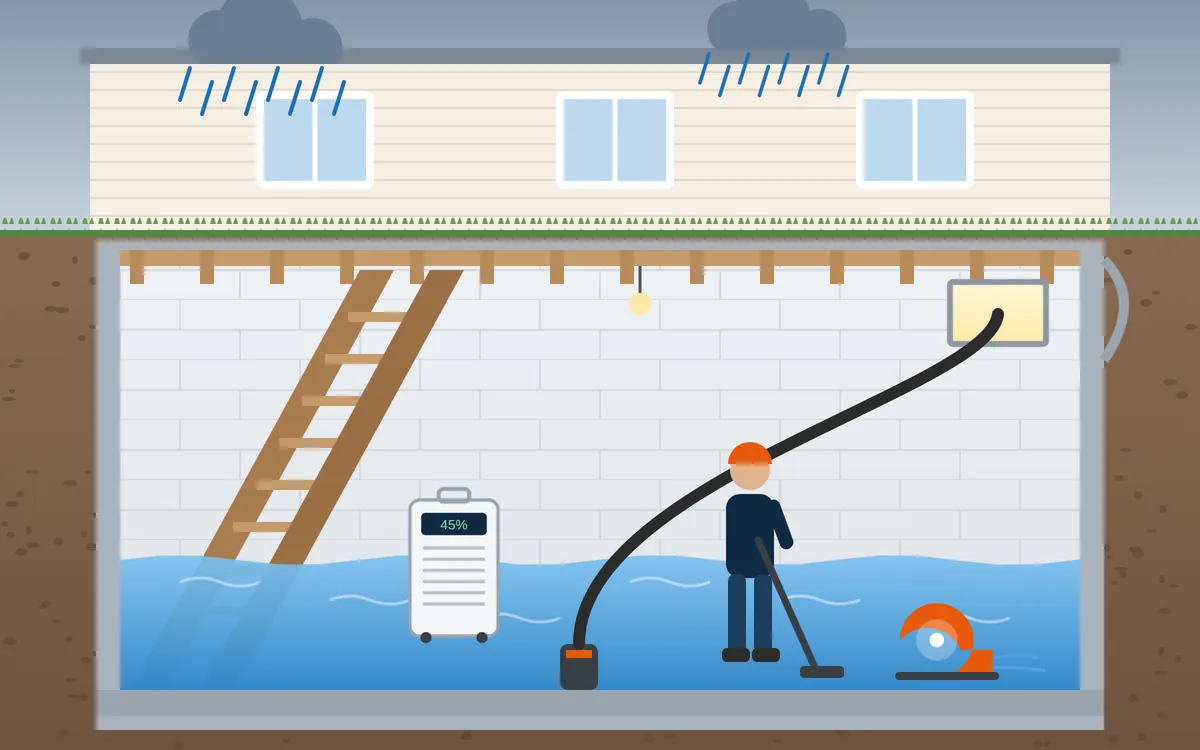
What is the fastest way to clean up a flooded basement?
The fastest safe order is: shut off power to the basement, stop the water source, document everything with photos, remove standing water with a pump or wet/dry vac, pull out saturated carpet and drywall that can't be dried, and run air movers with a dehumidifier for several days until moisture meters confirm the materials are dry. If the water is sewage or groundwater, call a cleanup crew at (800) 231-6861 before you step in it.
Step 1: Make the Basement Safe Before You Enter
Standing water and electricity are the single most dangerous combination in a flooded basement. The U.S. Consumer Product Safety Commission and most electrical codes are clear: do not step into a wet basement while the circuits serving it are energized. If you can reach the main breaker panel from a dry location, shut off power to the basement. If the panel is inside the flooded basement, call your utility and an electrician before you go in.
Gas is the second hazard. A floating water heater or a dislodged dryer can break a gas line. If you smell gas, leave the house and call your gas utility from outside. Wear rubber boots, nitrile gloves, and eye protection. If the water is murky, dark, or smells of sewage, add an N95 and keep children and pets upstairs.
Step 2: Stop the Water at the Source
Cleanup cannot start while water is still coming in. The fix depends on where it's coming from.
- Supply line or appliance leak. Close the house main water shutoff, usually near the water meter on the front wall of the basement.
- Sump pump that quit. Check the breaker and the float switch. If the pump failed, a battery or water-powered backup can keep up until a new pump arrives.
- Floor drain backing up. Stop using any water in the house. Running the washing machine or a shower sends more water into a drain that already can't keep up.
- Groundwater through walls or a crack. There is no shutoff for this. The goal shifts to removing water faster than it comes in and drying once the storm passes.
Step 3: Photograph Everything Before You Touch It
Insurance claims live or die on documentation. Before you move a single item, take wide shots of each wall, then close-ups of the water line on the drywall, stained flooring, damaged contents, and any visible source such as a split pipe. Keep the originals; insurers will often ask for the raw image files with their timestamps intact. Note the time water was first noticed and the time the source was stopped. Those two numbers decide how the drying timeline is read later.
Step 4: Remove the Standing Water
For an inch or two of clean water, a wet/dry vacuum works. For anything deeper, rent or borrow a submersible pump and run it from a dry spot with a grounded extension cord rated for outdoor use. Discharge the water well away from the house, downhill from the foundation, and not into a storm drain if the water is contaminated. Pumps pull air once the water drops below about an inch, so finish with a wet/dry vac or a truck-mount extractor.
For carpeted basements, a heavy-duty extraction tool pulls water from both carpet and pad in one pass. A household shop vac will clear the surface but leaves the pad soaked, which is the main reason carpets that look dry on top start to smell within a week.
Step 5: Remove Materials That Can't Be Dried
Some basement materials can be dried and saved. Others trap water and must come out. The IICRC S500 standard, which most restoration crews follow, draws the line like this:
- Carpet pad: remove after Category 1 water; remove after any Category 2 or 3 water.
- Carpet: can often be dried in place after clean water; must be removed after sewage or groundwater contact.
- Drywall: cut a flood cut 12 to 24 inches above the water line. Drywall wicks water upward past the visible line.
- Fiberglass insulation: remove any that got wet. It does not dry inside a wall cavity.
- Particleboard furniture: rarely saved.
- Hardwood subfloor and framing: usually dried in place with specialized equipment.
Step 6: Clean and Disinfect Hard Surfaces
Concrete, tile, and sealed wood get a wash with a detergent to remove soil, then a disinfectant on surfaces that touched contaminated water. The EPA keeps a list of registered disinfectants on its website; follow the contact time on the label. Do not mix bleach with ammonia or acidic cleaners. Rinse, then let surfaces air dry before drying equipment goes on them.
Step 7: Dry the Structure With Air Movers and Dehumidifiers
Drying is where most DIY cleanups fail, because household fans move air but do not remove the moisture it carries. A basement dries properly with two tools working together: axial air movers aimed low along the wet materials, and a dehumidifier pulling the moisture out of the air. A rough benchmark for a wet basement is one air mover per 10 to 16 linear feet of wet wall and a commercial-grade dehumidifier for every 1,000 square feet of wet area.
Run the equipment continuously, not just when you are home. Check moisture readings on the drywall, subfloor, and framing every 24 hours. Drying is done when the wet materials match the moisture content of equivalent dry materials elsewhere in the home, not when they feel dry to the hand.
Step 8: Verify Dryness Before You Close Anything Back Up
Closing up a wall or laying carpet over a subfloor that is still wet is the single most common way a flood becomes a mold problem. A pin-type moisture meter and a non-penetrating meter should both read within the acceptable range for the material before any insulation, drywall, or flooring goes back. Keep the daily moisture log. Insurers ask for it, and future buyers may too.
Step 9: Replace Materials and Rebuild
Only after the structure is dry does the rebuild start: new insulation, drywall, trim, paint, flooring, and any built-ins. This is a good time to think about upgrades that reduce the next flood: a battery backup sump, a water-backup endorsement on the homeowners policy, a backwater valve for the sewer line, and new window wells with drainage.
Step 10: Know When to Stop and Call a Professional
Call a basement flood cleanup crew if the water is sewage, the water has been sitting more than 24 hours, the area is larger than about 200 square feet, drywall has been wet above the baseboard, or the structure is under finished basement living space. Our line connects Colorado homeowners with crews around the state: (800) 231-6861.
FAQs
How soon do I need to start cleaning up a flooded basement?
Within 24 hours. The EPA notes mold can begin growing on wet materials in 24 to 48 hours.
Can I clean up a flooded basement myself?
Clean, shallow water from a known source can often be handled by a homeowner. Sewage, groundwater, or finished basements with wet drywall above the baseboard almost always need a crew with extraction trucks and commercial drying equipment.
What's the first thing to do when my basement floods?
Shut off power to the basement from a dry spot, then stop the water source if you can, then document everything with photos before you move anything.
How long does it take to dry a flooded basement?
Clean water in an unfinished basement typically dries in 3 to 5 days with proper equipment. Finished basements, sewage backups, or saturated concrete can take 7 to 14 days.
Do I need to throw out the carpet?
After clean water, carpet can often be saved if the pad is removed and the carpet is dried within 48 hours. After sewage or outside flooding, the IICRC S500 standard says to remove it.
Should I open windows while cleaning a flooded basement?
Only if outdoor humidity is lower than indoor. In Colorado's summer storms outdoor air can be wetter than basement air. A dehumidifier works more reliably than open windows.
Sources and further reading
- EPA: Brief Guide to Mold, Moisture and Your Home
- Colorado Division of Insurance
- National Weather Service, Boulder
- FEMA Flood Maps
- CDC: Flood water after a disaster
These public sources were used to check the safety, drying, and insurance information on this page.
Need basement flood cleanup in Colorado? Call to be connected with a crew in your area.
Call (800) 231-6861