
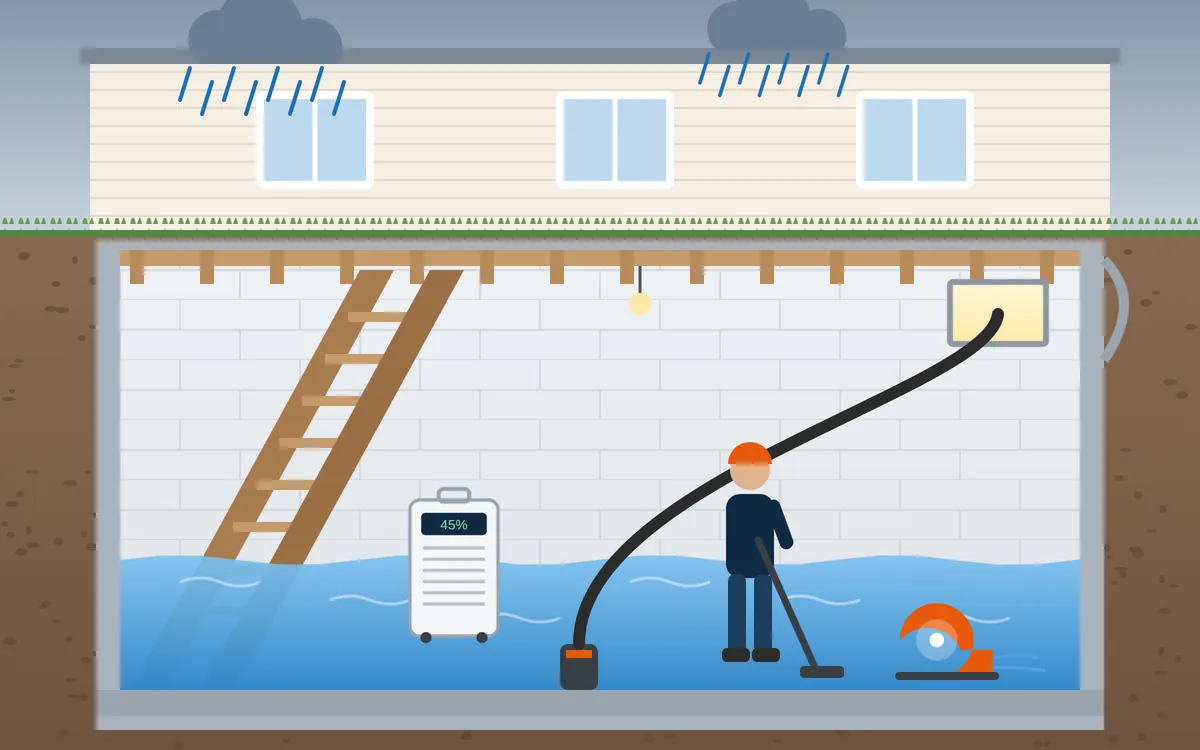
What are the health risks of a basement sewage backup?
Sewage backup water contains bacteria (E. coli, salmonella, shigella), viruses (hepatitis A, norovirus), parasites (giardia, cryptosporidium), and chemicals. Health effects range from skin rashes to serious gastrointestinal illness. Children, the elderly, pregnant people, and immunocompromised individuals face higher risk and should not be in the affected area.
The Pathogens Found in Sewage Water
- Bacteria: E. coli, salmonella, shigella, campylobacter.
- Viruses: Hepatitis A, norovirus, rotavirus.
- Parasites: Giardia, cryptosporidium, pinworm.
- Chemicals: Household cleaning agents, medications, pesticides.
- Molds and fungi: Growing on wet materials after 24-48 hours.
Documented Health Effects
- Gastrointestinal illness: diarrhea, vomiting, cramping.
- Skin infections from contact with contaminated water through cuts.
- Respiratory irritation from aerosolized contaminants.
- Eye infections if splashed.
- Tetanus risk if an open wound contacts sewage.
- Long-term mold exposure: respiratory sensitization, asthma worsening.
Who Is Most Vulnerable
Children under 5. Adults over 65. Pregnant people. People with weakened immune systems from chemotherapy, HIV, transplant medications, or autoimmune disease. People with asthma or COPD. For these individuals, consider relocating until the cleanup is complete and antimicrobial has been applied.
How to Protect the Household
- Seal off the basement from the rest of the house. Close doors and tape plastic over stairway openings if needed.
- Turn off HVAC that pulls air from the basement.
- Do not allow children or pets in the affected area.
- If anyone is immunocompromised, relocate temporarily.
- Wash hands aggressively after any potential contact.
- Wash or discard any clothes or shoes that touched the water.
When to See a Doctor
See a doctor if you develop: fever over 101°F, persistent diarrhea or vomiting, skin infection at a contact site, jaundice (yellowing of skin/eyes — possible hepatitis), respiratory symptoms worsening. Mention sewage exposure specifically so the right tests are ordered.
The Cleanup That Addresses Health Risks
Professional sewage cleanup includes: containment to prevent spread, removal of all porous materials, structural cleaning with EPA-registered antimicrobial, drying with HEPA air filtration, and final verification. This is what returns the basement to a safe condition. Call (800) 231-6861.
FAQs
Can I get sick just from being in a basement after sewage?
Direct contact is the highest risk. Breathing aerosolized contaminants is possible but less common. Close the door, run air scrubbers, and let professionals handle it.
How long after cleanup is the basement safe?
After porous materials are removed, structural cleaning is done with antimicrobial, and the room is dried. Usually 7-10 days from the backup.
Is the sewer smell itself dangerous?
The sulfide smell can be irritating but not acutely toxic at typical household concentrations. Prolonged exposure is still bad.
Do children need to see a pediatrician after sewage exposure?
If there was any contact, yes. Pediatricians can check for contaminant-related illness and update any vaccinations.
Can sewage water make pets sick?
Yes. Keep pets out of the affected area; if they had contact, call your vet.
What about the household's immune system after exposure?
A healthy immune system handles most short, non-contact exposure. Prolonged exposure or contact exposure warrants medical attention.
Sources and further reading
- EPA: Brief Guide to Mold, Moisture and Your Home
- Colorado Division of Insurance
- National Weather Service, Boulder
- FEMA Flood Maps
- CDC: Flood water after a disaster
These public sources were used to check the safety, drying, and insurance information on this page.
Need basement flood cleanup in Colorado? Call to be connected with a crew in your area.
Call (800) 231-6861