
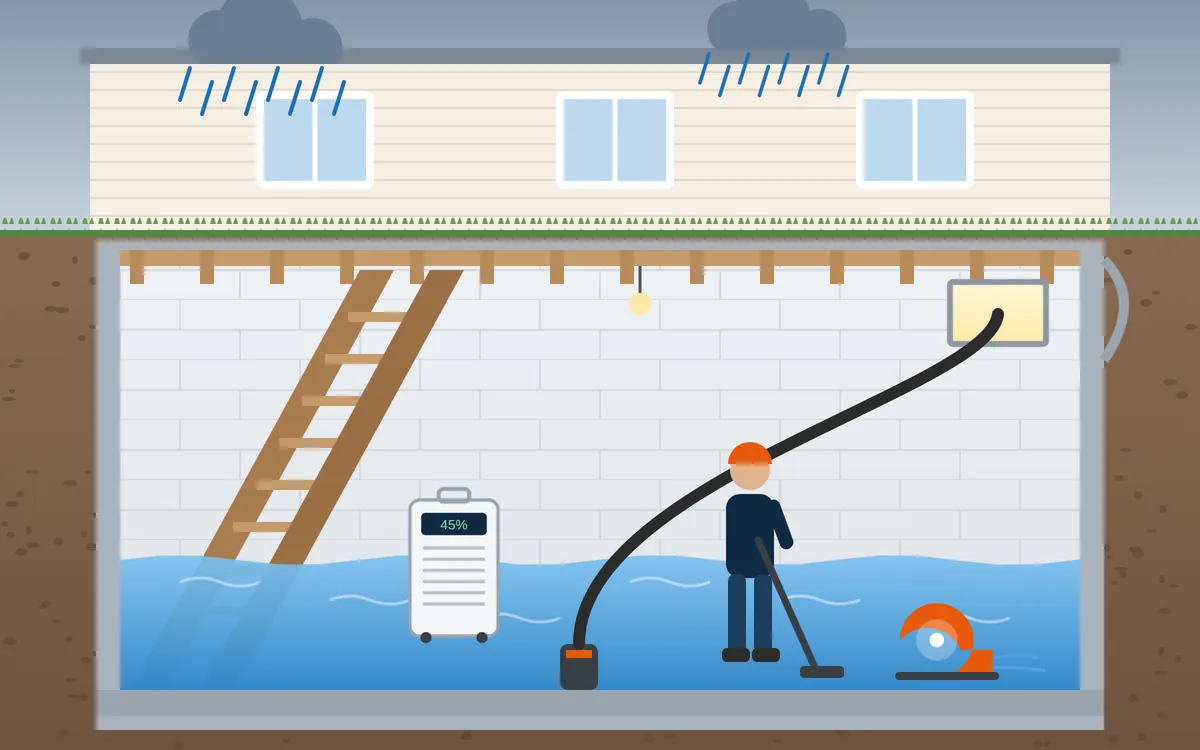
What can I do to prevent a basement flood?
The five highest-impact prevention steps for Colorado basements: install a battery-backup sump pump, extend downspouts 6+ feet from the foundation, regrade so water flows away from the house, add a water-backup insurance endorsement, and install a backwater valve on the sewer lateral.
The Top Five Priorities
- Battery-backup sump pump ($500-$1,500). Covers power outages during storms when you need the pump most.
- Downspout extensions 6+ feet ($30-$100). Cheapest, highest-ROI prevention.
- Regrade around foundation ($500-$3,000). First 10 feet should slope away from house.
- Water-backup insurance endorsement ($50-$250/yr). Covers sewer backups and sump overflows that standard policy doesn't.
- Backwater valve ($1,500-$4,000). Prevents sewer main backups from entering the house.
Plumbing Prevention
- Insulate pipes along exterior walls.
- Replace old polybutylene or galvanized supply lines.
- Install water leak sensors near water heater, washing machine, and under sinks.
- Automatic shut-off valves that trigger on leak detection ($500-$2,000).
- Have sewer lateral camera-inspected every 3-5 years.
- Shut off outside hose bibs in October.
Grading and Drainage
- Soil slope away from foundation: at least 6 inches of fall over the first 10 feet.
- No garden beds against the foundation that hold water.
- French drain if recurring groundwater issues ($3,000-$10,000).
- Window well covers with drains ($100-$400 per well).
- Regular gutter cleaning, twice per year minimum.
Sump System
- Primary pump sized correctly for the pit inflow.
- Battery backup OR water-powered backup.
- Test quarterly with a 5-gallon bucket.
- Replace pump every 7-10 years proactively.
- Discharge line clear of debris and freeze-protected.
Insurance Stack
- Water-backup endorsement.
- Service line endorsement.
- Flood insurance if below a dam, near a creek, or on a slope.
- Document home contents annually with photos.
See flood vs homeowners.
Seasonal Prevention Tasks
- Fall: Shut off outside hose bibs, clear gutters, insulate exposed pipes, test sump backup.
- Winter: Keep heat above 55°F even when away, let faucets drip during deep freezes.
- Spring: Shovel snow 4-5 feet from foundation, check for ice damming, inspect for new foundation cracks.
- Summer: Clean gutters pre-monsoon, check window well drains, test sump pump before storm season.
FAQs
What's the single most important prevention step?
Battery-backup sump pump for most Colorado homes with basements.
How much should I budget for basement flood prevention annually?
$200-$500 for basic maintenance (inspections, insurance, battery replacement). Larger projects (regrading, backwater valves) are one-time investments.
Do smart water sensors really help?
Yes. Early detection of a slow leak prevents days of damage.
Can I prevent all basement flooding?
No, but you can reduce risk by 80%+ with the top five priorities above.
Should I waterproof my basement from the inside?
Interior coatings help with minor moisture. For active water intrusion, exterior solutions are more effective.
Is flood prevention worth it if I'm not in a flood zone?
Yes. Most Colorado basement floods are not caused by designated-flood-zone water.
Sources and further reading
- EPA: Brief Guide to Mold, Moisture and Your Home
- Colorado Division of Insurance
- National Weather Service, Boulder
- FEMA Flood Maps
- CDC: Flood water after a disaster
These public sources were used to check the safety, drying, and insurance information on this page.
Need basement flood cleanup in Colorado? Call to be connected with a crew in your area.
Call (800) 231-6861