
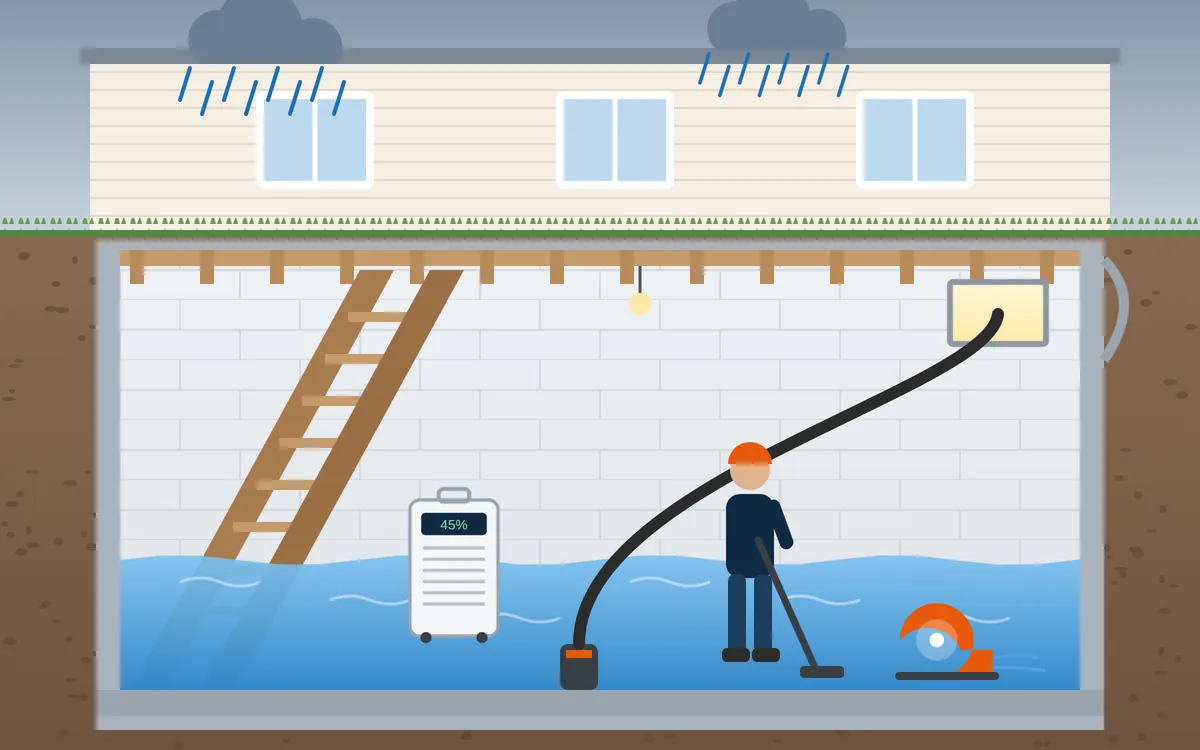
What is the difference between flood insurance and homeowners insurance for a basement?
Homeowners insurance covers sudden water from inside the home (burst pipe, appliance overflow). Flood insurance covers water from outside the home (groundwater, creek overflow, storm runoff). They do not overlap. A Colorado homeowner with a basement often needs both plus a water-backup endorsement.
What Homeowners Insurance Covers
A standard homeowners policy covers sudden, accidental damage from water inside the home. That includes burst supply lines, water heater failures, appliance overflows, and roof leaks from storm damage. It does not cover water that came from outside, from the ground, or from a backed-up drain or sewer.
What Flood Insurance Covers
Flood insurance through the NFIP or a private carrier covers damage from floodwater defined as surface water from outside the home. For a basement, coverage is limited: structural elements like the foundation walls, HVAC and water heaters, washers and dryers, and food freezers are covered. Finished interior walls, flooring, and contents in a basement are only partially covered under most NFIP policies.
The Third Piece: Water Backup Endorsement
Sewer and sump pump failures fall between the two policies. Neither covers these by default. A water-backup endorsement added to the homeowners policy fills the gap. Limits are usually $5,000 to $25,000, and premiums are $50 to $250 per year.
How to Stack Them for Full Coverage
The complete Colorado basement stack is: homeowners base + water backup endorsement + flood insurance. That combination covers plumbing failures, sewer backups, sump failures, and outside flooding. Each policy is issued separately; they do not auto-combine.
Why Basement Content Coverage Is Limited
The NFIP treats basements as higher-risk and limits coverage of finished materials and personal property in basements. Carpet pad, drywall, carpeted floors, and most belongings stored in a basement are excluded from standard NFIP coverage. Private flood insurance now offers broader basement coverage; it is worth comparing quotes.
Colorado Flood Risk Reality
Colorado's dry climate masks real flood risk. The 2013 Front Range floods caused over $4 billion in damage. Boulder, Larimer, and Weld counties were hit hardest. Flash flooding is common in the mountains. FEMA's flood maps underestimate risk in many Colorado counties, according to recent First Street Foundation modeling.
FAQs
Do I need flood insurance in Colorado?
If you have a basement, live below a dam, near a creek or river, or on a slope where runoff can reach your foundation, yes. Flood insurance is cheap compared to the gap it fills.
Why don't my combined policies cover everything in my basement?
Because each policy has gaps, and the gaps don't line up. The water-backup endorsement is the key missing piece most homeowners don't know about.
What's the cheapest way to get basement coverage?
Add water-backup to homeowners ($50-$250/yr) and buy a basic NFIP flood policy ($400-$800/yr for low-risk zones).
Does flood insurance kick in immediately?
No. NFIP policies have a 30-day waiting period. Buy before the risk, not during.
Can my mortgage company require flood insurance?
Yes, if you are in a FEMA-designated flood zone and your mortgage is federally backed.
Is private flood insurance better than NFIP?
For basements specifically, often yes. Private carriers offer broader coverage of finished basements and contents.
Sources and further reading
- EPA: Brief Guide to Mold, Moisture and Your Home
- Colorado Division of Insurance
- National Weather Service, Boulder
- FEMA Flood Maps
- CDC: Flood water after a disaster
These public sources were used to check the safety, drying, and insurance information on this page.
Need basement flood cleanup in Colorado? Call to be connected with a crew in your area.
Call (800) 231-6861