
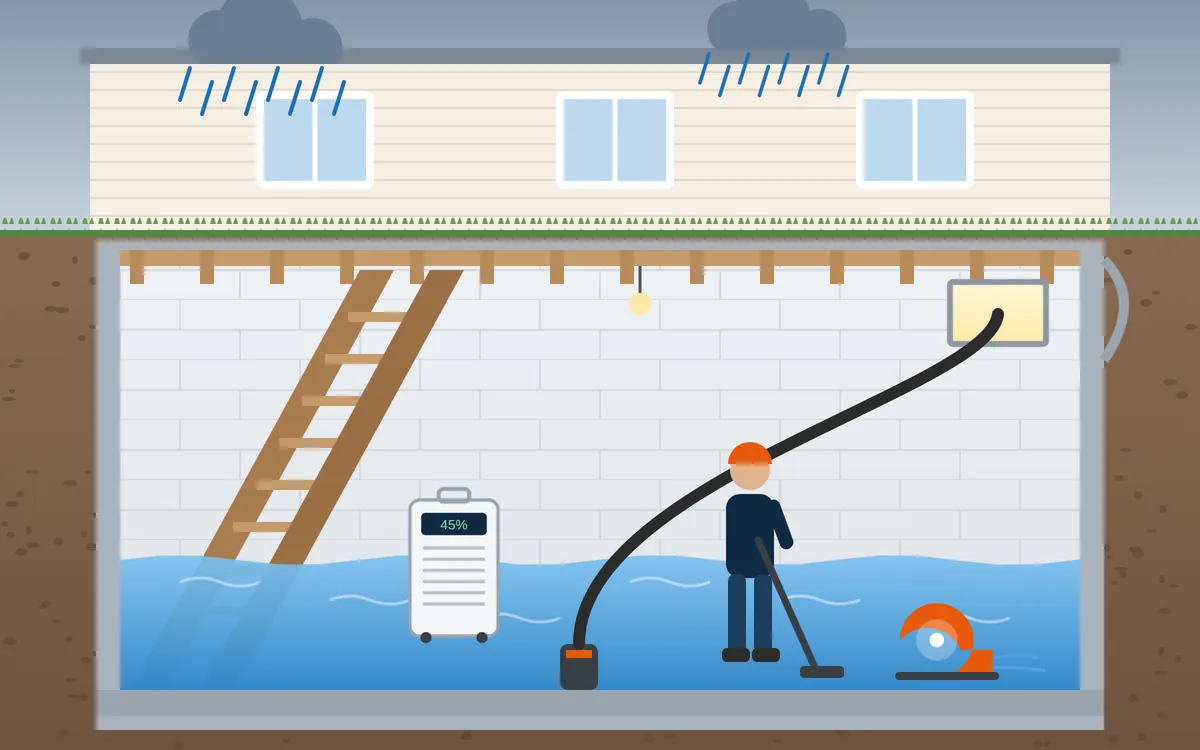
What causes a sewer backup in a basement?
Sewer backups happen when the private sewer lateral or the city sewer main is blocked or overloaded. Tree roots in old clay lines, grease buildup, broken pipes, and heavy storms that overwhelm city mains are the main causes. The result is wastewater coming up through basement floor drains, toilets, or tubs.
Why Sewer Backups Happen
- Tree roots. Roots grow into cracks in old clay or cast-iron laterals. Common in pre-1980 Colorado homes.
- Grease and flushables. Cooking grease, baby wipes, and paper towels stack up in the lateral.
- Broken pipe. Expansive clay soils in Colorado crack laterals over decades.
- City main surcharge. Heavy storms can push water from the main back toward the house.
- Combined sewer systems. Some older Colorado neighborhoods still have combined storm-and-sanitary systems that overload in storms.
Why It Is Category 3
Sewer water contains bacteria (E. coli, salmonella), viruses, parasites, and chemicals. The IICRC S500 classifies it as Category 3 (black water). Direct contact without PPE is a health hazard, especially for immunocompromised individuals, children, and pets.
What to Do Immediately
- 1
Stop using water in the house
Every sink, shower, toilet flush, and washing machine cycle sends more water into a system that can't take it.
- 2
Keep people and pets out of the basement
Especially children and anyone with health conditions.
- 3
Call the city or public works
Report the backup. Ask whether the main is involved.
- 4
Call a sewage cleanup crew
Not a general handyman. Sewage cleanup needs IICRC-certified crews with the right PPE and antimicrobials. Call (800) 231-6861.
- 5
Call a plumber
A plumber camera-inspects the lateral, finds the blockage, and clears it.
Sewage Cleanup Process
Sewage cleanup follows a more aggressive version of the standard cleanup process. Porous materials — carpet, pad, drywall to 24 inches, insulation — all come out. Hard surfaces get a detergent wash, a rinse, and an EPA-registered antimicrobial. Air scrubbers run continuously. The room is then dried.
Prevention: Backwater Valves and More
- Install a backwater valve on the sewer lateral. Cost: $1,500-$4,000. Prevents sewage from flowing back into the house.
- Have the sewer lateral camera-inspected every 3-5 years.
- Replace old clay or cast-iron laterals with PVC.
- Never pour grease down the drain.
- Trim tree roots or remove trees over the sewer line.
FAQs
Who is responsible — me or the city — for a sewer backup?
Lateral from the house to the property line: usually the homeowner. From the property line to the main: usually the city. Confirm with your municipality.
Does insurance cover sewer backups?
Only if you have a water-backup endorsement on your homeowners policy. The standard policy does not.
Can I clean up sewage myself?
Small, clean sewage spots (from a toilet overflow with clear water, limited to tile) can be cleaned by a homeowner with bleach and PPE. Anything larger or with solid waste needs a professional crew.
How long does sewage cleanup take?
7-14 days typically. The extraction and demo happen in the first 1-2 days; drying and verification take the rest.
Can a backwater valve prevent all sewer backups?
It prevents sewage from the city main from entering. It does not prevent clogs in your own lateral.
Should I move out during sewage cleanup?
If the backup is extensive or if anyone in the home is immunocompromised, yes. Otherwise, sealing off the basement is usually enough.
Sources and further reading
- EPA: Brief Guide to Mold, Moisture and Your Home
- Colorado Division of Insurance
- National Weather Service, Boulder
- FEMA Flood Maps
- CDC: Flood water after a disaster
These public sources were used to check the safety, drying, and insurance information on this page.
Need basement flood cleanup in Colorado? Call to be connected with a crew in your area.
Call (800) 231-6861