
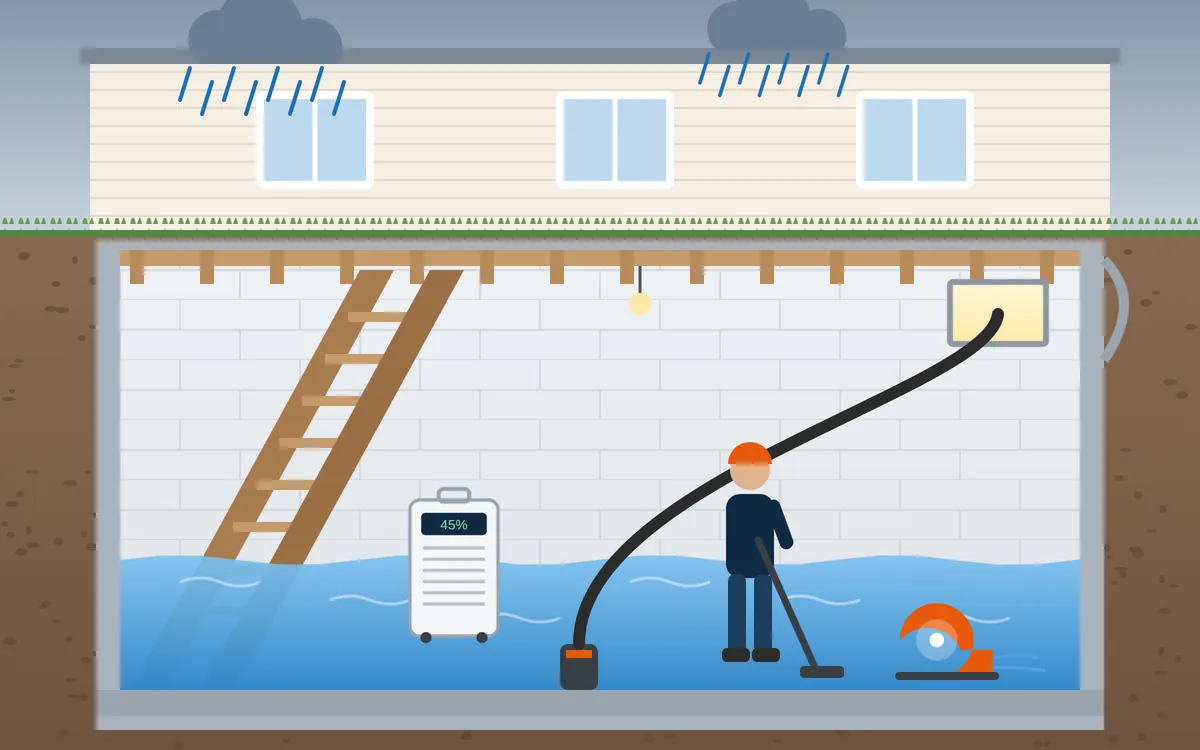
Why do sump pumps fail during storms?
The most common failure modes are: the pump itself wearing out (after 7-10 years), the float switch sticking, a tripped breaker, a power outage, a discharge line freezing or blocked, and the pump being undersized for the inflow. Any of these lets the sump pit overflow into the basement.
The Six Common Failure Modes
- Age. Sump pumps last 7-10 years. After that, bearings and impellers wear out.
- Stuck float. A float switch catches on the pit wall or a piece of debris and never triggers the pump.
- Tripped breaker. A dedicated circuit can trip from the pump itself or from another appliance on the same circuit.
- Power outage. Storms cause both heavy sump demand and power loss at the same time.
- Blocked discharge. Frozen or crushed discharge lines send water right back into the pit.
- Undersized pump. A pump rated for average flow can't keep up with a 100-year storm.
Three Levels of Sump Backup
- Battery backup pump. A second pump with a sealed battery that kicks in during power loss. Good for 6-12 hours of runtime.
- Water-powered backup. Uses municipal water pressure to pump out the sump. No electricity needed, but uses a lot of water.
- Generator-powered sump. A whole-home backup generator keeps the primary sump running indefinitely.
Warning Signs Before Failure
- Unusual noises during pump cycles.
- Pump running constantly in dry weather.
- Pump cycling but water level not dropping.
- Visible rust or corrosion.
- Pump over 7 years old.
After a Sump Overflow Flood
Sump water is usually Category 2 (gray water) — groundwater mixed with whatever has been in the pit. Cleanup follows the standard process. A new pump goes in before or during the cleanup. Call (800) 231-6861.
How to Test Your Sump Before Storm Season
Pour a 5-gallon bucket of water into the sump pit. The pump should start automatically, pump out the water, and shut off. If it cycles slowly, hesitates, or struggles, replace it before the storm season. Test every 3 months.
FAQs
How long does a sump pump last?
7-10 years. Replace proactively at 10, not after failure.
Should I have a battery backup sump pump?
In Colorado, yes. Storm-related power loss is a primary cause of sump failures.
Do I need two sump pumps?
Two is wise for finished basements with high water tables or flood history.
What size sump pump do I need?
1/3 HP handles most residential needs. 1/2 HP for high-flow or basements below the water table.
Can my sump pump discharge into the sewer line?
No. Most Colorado municipalities prohibit this. Discharge to the yard, a dry well, or a storm drain if allowed.
Why does my sump run constantly?
Groundwater table is at or near the pit level, or the pit is getting water from somewhere unintended. Investigate the inflow source.
Sources and further reading
- EPA: Brief Guide to Mold, Moisture and Your Home
- Colorado Division of Insurance
- National Weather Service, Boulder
- FEMA Flood Maps
- CDC: Flood water after a disaster
These public sources were used to check the safety, drying, and insurance information on this page.
Need basement flood cleanup in Colorado? Call to be connected with a crew in your area.
Call (800) 231-6861