
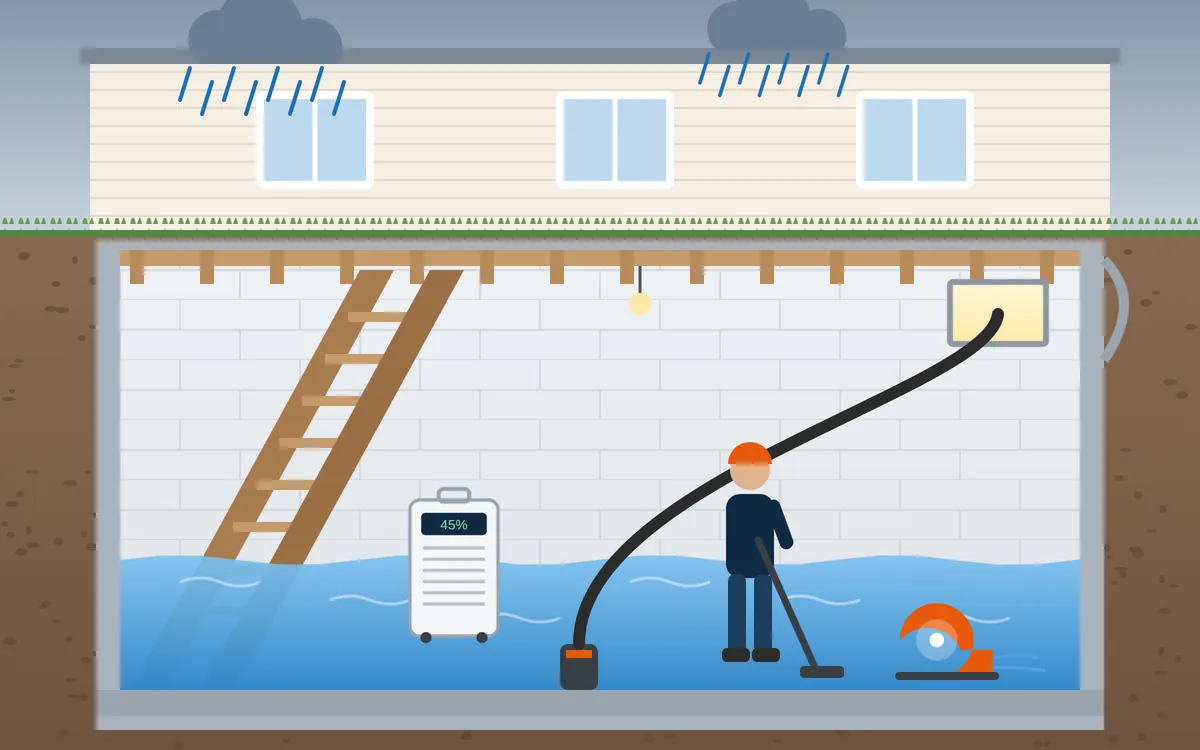
How does spring runoff cause a flooded basement?
Spring runoff combines snowmelt from the mountains, saturated ground, and warming temperatures into a slow-moving flood that pushes water through foundation cracks, backs up storm drains, and raises the water table under basements. Peak risk is late April through early June for most of Colorado.
Where Spring Runoff Comes From
The Colorado high country stores enormous amounts of water as snowpack each winter. The NRCS publishes snowpack percentages weekly through the SNOTEL network. When spring warms, that water runs off into every creek and river on the Front Range, raising groundwater and flooding storm systems. A high snow year like 2023 produces runoff flooding well into June.
Who Is Most at Risk
Homes near Boulder Creek, the South Platte in Denver, the Cache la Poudre in Fort Collins, Big Thompson River near Loveland, Fountain Creek through Colorado Springs, and the Arkansas River through Pueblo are the highest risk. Even homes 500 feet from a creek can see elevated groundwater during peak runoff.
Why Runoff Water Is Category 3
Runoff water picks up everything in its path: pesticides, oil, animal waste, agricultural runoff. The IICRC S500 classifies it as Category 3 (black water). Cleanup requires full PPE, antimicrobial treatment, and removal of porous materials. See stormwater cleanup.
Prevention Steps
- Watch NWS river forecasts and local flood warnings.
- Elevate items in the basement in April.
- Confirm sump pump and backup are tested.
- Install flood shields on window wells near creek-adjacent homes.
- Check that NFIP flood insurance is active (30-day waiting period means last-minute purchases don't help).
If Runoff Reaches Your Basement
Treat the water as contaminated. Do not wade in without PPE. Call (800) 231-6861 for a crew that handles Category 3 water. Document everything. Contact your flood insurer (not your homeowners insurer, which does not cover this).
FAQs
When does spring runoff peak in Colorado?
Late April through early June for most areas. Higher elevations peak in June.
Can snowmelt from my yard and spring runoff combine?
Yes, often. Either alone may be manageable; combined they overwhelm many sump systems.
Is runoff water considered sewage?
It is Category 3 black water under the IICRC S500 standard, which is cleaned the same way as sewage.
Does homeowners insurance cover runoff flooding?
No. NFIP flood insurance or a private flood policy covers it. Standard homeowners does not.
How is runoff flooding different from a sewer backup?
Runoff comes from outside; sewer backup comes through drains. Both are Category 3 and need professional cleanup.
Where can I check runoff forecasts?
The NWS and the CO Department of Water Resources both publish spring runoff forecasts.
Sources and further reading
- EPA: Brief Guide to Mold, Moisture and Your Home
- Colorado Division of Insurance
- National Weather Service, Boulder
- FEMA Flood Maps
- CDC: Flood water after a disaster
These public sources were used to check the safety, drying, and insurance information on this page.
Need basement flood cleanup in Colorado? Call to be connected with a crew in your area.
Call (800) 231-6861