
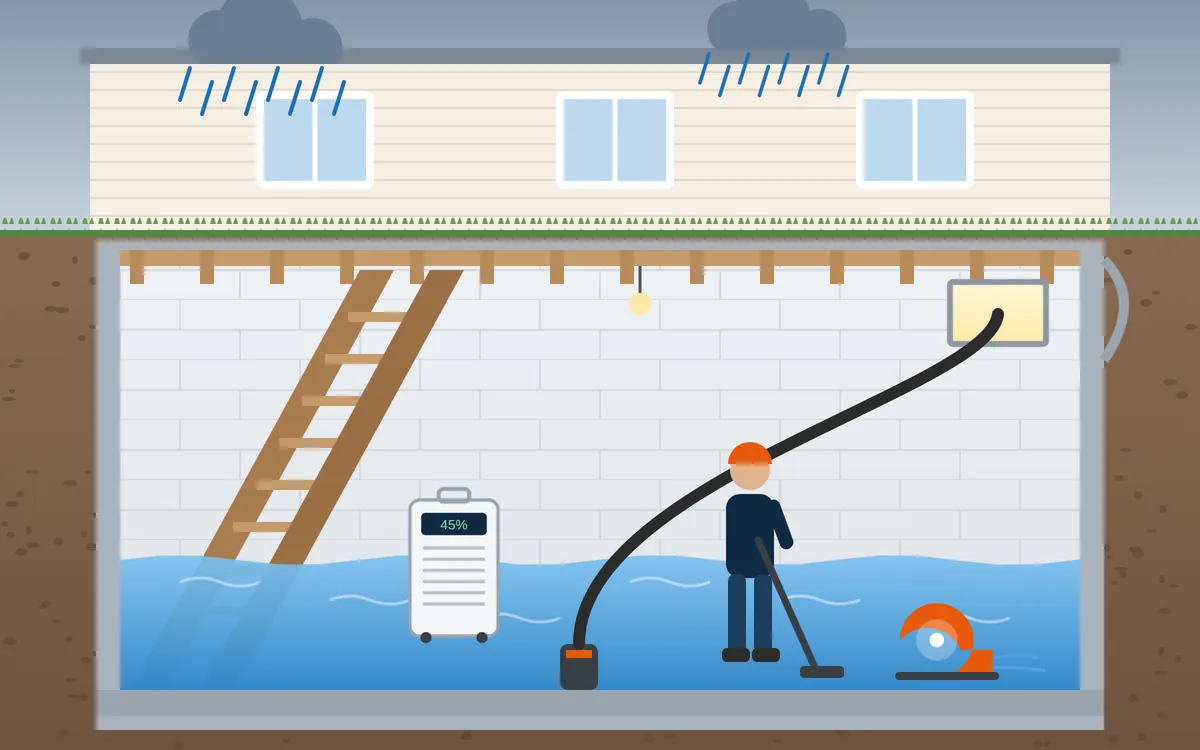
What is the safest way to remove water from a flooded basement?
The safest method depends on three things: the water's depth, where it came from, and the conditions outside the house. For shallow clean water (under 1 inch) from a known indoor source, a wet/dry vacuum works. For 1-3 inches, a submersible pump with proper discharge works. During major outside flooding when the surrounding ground is saturated, pumping too fast can damage the foundation — wait for exterior water to recede first. Always confirm power to the basement is off before entering standing water.
Before You Remove a Single Gallon: Three Safety Checks
The CDC is explicit about this sequence: do not step into standing water in a basement until you have confirmed the circuits serving that basement are off. If reaching the breaker panel requires walking through water, call a licensed electrician or your utility — don't do it yourself. The CDC's re-entry safety guide covers the full list.
- 1
Power to the basement is off at the breaker
Reached from a dry spot only. Never operate electrical switches while standing in water.
- 2
The water source is stopped or identified
If a supply pipe is leaking, close the house main water valve. If a floor drain is backing up, stop using water anywhere in the house.
- 3
Outside conditions are known
If major flooding is happening outside the home (creeks over bank, storm drains surcharged, standing water in the yard), see the pumping-pressure warning below before you begin.
Safety first. The water isn't going anywhere in the next ten minutes.
The Pumping Pressure Warning Most Guides Skip
When the soil around a basement is saturated from major outside flooding, that soil pushes against the foundation walls with substantial pressure. The water inside the basement counterbalances it. Remove the interior water too fast and the pressure differential can crack walls, lift a floor slab, or in extreme cases collapse a foundation.
This is well-documented building-science. The University of Nebraska-Lincoln Extension's pumping guide and FEMA post-disaster guidance both recommend waiting for exterior water to recede before fully pumping out a flooded basement during a major flood event.
In Colorado, this matters most during major Front Range flood events — the 2013 September floods documented by the National Weather Service caused foundation damage to some homes where owners pumped basements while surrounding soil was still saturated.
Methods by Water Depth
Match your method to how deep the water is. Using the wrong tool is the fastest way to turn a one-day extraction into a week-long job.
| Water depth | Primary tool | Notes |
|---|---|---|
| Under 1 inch, clean water | Wet/dry vacuum (16+ gallon) | Works for small contained spills. Empty frequently. Expect to go back over the same area twice. |
| 1-3 inches, clean water | Submersible utility pump + wet/dry vac to finish | Pump handles bulk water down to ~1 inch, then vacuum the remainder. |
| 3-12 inches | Submersible pump with 1.5-2 inch discharge hose | A standard home sump pump can move 30-60 gallons per minute. A rental trash pump moves 100+ GPM. |
| Over 12 inches | Professional truck-mounted extractor | Not a realistic DIY depth. At these volumes you need commercial equipment and documentation for insurance. |
| Sewage or outside flood water, any depth | Professional with PPE and containment | Category 3 water. DIY extraction creates serious health risks. Call sewage cleanup. |
What Each Piece of Equipment Actually Does
Wet/dry vacuum
Household units move about 90 CFM. Rated by gallon capacity, not flow rate. Good for surface puddles and the last inch after a pump. Will not dry carpet pad — just removes the water sitting on top of carpet.
Submersible utility pump
Drops into the water and pushes it out through a discharge hose. Rated in gallons per hour. A 1/4 HP utility pump moves about 1,500 GPH; a 1/2 HP moves 3,000 GPH. Will stop pulling water once the level drops below about 1 inch.
Trash pump (rental)
Engine-powered portable pump that handles water with debris. Moves 100+ GPM. Must be operated outdoors — CDC carbon-monoxide guidance warns that any fuel-powered engine indoors or within 20 feet of an opening is a serious CO hazard.
Truck-mounted extractor
Commercial equipment pulling thousands of CFM. Removes water from carpet, pad, concrete, and masonry at the same time. This is what professional basement water removal crews bring to a Category 2 or 3 event.
Where to Discharge the Water
Three rules in Colorado:
- Away from the foundation. At least 10 feet. Pumping water next to the house just sends it back in.
- Downhill. Gravity does most of the work.
- Not into a floor drain, storm drain, or sanitary sewer unless the water is clean. Contaminated water needs to go where your municipality allows — call public works if you're unsure.
If a hose won't reach, use a submersible pump with a longer discharge line. Daisy-chaining extensions works but drops the flow rate significantly.
After the Water Is Out, You're Not Done
Removing visible water is one step of eight. The structural materials — drywall, carpet pad, insulation, subfloor — still hold moisture that evaporates slowly into the room and keeps the humidity high enough for mold to grow.
This is where structural drying starts: axial air movers aimed low along wet walls, a commercial LGR dehumidifier pulling the evaporated moisture out of the air, and daily moisture meter readings. Our guide on drying a flooded basement covers equipment selection and placement in detail, and how to tell if the basement is actually dry covers the verification step most homeowners skip.
Colorado-Specific Considerations
Two situations come up repeatedly along the Front Range:
- Window wells flooding during summer storms. If a window well fills during a monsoon storm, water enters around the frame rather than through the wall. The extraction method is standard — wet/dry vac usually handles it — but the fix is window well drainage and gutter extensions, not waterproofing.
- Burn-scar flood water in the Pikes Peak and Southern Colorado regions. Water coming off burn scars from the Waldo Canyon, Black Forest, or Spring Fire burn areas often carries sediment, ash, and debris. Treat it as Category 3 and use PPE during any removal.
When to Stop and Call a Professional Crew
Call for help if:
- Water depth is over 2 inches across more than 200 sq ft.
- Water is Category 2 (gray water from appliances) or Category 3 (sewage, groundwater, outside flooding).
- Water has been sitting more than 24 hours.
- Carpet, drywall, or insulation is wet.
- You smell gas, see active electrical sparking, or notice structural damage to the foundation.
Our Colorado line is (800) 231-6861, open 24/7 for basement flood response.
Frequently Asked Questions
Can I use a regular shop vac to remove 2 inches of basement water?
For a small area under 100 sq ft, yes, but expect to make many passes and empty the vacuum frequently. For anything larger, a submersible pump is dramatically faster and the right tool.
Is pumping during a flood dangerous for my foundation?
It can be, if the surrounding ground is still saturated from major outside flooding. The water inside the basement counterbalances external pressure. Multiple university building-science sources recommend waiting until exterior water recedes before fully pumping out. For contained indoor leaks where the ground is normal, extract as quickly as possible.
Where should I discharge pumped basement water in Colorado?
At least 10 feet from the foundation, downhill, and not into a storm drain or sewer if the water is contaminated. Check with your city's public works department if you're unsure.
How long should it take to pump out a flooded basement?
A 1/2 HP submersible pump moving 3,000 GPH will clear 3 inches of water from a 1,000 sq ft basement (about 1,900 gallons) in roughly 40 minutes. Larger volumes or contaminated water take longer and may need professional equipment.
Does removing the water mean the basement is dry?
No. Carpet pad, drywall, insulation, and subfloor hold moisture that only comes out with commercial air movers and dehumidifiers running for several days. Mold can begin growing in 24-48 hours on wet materials that are left undried.
Can I run a gas generator or gas-powered pump in the basement?
No. The CDC warns that any fuel-powered engine indoors or within 20 feet of an opening creates serious carbon monoxide risk. Keep generators and gas pumps outdoors, well away from windows and doors.
Sources and further reading
- CDC: Re-entering your flooded home safely
- University of Nebraska Extension: Pumping a flooded basement
- CDC: Carbon monoxide prevention
- National Weather Service: Colorado flood information
- IICRC: ANSI/IICRC S500 water damage restoration standard
These authoritative public sources were used to verify the technical, safety, and insurance information on this page. They are not endorsements of MH Restoration.
Need help with basement flood cleanup in Colorado? Call for 24/7 IICRC-certified response.
Call (800) 231-6861