
What causes water damage in Colorado homes and how is it cleaned up?
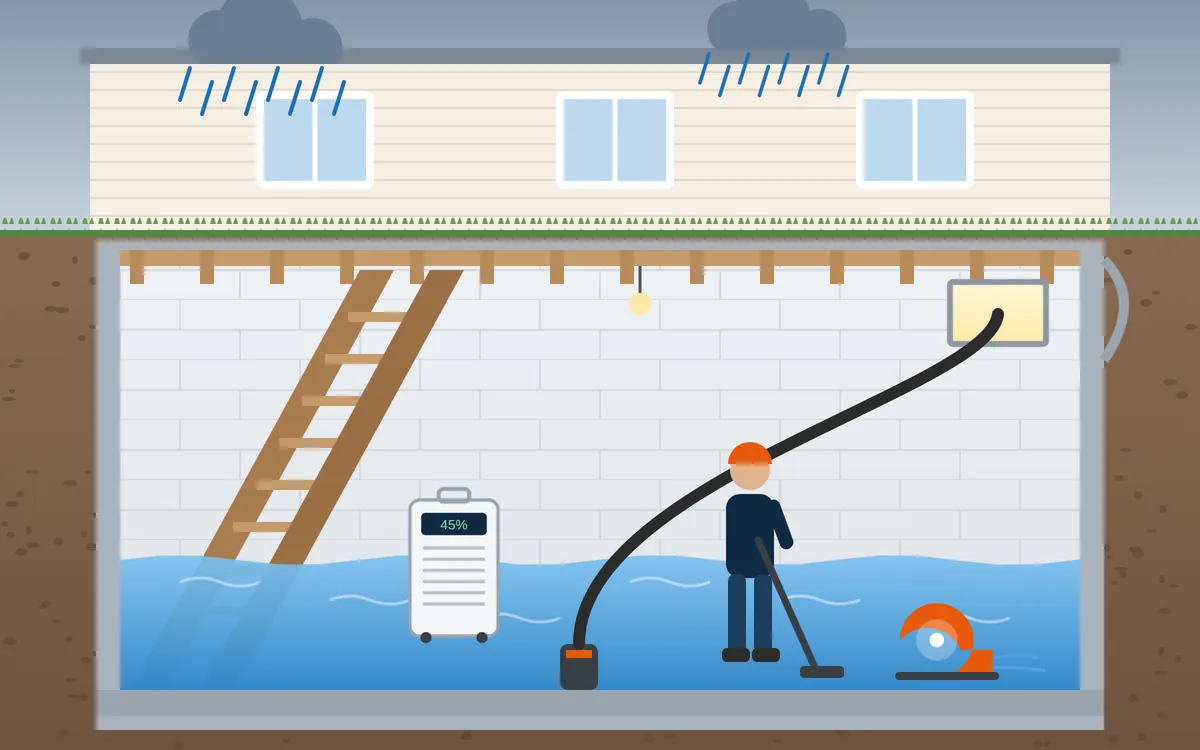
Water damage in Colorado homes comes from five main sources: burst pipes during winter cold snaps, basement flooding from storms and snowmelt, appliance overflows, sewer backups, and roof/window leaks during hail-heavy storms. Cleanup follows the ANSI/IICRC S500 water damage restoration standard: safety assessment, water category classification, extraction, structural drying with commercial equipment, material removal where needed, antimicrobial treatment for contaminated water, and reconstruction. Fast response (within 24-48 hours) prevents most mold risk.
What Counts as Water Damage
Water damage is any unintended water intrusion into a home that affects building materials, contents, or structure. The IICRC S500 standard distinguishes water damage from flood damage based on source:
- Water damage: water from inside the home (plumbing, appliances) or specific weather events (rain through a damaged roof, snowmelt through a crack).
- Flood damage: general and temporary surface water from overflow (rivers, creeks, storm surge). Specifically defined by the NFIP for flood insurance purposes.
The distinction matters because homeowners insurance and flood insurance cover different categories. See our guide on flood vs homeowners insurance.
The Five Main Causes of Water Damage in Colorado Homes
1. Burst pipes from winter freezes
The dominant cause of insurance claims November through March. Colorado's cold snaps regularly drop below zero across the Front Range and much colder in mountain towns and the eastern plains. Pipes along exterior walls freeze, expand, and split. See our frozen pipe burst guide and burst pipe cleanup service.
2. Basement flooding from storms and snowmelt
Peak season April through September. Summer monsoon storms drop intense rain that overwhelms sumps and drainage; spring snowmelt raises groundwater and pushes through foundation cracks. Our full basement flood cleanup guide covers this in depth.
3. Appliance overflows and leaks
Washing machine supply lines, dishwasher connections, water heater failures, refrigerator ice-maker lines. Year-round, often discovered after significant damage has accumulated. See appliance overflow cleanup.
4. Sewer backups
More common in older Front Range neighborhoods with original clay sewer laterals. Also common during combined storm/sanitary events in older urban areas. See sewer backup guide and sewage cleanup service.
5. Roof and envelope leaks
Colorado's position in the hail belt means roofs take damage several times per year. Damaged shingles, flashing, and gutters allow water into walls, ceilings, and ultimately basements. See our hail flooding guide.
Water Damage Categories
Every water damage event is classified under one of three categories by the ANSI/IICRC S500 standard. The category determines what can be saved, what PPE is required, and how aggressive the cleanup needs to be:
| Category | Source examples | Cleanup implications |
|---|---|---|
| Category 1 (clean) | Burst supply pipe, water heater, melted ice, rainwater without contamination | Standard extraction and drying; most materials saved if addressed within 48 hours |
| Category 2 (gray) | Appliance overflow, toilet overflow (urine), aquarium, aged Category 1 | PPE required; carpet pad and some materials removed; antimicrobial |
| Category 3 (black) | Sewage, outside flooding, groundwater, aged Category 2 | Full PPE and containment; most porous materials removed; antimicrobial required |
See our in-depth category guide.
The Water Damage Cleanup Process
Professional restoration follows the IICRC S500 standard, in this order:
- 1
Safety assessment
Electrical, gas, structural, contamination. Nothing else starts until this is complete.
- 2
Water category and class classification
Determines the full scope of work.
- 3
Water extraction
Truck-mounted extractors, submersible pumps, wet/dry vacuums depending on volume.
- 4
Selective demolition
Flood cuts in drywall, carpet pad removal, wet insulation removal, baseboards off.
- 5
Structural cleaning and antimicrobial
Especially for Category 2/3. Hard surfaces washed, rinsed, treated.
- 6
Structural drying
Axial air movers, LGR dehumidifiers, specialty equipment for walls/floors. Daily moisture monitoring.
- 7
Verification
Moisture readings match dry references. See our drying verification guide.
- 8
Reconstruction
New insulation, drywall, flooring, trim, paint.
For the complete step-by-step detail, see the professional cleanup process.
Typical Water Damage Costs in Colorado
- Small clean-water event (under 500 sq ft affected): $1,000-$3,000 for cleanup, $3,000-$10,000 total with repairs.
- Medium event (500-1,000 sq ft, finished space): $3,500-$8,000 cleanup, $10,000-$25,000 total.
- Large event (1,000+ sq ft, Category 3): $8,000-$20,000+ cleanup, $25,000-$60,000+ total.
Full detail: cost guide, average prices by city.
Insurance Coverage for Water Damage
Colorado water damage coverage depends on cause:
- Sudden plumbing damage: Usually covered by standard homeowners insurance.
- Sewer and sump backups: Usually require a water-backup endorsement.
- Outside flooding: Requires NFIP flood insurance.
- Gradual leaks: Usually excluded as maintenance issues.
See our detailed guides: insurance coverage, claim process.
MH Restoration Water Damage Services in Colorado
We handle every stage of water damage cleanup across Colorado:
Colorado Service Coverage
We serve 340+ Colorado cities across all 64 counties. Find your area:
- Denver, Colorado Springs, Aurora, Fort Collins, Lakewood, Boulder and 300+ more cities
- County hubs: Denver County, El Paso County, Jefferson County, Larimer County, Arapahoe County, Weld County, and all 64 counties
- Browse: all cities · all counties
Preventing Water Damage in Your Colorado Home
The highest-ROI prevention steps for Colorado homes:
- 1
Insulate pipes along exterior walls
$5-10 per linear foot of foam insulation. Prevents the most common winter claim.
- 2
Install smart water leak sensors
$20-50 each near water heater, washing machine, dishwasher, and under sinks. Catches slow leaks immediately.
- 3
Add water-backup insurance endorsement
$50-$250/yr for $5,000-$25,000 coverage of sewer/sump events.
- 4
Battery-backup sump pump
$500-$1,500. Covers the power outages that cause most storm-related claims.
- 5
Extend downspouts 6+ feet from foundation
$30-100 per downspout. The cheapest basement flood prevention.
Full checklist: basement flood prevention.
Frequently Asked Questions
What's the difference between water damage and flood damage in Colorado?
Water damage refers to water from inside the home (plumbing, appliances) or specific weather events (snowmelt, rain through a damaged roof). Flood damage specifically refers to general surface water from overflow (rivers, storm surge). Homeowners insurance covers most water damage; separate NFIP flood insurance covers flood damage.
How quickly should I call after noticing water damage?
Within hours. The IICRC S500 standard emphasizes that water category progresses with time — clean water becomes gray water at 24 hours, and gray becomes black at 48 hours. Each category change expands the cleanup scope and cost.
Is Colorado's dry climate protective against water damage?
Outdoor air helps materials dry faster once water is removed, but doesn't protect against the initial damage. Burst pipes release water the same way whether it's Arizona or Minnesota. Response time matters more than climate.
Does homeowners insurance cover all water damage?
No. Sudden plumbing damage usually is covered. Sewer backups, sump failures, and outside flooding usually are not covered under the standard policy. Water-backup endorsement and NFIP flood insurance fill the gaps.
How long does water damage cleanup take?
Mitigation (water removal + drying): 3-14 days depending on scope. Reconstruction: 1-4 weeks. Total: 2-6 weeks for most residential water damage events in Colorado.
What are the signs of hidden water damage?
Musty smell, discoloration on walls or ceilings, peeling paint, warped flooring, higher-than-normal water bill, visible mold, dampness at baseboards. Any of these warrant investigation.
Sources and further reading
- ANSI/IICRC S500 Water Damage Restoration Standard
- EPA: A Brief Guide to Mold, Moisture and Your Home
- Colorado Division of Insurance
- National Weather Service Colorado Flood Information
- FloodSmart (NFIP)
- CDC Flood Safety
These authoritative public sources were used to verify the technical, safety, and insurance information on this page. They are not endorsements of MH Restoration.
Need help with basement flood cleanup in Colorado? Call for 24/7 IICRC-certified response.
Call (800) 231-6861