What should I do if my water heater is leaking in the basement?
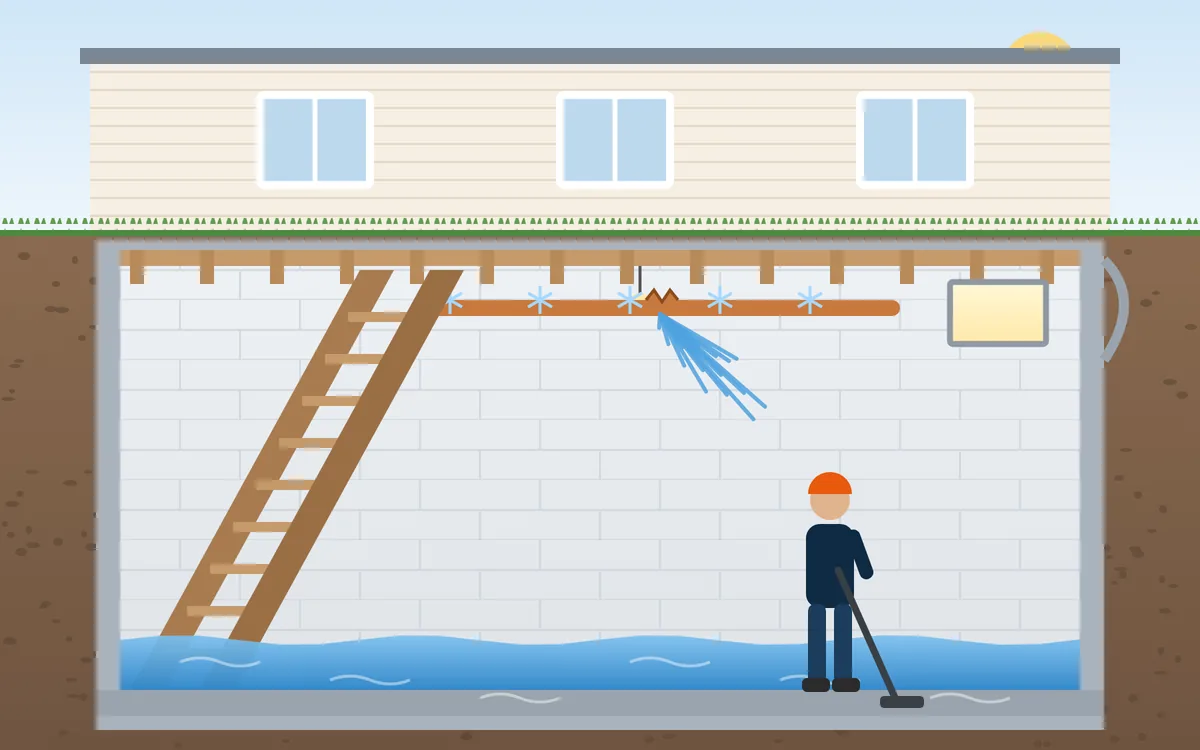
Turn off the water heater's cold-water supply valve, then turn off its power (electric) or set the gas control to off or pilot (gas). If water is spreading, close the main water shutoff too. Let the tank cool before draining it. Then photograph the damage and call for cleanup. A plumber should decide whether the heater can be repaired.
What to Do Right Now
- Shut off the appliance's water supply valve. For a washer, close both hoses. For a water heater, close the cold inlet on top.
- Turn off power to the appliance. For a gas water heater, turn the gas control to off or pilot.
- Never drain a water heater while the water is still hot. Scalding is a real risk.
- Move laundry, boxes, and rugs out of the water.
- Call (800) 231-6861 for basement appliance overflow cleanup.
Common Basement Appliance Leaks
| Appliance | Typical failure | Water category |
|---|---|---|
| Tank water heater | Tank corrosion, failed relief valve or drain valve, loose fittings | Category 1 |
| Washing machine | Burst supply hose, drain hose pulled from standpipe, pump failure | Category 1 (supply) to 2 (drain) |
| Utility or laundry sink | Clogged drain overflowing, faucet left running | Category 1 to 2 |
| Water softener or filter | Cracked housing, brine tank overflow | Category 1 |
| Dehumidifier or AC condensate | Full bucket, blocked condensate line | Category 1 to 2 |
| Refrigerator or freezer | Ice maker line split, defrost drain clog | Category 1 |
Washing machine overflow from the drain side carries detergent, lint, and soil, which makes it gray water. That affects whether carpet and pad can be kept.
Water Heater Leaking in Basement: What It Usually Means
A water heater leaking in the basement can be a minor fitting or a failing tank. The location of the water is a clue:
From the top
Often a loose inlet or outlet connection or a leaking relief valve. Usually repairable.
From the relief valve pipe
The temperature-pressure relief valve may be doing its job because of excess pressure or heat. Have a plumber check it right away.
From the bottom of the tank
Often internal corrosion. A tank leaking from the bottom usually has to be replaced.
Water heaters in Colorado basements often sit on concrete near the floor drain, so a slow leak can run for a long time before anyone notices. By then, the bottom of nearby drywall, carpet edges, and stored boxes may be wet. A water heater leaking in basement corners behind stored boxes can go unnoticed for weeks.
Water Category for Appliance Overflows
Category 1: clean water
Water from a supply line, a water heater, or rain that hasn't touched soil or sewage. Most materials have a real chance of being dried in place if work starts quickly.
Category 2: gray water
Water carrying some contamination: washing machine discharge, dishwasher overflow, or clean water that has sat long enough to start breaking down. Porous materials need a closer look.
Category 3: black water
Sewage, toilet backflow, and outside floodwater that ran across soil. Treat it as unsanitary. Carpet, pad, and wet drywall usually come out.
These three categories come from the ANSI/IICRC S500 standard that the restoration industry uses to describe water. The category decides what can be saved, what protective gear the crew wears, and how much the job costs.
The Basement Appliance Overflow Cleanup Process
Here is how a professional crew typically handles basement appliance overflow cleanup, from arrival to sign-off.
- 1
Shut down the appliance
Water and power or gas to the appliance are turned off, and hot water is allowed to cool.
- 2
Extract water
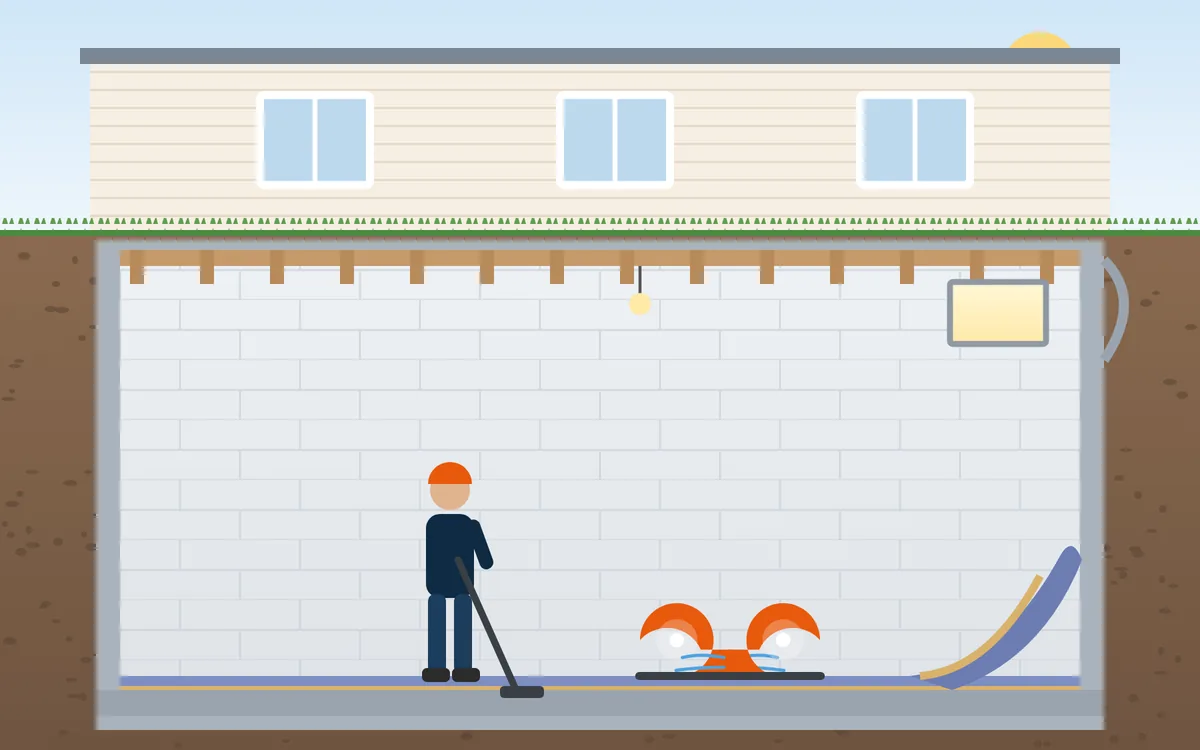
Standing water is removed from floors, carpet, and pad around the appliance.
- 3
Map the moisture
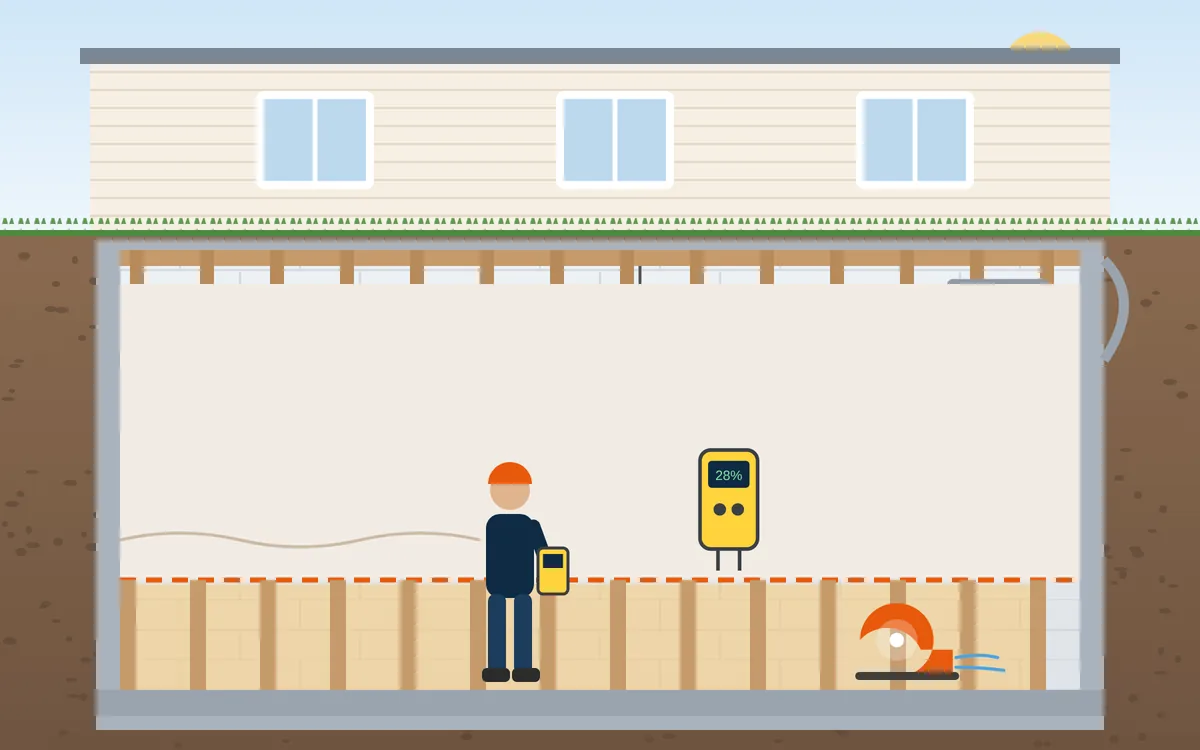
Meters check drywall, baseboards, cabinets, and flooring beyond the visible water, especially after slow leaks.
- 4
Remove what won't dry
Wet pad, swollen trim, and drywall above the wick line are removed where needed.
- 5
Dry and verify
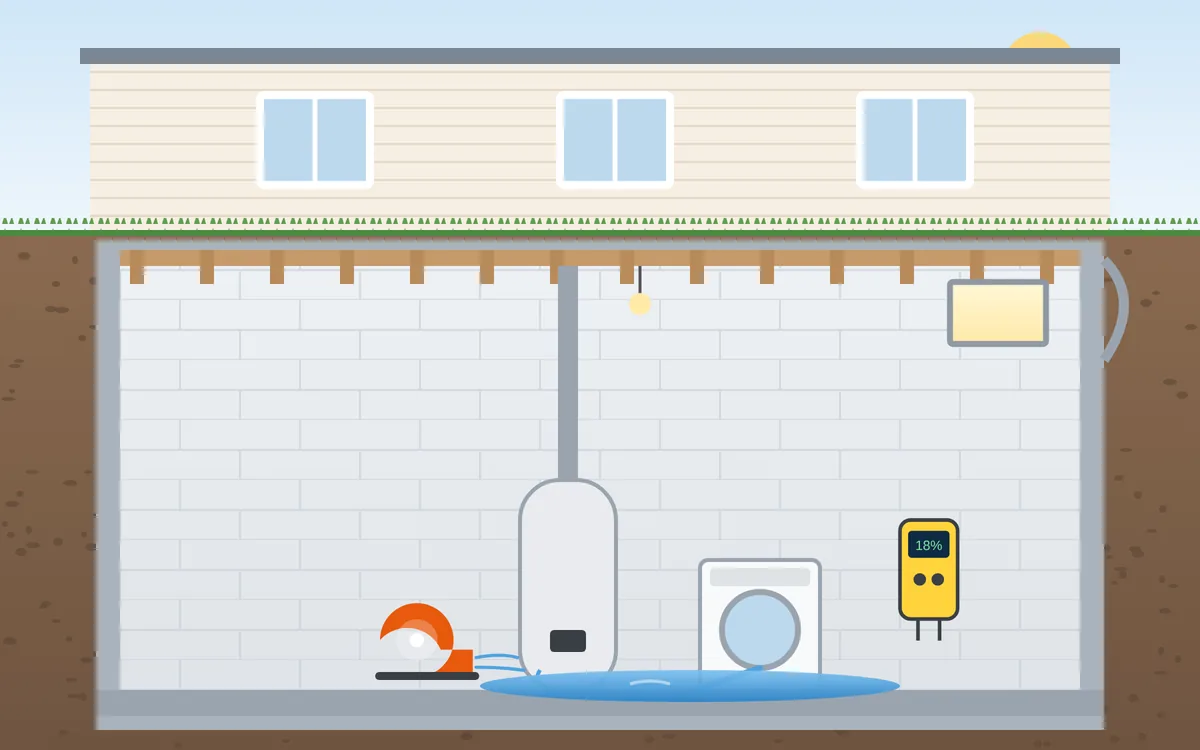
Air movers and dehumidifiers run with daily readings until materials are dry.
- 6
Prevent a repeat
A drain pan, leak sensor, or hose upgrade is recommended where it fits.
Slow Appliance Leaks Do More Damage Than They Look
A sudden washing machine overflow is obvious. A slow appliance leak isn't, and it often does more damage because it runs for days or weeks. Long, low-volume exposure lets water wick deep into drywall and the bottom plate of walls, and gives mold time to start. Signs of a slow leak include a musty smell near the laundry area, swollen baseboards, rust on the bottom of the water heater, or a stained ring on the floor. In those cases, basement appliance overflow cleanup should include moisture mapping well beyond the visible wet area.
Dealing with this right now? Call to be connected with a Colorado cleanup crew and talk through your options.
Call (800) 231-6861Appliance Overflow Cleanup Cost Factors
| Factor | Effect |
|---|---|
| Sudden vs. slow leak | Slow leaks often need more removal because water traveled further. |
| Clean vs. gray water | Drain-side washer water may mean carpet and pad are removed. |
| Finished laundry area | Cabinets, drywall, and flooring add scope. |
| Appliance repair or replacement | Handled separately by a plumber or appliance tech. |
Insurance for Appliance Leaks
Sudden appliance failures, like a burst washer hose, are often covered as sudden and accidental water damage. Slow, long-term leaks are commonly excluded as maintenance issues. The appliance itself is usually not covered when it simply wears out. Document the failure and keep the failed part if possible.
Appliance Leak Mistakes
- Draining a water heater while it's still hot.
- Ignoring a small puddle under the water heater for weeks.
- Using old rubber washer hoses well past their recommended replacement.
- Running the washer again before checking the drain hose and standpipe.
- Drying only the visible puddle after a slow leak.
Preventing Appliance Overflows
- Install a drain pan under the water heater and washer, piped to a drain where possible.
- Replace rubber washer hoses with braided stainless hoses.
- Place leak sensors near the water heater, washer, and softener.
- Have the water heater flushed and the anode rod checked as part of routine maintenance.
- Keep floor drains clear so overflows can drain away.
Basement Appliance Overflow Cleanup FAQs
What should I do if my water heater is leaking in the basement?
Close the cold-water supply, turn off power or gas to the heater, let it cool, and call a plumber. Then have the water cleaned up and the area dried.
Is washing machine overflow water clean?
Supply-side water is clean. Water from the drain or tub carries detergent and soil and is treated as gray water.
Can a slow water heater leak cause mold?
Yes. Slow leaks keep materials wet for long periods, which is exactly what mold needs. Check for odor, staining, and swollen baseboards.
Does insurance cover a water heater leak?
Sudden failure is often covered for the resulting water damage. Slow leaks and the heater itself are often not.
How long does appliance overflow cleanup take?
Extraction usually takes hours. Drying typically takes a few days, longer after slow leaks.
Do I need a drain pan under my water heater?
A drain pan piped to a drain can catch small leaks before they spread. It won't contain a sudden tank failure, but it helps with the common slow ones.
Should I replace my water heater after a leak?
If it's leaking from the bottom of the tank, usually yes. Leaks from fittings or valves are often repairable. A plumber can tell you.
Sources and further reading
- IICRC: ANSI/IICRC S500 water damage restoration standard
- EPA: A Brief Guide to Mold, Moisture and Your Home
- Colorado Division of Insurance
These public sources were used to check the safety, drying, and insurance information on this page. They are not endorsements of MH Restoration.