
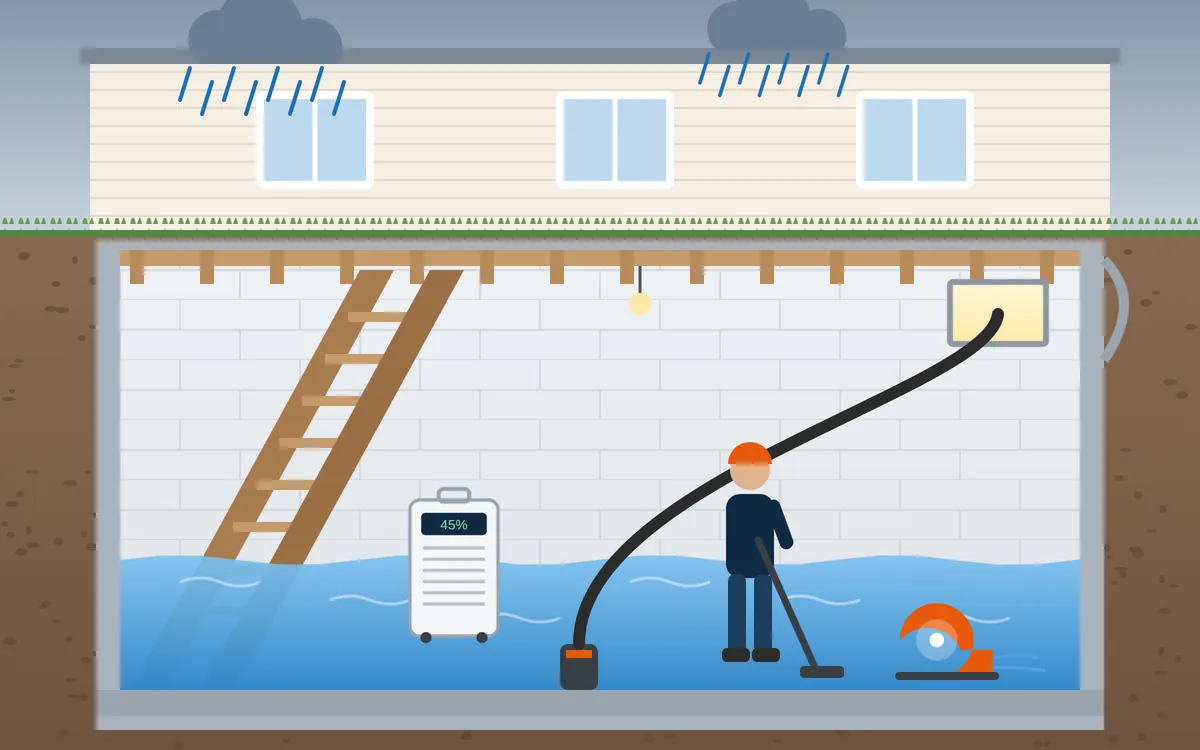
What causes most basement floods in Colorado?
The top causes in Colorado are burst pipes from winter freezes (1), sump pump failure during storms (2), sewer and drain backups (3), snowmelt and spring runoff (4), summer thunderstorm flooding (5), appliance overflows (6), poor grading around the foundation (7), foundation cracks (8), water heater failures (9), and hail damage opening drainage paths (10).
1. Burst Pipes from Winter Freezes
Colorado winters regularly drop into single digits. Pipes along exterior walls and in unheated corners freeze, expand, and split. Damage shows up when temperatures climb back above freezing and the ice thaws. See basement burst pipe cleanup and our detailed frozen pipe burst guide.
2. Sump Pump Failure
A failed sump pump is the most common cause of basement flooding during storms. The pump may fail from age, a stuck float, a tripped breaker, or a dead power supply. See sump pump failure cleanup and our sump failure deep dive.
3. Sewer and Drain Backups
Older Front Range neighborhoods, especially in Denver, have clay or cast-iron sewer laterals vulnerable to tree roots and age. Heavy storms can also overwhelm city mains and push water up through floor drains. See sewage backup cleanup and our sewer backup guide.
4. Snowmelt and Spring Runoff
Colorado's snowpack doesn't stay frozen forever. Warm spring days combined with saturated ground can push water through foundation cracks and up through floor drains. See our snowmelt flooding guide.
5. Summer Thunderstorm Flooding
Late spring through summer, Front Range thunderstorms can drop an inch of rain in an hour. Window wells, gutters, and storm drains all get overwhelmed. See stormwater cleanup and our summer storm guide.
6. Appliance Overflows
Washing machine supply lines, dishwasher connections, and water heater drains fail every day in Colorado homes. See basement appliance overflow cleanup.
7. Poor Grading Around the Foundation
Ground sloped toward the house instead of away sends surface water straight to the foundation. Downspouts emptying at the foundation wall do the same. Fixes include regrading, downspout extensions, and French drains.
8. Foundation Cracks
Colorado's expansive clay soils cycle through swell and shrink seasons, cracking foundations. Each crack is a path for groundwater. See our foundation cracks guide.
9. Water Heater Failure
Standard tank water heaters last 10-12 years. Past that, bottom corrosion is common. A full-tank failure releases 40-80 gallons into the basement.
10. Hail Damage Opening Drainage Paths
Colorado has some of the highest hail-damage rates in the U.S. Damaged roofs, torn flashing, and dented gutters all redirect water in ways that can end up in the basement. See our hail-related flooding guide.
FAQs
Which cause is most common in the Denver metro?
Sump pump failures during summer storms and sewer backups in older neighborhoods.
Which cause produces the most expensive damage?
Sewage backups, because every porous material has to come out and antimicrobial costs are high.
Is snowmelt flooding common in Colorado?
Yes, mostly in March-May along the Front Range and foothills.
Can I prevent basement flooding completely?
No, but you can reduce risk sharply: battery backup sump, water-backup endorsement, regraded landscape, and sealed foundation cracks.
Which Colorado cities see the most basement flooding?
Any city with older housing stock and heavy summer storms. Denver, Boulder, Fort Collins, and Greeley all see high claim volumes.
Do new homes flood too?
Yes. Many are built on clay soil with finished basements, which raises the stakes of any water event.
Sources and further reading
- EPA: Brief Guide to Mold, Moisture and Your Home
- Colorado Division of Insurance
- National Weather Service, Boulder
- FEMA Flood Maps
- CDC: Flood water after a disaster
These public sources were used to check the safety, drying, and insurance information on this page.
Need basement flood cleanup in Colorado? Call to be connected with a crew in your area.
Call (800) 231-6861